
Flamboyant architecture and medieval technicality, c. 1400-c. 1530 : a micro-history of the rise of artistic consciousness at the end of Middle Ages Jean-Marie Guillouët ; translation, Jane MacAvock. txt
Series Architectura Medii AEVI ; Vol. XIITurnhout, Belgium : Brepols, 2019Descripción: xvii, 200 p. ill.; col.; plans 29 cmTipo de contenido:- text
- unmediaded
- volume
- 9782503577296
- 2503577296
- 23 724.12
- NA1043 G8513 2019
| Imagen de cubierta | Tipo de ítem | Biblioteca actual | Biblioteca de origen | Colección | Ubicación en estantería | Signatura topográfica | Materiales especificados | Info Vol | URL | Copia número | Estado | Notas | Fecha de vencimiento | Código de barras | Reserva de ítems | Prioridad de la cola de reserva de ejemplar | Reservas para cursos | |
|---|---|---|---|---|---|---|---|---|---|---|---|---|---|---|---|---|---|---|
| Libro | CARIBET Biblioteca Arquitectura Colección General CARIBET | General NA1043 G8513 2019 (Navegar estantería(Abre debajo)) | 1 | Disponible | 91000000062554 |
Descripciones mejoradas de Syndetics:
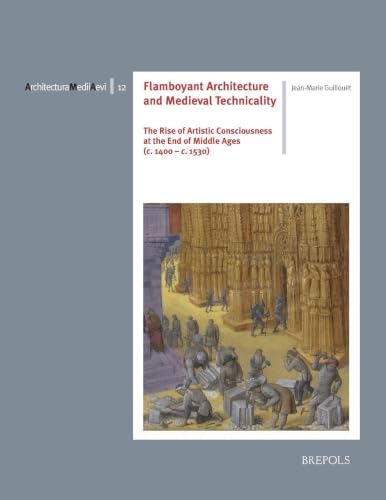
This book seeks to further our understanding of the socio-genesis of artistic modernity by turning to micro-history. It explores a late-medieval decorative procedure that emerged and spread in northern and central France from the early fifteenth century to the start of the following century. Using the well-known miniature, the Building of Solomon's temple in Jerusalem from the fifteenth-century codex of Les Antiquites judaiques as a starting point, this study deals with architecture and technical knowledge of builders. This investigation unpacks and reveals many aspects of the technical and visual culture of late medieval craftsmen and artists. The virtuosic skills these artisans displayed are worthy of inclusion in the development of technical practices of Flamboyant Gothic architecture. They also reflect broader cultural and social configurations, which go far beyond the history of building. This micro-historical perspective on what can be called hyper-technical Gothic contributes to our appreciation of the role of technical mastery in establishing social hierarchies and artistic individuation processes during the Late Middle Ages and Early Modern period.
"The rise of artistic consciousness at the end of the Middle Ages, c. 1400-c. 1530"--Subtitle from cover.
Include Bibliography (141-164 p.)
Technical Savoir-Faire as Historical Topic --
Observations on a well-known Illumination --
Nantes, Tours and the Master of the Munich Boccaccio --
Representation of a technical Gesture and Jean Fouquet's Heritage --
A French 15th-Century sculptural savoir-faire --
Late Medieval Gothic Building Sites and Technical Innovations --
First Conclusions --
Slate Inlay: A Technical History --
Functional Constraints --
Hollowed out blocks for Inlay --
The Practice of Preparatory Tracing -
Installation in the Archivolts --
An Operational Change at the Beginning of the 15th Century --
An Interruption in the History of Technique: Auxerre --
The Consequences of a new stereotomic System --
Choices of Stone Types --
Conclusions on Implementation --
Social History of a Skill --
Traces and Remains of a Valued Procedure--
The Practical Geometry of a Building Site at the End of the Middle Ages and its Tools --
The Tools and their Uses --
The Prevalence of the Square --
The insignological Uses of the Compass --
The Incisions at Tours and Rouen as Illustrations of Construction Practices --
Workers with Stone: social History of a Technique --
Masons and Sculptors --
Stone-cutters and Carvers of Images --
The Socio-Professional Distinction of the Creators of the Canopies - the Case of Bourges --
Technical One-upmanship and Informal Hierarchies at a Building Site --
Microarchitecture and Represented Space --
Architecture and Represented Space --
Towards 1400 in Central/Middle France: a Rupture --
Microarchitecture as a Locus --
Slate Inlay and the Depth of Fictive Space --
Baldachins, Canopies and Late-Medieval Sacral Regimes --
Monumental Syntax toward "Architectural Wit" --
Virtuosity, Varietas and Captatio benevolentiae --
Slate or Glass Insertion, Admiratio and Varietas --
Material and Colour Contrasts during the Late Middle Ages --
An Incunabula of c. 1400 --
Slate Inlay as a "Technology of Enchantment" --
Late Gothic Art: A Hyper-Technical Cultural Regime --
Conclusion -- Bibliography -- Colour Plates
"This book seeks to further our understanding of the socio-genesis of artistic modernity by turning to micro-history. It explores a late-medieval decorative procedure that emerged and spread in northern and central France from the early fifteenth century to the start of the following century. Using the well-known miniature, the Building of Solomon's temple in Jerusalem from the fifteenth-century codex of Les Antiquités judaïques as a starting point, this study deals with architecture and technical knowledge of builders. This investigation unpacks and reveals many aspects of the technical and visual culture of late medieval craftsmen and artists. The virtuosic skills these artisans displayed are worthy of inclusion in the development of technical practices of Flamboyant Gothic architecture. They also reflect broader cultural and social configurations, which go far beyond the history of building. This micro-historical perspective on what can be called "hyper-technical" Gothic contributes to our appreciation of the role of technical mastery in establishing social hierarchies and artistic individuation processes during the Late Middle Ages and Early Modern period."--Back cover.
Translated from the French.