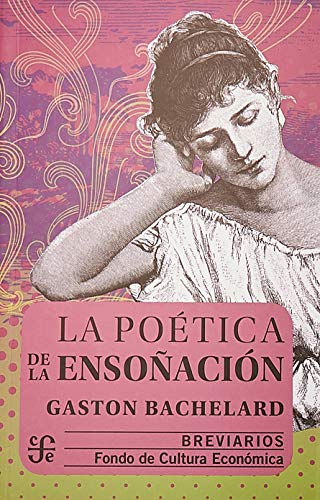

La poética de la ensoñación / Gaston Bachelard ; traducción : Ida Vitale.
Series Colección Breviarios ; 330México : Fondo de Cultura Económica, 2014Descripción: 321 pages ; 17 cmTipo de contenido:- 9789681653385
| Imagen de cubierta | Tipo de ítem | Biblioteca actual | Biblioteca de origen | Colección | Ubicación en estantería | Signatura topográfica | Materiales especificados | Info Vol | URL | Copia número | Estado | Notas | Fecha de vencimiento | Código de barras | Reserva de ítems | Prioridad de la cola de reserva de ejemplar | Reservas para cursos | |
|---|---|---|---|---|---|---|---|---|---|---|---|---|---|---|---|---|---|---|
| Libro | Biblioteca Encarnación Valdés Colección General bev | 142.7 B119p E (Navegar estantería(Abre debajo)) | Disponible | 80000002609389 |
Descripciones mejoradas de Syndetics:
Discutido y polemico, mas no facil de objetar en sus proposiciones innovadoras, Bachelard emprende aqui un camino prometedor para todos aquellos que se hallen dispuestos a entrar en el territorio de lo inasible, cuya concrecion permite el acceso a lo fecundo, abierto por la libre imaginacion creadora.
Notas de autor provistas por Syndetics
Born in Bar-sur-Aube, France, in 1884, Gaston Bachelard received his doctorate in 1927. He became professor of philosophy at the University of Dijon in 1930, and held the chair in the history and philosophy of science at the University of Paris from 1940 to 1954.In epistemology and the philosophy of science, Bachelard espoused a dialectical rationalism, or dialogue between reason and experience. He rejected the Cartesian conception of scientific truths as immutable; he insisted on experiment as well as mathematics in the development of science. Bachelard described the cooperation between the two as a philosophy of saying no, of being ever ready to revise or abandon the established framework of scientific theory to express the new discoveries.
In addition to his contributions to the epistemological foundations of science, Bachelard explored the role of reverie and emotion in the expressions of both science and more imaginative thinking. His psychological explanations of the four elements-earth, air, fire, water-illustrate this almost poetic aspect of his philosophy.
(Bowker Author Biography)