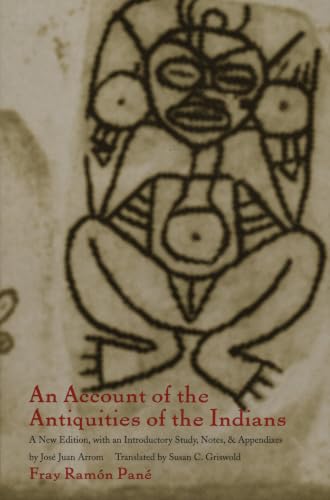

An account of the antiquities of the Indians : chronicles of the New World encounter / Ramón Pané.
Idioma: Inglés Lenguaje original: Español Durham, N.C. : Duke University Press, 1999Edición: A new ed. / introductory study, notes, and appendixes by José Juan Arrom ; translated by Susan C. GriswoldDescripción: xxix, 72 pages : maps ; 24 cmTipo de contenido:- 0822323478 (pbk. : alk. paper)
- 972.93
- F1909 .P3613 1999
| Imagen de cubierta | Tipo de ítem | Biblioteca actual | Biblioteca de origen | Colección | Ubicación en estantería | Signatura topográfica | Materiales especificados | Info Vol | URL | Copia número | Estado | Notas | Fecha de vencimiento | Código de barras | Reserva de ítems | Prioridad de la cola de reserva de ejemplar | Reservas para cursos | |
|---|---|---|---|---|---|---|---|---|---|---|---|---|---|---|---|---|---|---|
| Libro | Biblioteca Encarnación Valdés Colección General bev | 972.93 P1871a (Navegar estantería(Abre debajo)) | Disponible | 80000002575382 |
Descripciones mejoradas de Syndetics:
Accompanying Columbus on his second voyage to the New World in 1494 was a young Spanish friar named Ramón Pané. The friar's assignment was to live among the "Indians" whom Columbus had "discovered" on the island of Hispaniola (today the island shared by Haiti and the Dominican Republic), to learn their language, and to write a record of their lives and beliefs. While the culture of these indigenous people--who came to be known as the Taíno--is now extinct, the written record completed by Pané around 1498 has survived. This volume makes Pané's landmark Account --the first book written in a European language on American soil--available in an annotated English edition.
Edited by the noted Hispanist José Juan Arrom, Pané's report is the only surviving direct source of information about the myths, ceremonies, and lives of the New World inhabitants whom Columbus first encountered. The friar's text contains many linguistic and cultural observations, including descriptions of the Taíno people's healing rituals and their beliefs about their souls after death. Pané provides the first known description of the use of the hallucinogen cohoba , and he recounts the use of idols in ritual ceremonies. The names, functions, and attributes of native gods; the mythological origin of the aboriginal people's attitudes toward sex and gender; and their rich stories of creation are described as well.
Includes bibliographical references (p. [68]-70) and index.
Tabla de contenidos provista por Syndetics
- Acknowledgments
- Introduction to the English Edition
- Introductory Study
- An Account of the Antiquities of the Indians
- Appendix A Christopher Columbus
- Appendix B Pietro Martire d'Anghiera
- Appendix C Fray Bartolomé de Las Casas
- Bibliographic Note
- Index of Taino Words and Names