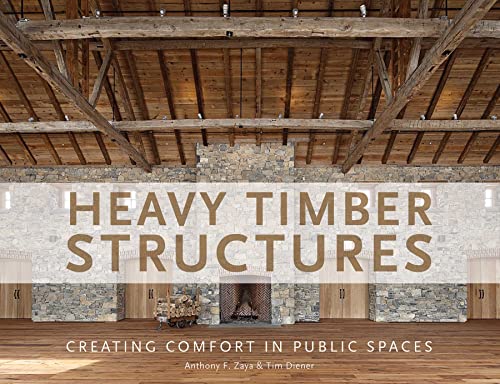

Heavy timber structures : creating comfort in public spaces / Anthony F. Zaya, Tim Diener. txt
Editor: Atglen, PA : Schiffer Pub., Ltd., 2017Descripción: 223 pages : 24 cmTipo de contenido:- text
- unmediated
- volume
- 9780764354205 (hard cover)
- NA4110 Z39 2017
| Imagen de cubierta | Tipo de ítem | Biblioteca actual | Biblioteca de origen | Colección | Ubicación en estantería | Signatura topográfica | Materiales especificados | Info Vol | URL | Copia número | Estado | Notas | Fecha de vencimiento | Código de barras | Reserva de ítems | Prioridad de la cola de reserva de ejemplar | Reservas para cursos | |
|---|---|---|---|---|---|---|---|---|---|---|---|---|---|---|---|---|---|---|
| Libro | CARIBET Biblioteca Arquitectura Colección General CARIBET | General NA4110 Z39 2017 (Navegar estantería(Abre debajo)) | 1 | Disponible | Presupuesto 2017-2018 | 91000000054866 |
Descripciones mejoradas de Syndetics:
Explore the physiological and aesthetic benefits of heavy timber construction in public spaces through 35 case studies, including health care facilities, houses of worship, zoos, museums, and more.
In the triumvirate of dominant structural building materials--wood,metal, and masonry--each has its advantages, but none are as intertwinedwith the human spirit as wood. Thirty-five public buildings illustrate how heavy timber framing can address familiar programmatic issues such as structure, economics, aesthetics, and sustainability.
Timber framing can also have a positive effect on human emotions and physiology. In addition to being warm to the touch, wood building interiors have been widely proven to reduce blood pressure and heart rate and to speed convalescence in health care facilities.
More than 450 photos, plans, and diagrams show how wood framing components from solid timbers to glulams and peeled logs are designed for durability and expressiveness. The finished projects aptly demonstrate what it means not only to shape buildings, but how they shape us.
Includes bibliographical notes and index.