Imagen de portada de Amazon
Imagen de Amazon.com
Imagen de cubierta Syndetics
Portada de Syndetics
Imagen de OpenLibrary

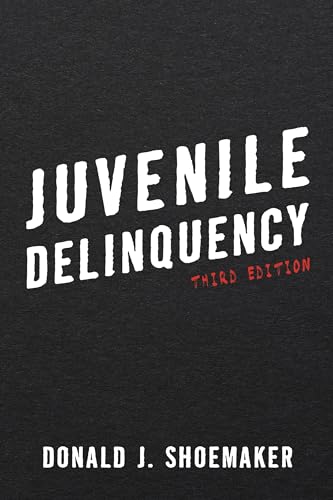
Juvenile delinquency / Donald J. Shoemaker, Virginia Tech.

Por: Editor: Lanham : Rowman & Littlefield, [2018]Edición: Third editionDescripción: xiv, 340 pages ; 24 cmTipo de contenido:
  • text
Tipo de medio:
  • computer
Tipo de soporte:
  • online resource
ISBN:
  • 9781442271937 (hardcover : alk. paper)
  • 9781442271944 (pbk. : alk. paper)
  • 9781442271951 (ebook)
Tema(s): Formatos físicos adicionales: Online version:: Juvenile delinquencyClasificación CDD:
  • 364.36 23
Clasificación LoC:
  • HV9069 .S524 2018
Contenidos:
Chapter 1. Introduction -- Chapter 2. The History of Juvenile: Justice in America -- Chapter 3. The Measurement of Delinquency -- Chapter 4. The Classical School, Rational Choice, and Individualistic Explanations of Delinquency -- Chapter 5. Social Development and Delinquency -- Chapter 6. Social Process Theories -- Chapter 7. The Family and Delinquency -- Chapter 8. Schools and Delinquency -- Chapter 9. Drug Use among Youth -- Chapter 10. Juvenile Gangs -- Chapter 11. Female Delinquency -- Chapter 12. Labeling and Conflict Theories -- Chapter 13. The Contemporary Juvenile Justice System -- Chapter 14. Police and Courts -- Chapter 15. Juvenile Institutions and the Treatment and Prevention of Delinquency -- References -- Index.
Resumen: Juvenile Delinquency is a timely and comprehensive introduction to crime, justice, and young people, with an emphasis on theory and practice. The third edition retains the overall structure of the second edition and features updates throughout, including new information on gangs and prevention, the impact of race and gender on crime and justice, additional comparative and international examples, and more. The book opens with an overview of delinquency; historical and contemporary discussions of juvenile justice; theories of delinquency; institutional contexts of delinquency, such as school and the family; and chapters on topics such as drug use, youth gangs, female delinquency, police, courts, and corrections. Many chapters discuss treatment programs as well as delinquency and illustrate theory put into practice. Most issues are examined through the lenses of race, class, and gender. Juvenile Delinquency covers the essentials of the topic with a price point far below most competitors. To enhance student learning, a complimentary instructor’s manual and test bank are available. Please see the “Features” page for additional information.
Valoración
    Valoración media: 0.0 (0 votos)
Existencias
Imagen de cubierta Tipo de ítem Biblioteca actual Biblioteca de origen Colección Ubicación en estantería Signatura topográfica Materiales especificados Info Vol URL Copia número Estado Notas Fecha de vencimiento Código de barras Reserva de ítems Prioridad de la cola de reserva de ejemplar Reservas para cursos
Libro electrónico Biblioteca de Mayagüez Acceso en línea HV9069 .S524 2018 (Navegar estantería(Abre debajo)) c. 1 Disponible 50000003273306
Total de reservas: 0

Descripciones mejoradas de Syndetics:

Juvenile Delinquency is a timely and comprehensive introduction to crime, justice, and young people, with an emphasis on theory and practice. The third edition retains the overall structure of the second edition and features updates throughout, including new information on gangs and prevention, the impact of race and gender on crime and justice, additional comparative and international examples, and more.

The book opens with an overview of delinquency; historical and contemporary discussions of juvenile justice; theories of delinquency; institutional contexts of delinquency, such as school and the family; and chapters on topics such as drug use, youth gangs, female delinquency, police, courts, and corrections. Many chapters discuss treatment programs as well as delinquency and illustrate theory put into practice. Most issues are examined through the lenses of race, class, and gender.

Juvenile Delinquency covers the essentials of the topic with a price point far below most competitors. To enhance student learning, a complimentary instructor's manual and test bank are available. Please see the "Features" page for additional information.

Includes index.

Chapter 1. Introduction -- Chapter 2. The History of Juvenile: Justice in America -- Chapter 3. The Measurement of Delinquency -- Chapter 4. The Classical School, Rational Choice, and Individualistic Explanations of Delinquency -- Chapter 5. Social Development and Delinquency -- Chapter 6. Social Process Theories -- Chapter 7. The Family and Delinquency -- Chapter 8. Schools and Delinquency -- Chapter 9. Drug Use among Youth -- Chapter 10. Juvenile Gangs -- Chapter 11. Female Delinquency -- Chapter 12. Labeling and Conflict Theories -- Chapter 13. The Contemporary Juvenile Justice System -- Chapter 14. Police and Courts -- Chapter 15. Juvenile Institutions and the Treatment and Prevention of Delinquency -- References -- Index.

Juvenile Delinquency is a timely and comprehensive introduction to crime, justice, and young people, with an emphasis on theory and practice. The third edition retains the overall structure of the second edition and features updates throughout, including new information on gangs and prevention, the impact of race and gender on crime and justice, additional comparative and international examples, and more. The book opens with an overview of delinquency; historical and contemporary discussions of juvenile justice; theories of delinquency; institutional contexts of delinquency, such as school and the family; and chapters on topics such as drug use, youth gangs, female delinquency, police, courts, and corrections. Many chapters discuss treatment programs as well as delinquency and illustrate theory put into practice. Most issues are examined through the lenses of race, class, and gender. Juvenile Delinquency covers the essentials of the topic with a price point far below most competitors. To enhance student learning, a complimentary instructor’s manual and test bank are available. Please see the “Features” page for additional information.

Reseñas proporcionadas por Syndetics

CHOICE Review

Shoemaker (Virginia Polytechnic Institute and State Univ.) has written a very comprehensive text exploring how the social issues of race, class, and gender impact juvenile delinquents. The 15 chapters include the history of juvenile justice in the US; measurement of delinquency (arrest patterns in terms of gender, race, age, juvenile court data, and self-report data); comprehensive theoretical topics; family, schools, and delinquency; impressive coverage and discussion of drug use among youth and delinquents; juvenile gangs; female delinquency; police and courts; and treatment and prevention of delinquency. The author has succeeded in presenting "an overview of the important concepts related to delinquency, along with discussion of the historical roots of delinquency laws, the extent of delinquency and its sociological parameters, and important theoretical explanations of delinquency" (p. 7). Without question, Shoemaker has provided a well-written, very comprehensive, and readable text. Better suited as a comprehensive discussion of juvenile delinquency intended primarily for researchers and/or scholars than as an undergraduate text, the quality of information is well above average when compared with standard delinquency textbooks. Summing Up: Highly recommended. Upper-division undergraduates and above. P. J. Venturelli Valparaiso University

Notas de autor provistas por Syndetics

Donald J. Shoemaker is professor of sociology at Virginia Polytechnic Institute and State University, where he teaches and researches crime and deviance and has won two teaching awards. He is the author or co-editor of several books, including Juvenile Justice: A Reference Handbook and Theories of Delinquency.
Compartir
logopucpr-y-vive

Contáctanos

¡Queremos saber de ti!

Tel. 787.841.2000 Ext. 1801

bibliotecavaldes@pucpr.edu

⁣Búscanos en las redes

© 2026 Desarrollado por Ignite Online • All Rights Reserved • Powered by Koha.