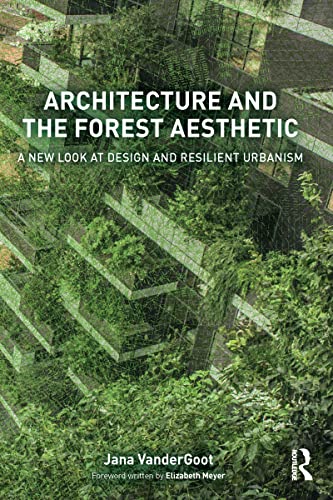

Architecture and the forest aesthetic : a new look at design and resilient urbanism. Jana Vander Goot
Editor: New York : Routledge, 2017Descripción: 276 pages 25cm 25cm. illTipo de contenido:- text
- unmediated
- volume
- 9781138837737 (hardback)
- 9781138837744 (pbk.)
- 720/.47 23
- NA2542.35 V36 2018
| Imagen de cubierta | Tipo de ítem | Biblioteca actual | Biblioteca de origen | Colección | Ubicación en estantería | Signatura topográfica | Materiales especificados | Info Vol | URL | Copia número | Estado | Notas | Fecha de vencimiento | Código de barras | Reserva de ítems | Prioridad de la cola de reserva de ejemplar | Reservas para cursos | |
|---|---|---|---|---|---|---|---|---|---|---|---|---|---|---|---|---|---|---|
| Libro | CARIBET Biblioteca Arquitectura Colección General CARIBET | General NA2542.35 V36 2018 (Navegar estantería(Abre debajo)) | 1 | Disponible | Presupuesto 2017-2018 | 91000000055053 |
Descripciones mejoradas de Syndetics:
Despite population trends toward urbanization, the forest continues to have a strong appeal to the human imagination, and the human preference for forest over many other types of terrain is well documented. This book re-imagines architecture and urbanism by allowing the forest to be a prominent consideration in the language of design, thus recognizing the forest as essential rather than just incidental to human well-being. In Architecture and the Forest Aesthetic, forest is a large-scale urban construct that is far more extensive and nuanced than trees and shrubbery. The forest aesthetic opens designers to the forest as a model for an urban architecture of permeable floors, protective canopies, connected food chains, beneficial decomposition, and resilient ecologies. Much can be learned about these features of the forest from the natural sciences; however, when they are given due consideration technically and metaphorically in the design of urban habitat, the places in which humans live become living forests.
What is present here in Architecture and the Forest Aesthetic is both a review of many ingenious ways in which the forest aesthetic has already been expressed in design and urbanism, and an encouragement to further use the forest aesthetic in design language and design outcomes. Case study projects featured include the Chilotan building craft of Southern Chile, the yaki sugi of Japan, the Biltmore Forest in the Southeastern United States, the Australian capital city Canberra, Bosco Verticale in Milan, Italy, the Beijing Olympic Forest Park in China, and more.
Built in wood -- Decomposition -- Collective space in a field -- Forestry cultures -- Technology and the forest archive -- Treed infrastructure -- Human forest biosystems.
Notas de autor provistas por Syndetics
Jana VanderGoot is an Assistant Professor of Architecture at the University of Maryland School of Architecture, Planning and Preservation, USA. She holds a Master of Landscape Architecture degree from Harvard University Graduate School of Design, a Master of Architecture from the University of Virginia, and a Bachelor of Architecture from the University of Notre Dame. Jana is a registered architect, founding partner of VanderGoot Ezban Studio, and the 2011 recipient of the Rieger Graham Prize ICAA affiliated fellowship at the American Academy in Rome.