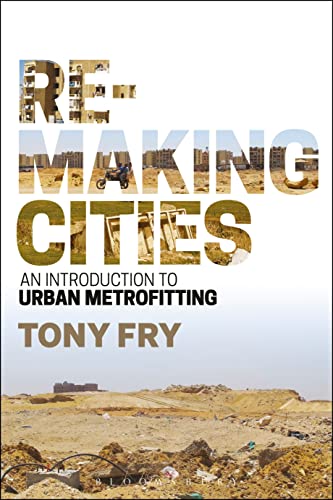

Remaking cities : an introduction to urban metrofitting / Tony Fry. txt
Editor: New York : Bloomsbury Academic, 2017Edición: 1st. edDescripción: 265 pages 24 cm illTipo de contenido:- text
- unmediated
- volume
- 9781474224154
- 9781474224161
- 307.1/216 23
- HT241 F797 2017
- ARC000000 | ARC010000 | ARC018000 | DES008000
| Imagen de cubierta | Tipo de ítem | Biblioteca actual | Biblioteca de origen | Colección | Ubicación en estantería | Signatura topográfica | Materiales especificados | Info Vol | URL | Copia número | Estado | Notas | Fecha de vencimiento | Código de barras | Reserva de ítems | Prioridad de la cola de reserva de ejemplar | Reservas para cursos | |
|---|---|---|---|---|---|---|---|---|---|---|---|---|---|---|---|---|---|---|
| Libro | CARIBET Biblioteca Arquitectura Colección General CARIBET | General HT241 F797 2017 (Navegar estantería(Abre debajo)) | 1 | Disponible | 91000000054056 | |||||||||||||
| Libro | CARIBET Biblioteca Arquitectura Colección General CARIBET | General HT241 F797 2017 (Navegar estantería(Abre debajo)) | 2 | Disponible | 91000000053876 |
Descripciones mejoradas de Syndetics:
Unprecedented challenges await the future of the world's cities. Accelerating population pressure, climate change, food insecurity, poverty and geopolitical instability - in the face of such problems our current attempts at producing a sustainable agenda for the world's cities appear fragmented and inadequate. Fresh thinking is needed.
In Remaking Cities , renowned design theorist Tony Fry brings a conceptual design perspective to the challenge of urban sustainability and resilience. In a typically far-sighted and provocative work, Fry presents ideas and actions for 'metrofitting' - a new kind of practice in architecture and urban design. Metrofitting expands the technological concept of retrofit up to the city scale, placing social, cultural, political and ethical concerns at its heart. Metrofitting is not about visionary technology, it is about transforming existing cities by combining available resources with human creativity, prompted by new thinking about new and old urban problems. It requires overcoming outmoded Eurocentric assumptions of what constitutes a city, rethinking their forms and structures, and understanding their metabolic processes and social and economic functions. This book provides conceptually strong practical approaches that will ultimately change the whole way we view cities and the way the urban future is designed.
Illustrated with international case studies of metrofitting in action, Remaking Cities will provoke and stimulate debate among architects, urban designers, and anyone concerned with the urban environment and social and cultural change.
Index
Bibliography
Machine generated contents note: -- Preface -- Introduction Part I: Contexts of Change: the limits of how we see cities today -- 1. Cities Now -- 2. Understanding the City as a Designing Event -- 3. What Designs a City? -- 4. The City, Humanity & Time -- 5. Urban Imperatives -- 6. New Imaginaries & the City -- 7. Other Worlds are Coming -- 8. Post-Sustainability Part II Contexts of Action -- 9. Metrofitting: Take Two -- 10. Metrofitting, Thinking Otherwise -- 11. Unlearning & Learning -- 12. Metrofitting & the De-signing of Design -- 13. Metrofitting & Urban Design Fictions -- 14. Space, Time, Dwelling & Movement -- 15. Metrofitting and Being in the City Part III Introduction to the case studies -- Cincinnati Case Study -- New Cairo Case Study Selected Bibliography -- Index.
"Unprecedented challenges await the future of the world's cities. Accelerating population pressure, climate change, food insecurity, poverty and geopolitical instability - in the face of such problems our current attempts at producing a sustainable agenda for the world's cities appear fragmented and inadequate. Fresh thinking is needed. In Remaking Cities, renowned design theorist Tony Fry brings a conceptual design perspective to the challenge of urban sustainability and resilience. In a typically far-sighted and provocative work, Fry presents ideas and actions for 'metrofitting' - a new kind of practice in architecture and urban design. Metrofitting expands the technological concept of retrofit up to the city scale, placing social, cultural, political and ethical concerns at its heart. Metrofitting is not about visionary technology, it is about transforming existing cities by combining available resources with human creativity, prompted by new thinking about new and old urban problems. It requires overcoming outmoded Eurocentric assumptions of what constitutes a city, rethinking their forms and structures, and understanding their metabolic processes and social and economic functions. This book provides conceptually strong practical approaches that will ultimately change the whole way we view cities and the way the urban future is designed. Illustrated with international case studies of metrofitting in action, Remaking Cities will provoke and stimulate debate among architects, urban designers, and anyone concerned with the urban environment and social and cultural change."-- Provided by publisher.
Tabla de contenidos provista por Syndetics
- Preface(p. vii)
- List of figures(p. x)
- Introduction(p. 1)
- Part 1 Contexts of Change: The Limits of How We See Cities Today(p. 19)
- 1 Cities now(p. 21)
- 2 Understanding the city as a designing event(p. 35)
- 3 What designs a city?(p. 49)
- 4 The city, humanity and time(p. 67)
- 5 Urban imperatives in the face of change(p. 81)
- 6 New imaginaries and the city(p. 95)
- 7 Other worlds are coming(p. 109)
- 8 Post-sustainability(p. 121)
- Part 2 Contexts of Action(p. 131)
- 9 Metrofitting: Take two(p. 133)
- 10 Metrofitting, thinking otherwise and a new foundation of change(p. 143)
- 11 Unlearning and learning(p. 153)
- 12 Metrofitting and the de-signing of design(p. 163)
- 13 Metrofitting and urban design fictions(p. 175)
- 14 Space, time, dwelling and movement(p. 185)
- 15 Metrofitting and being in the city(p. 195)
- Part 3 Introduction to the Case Studies(p. 205)
- 16 Cincinnati case study(p. 207)
- 17 New Cairo case study(p. 223)
- Selected bibliography(p. 247)
- Index(p. 255)