Imagen de Amazon.com

Portada de Syndetics
Imagen de OpenLibrary
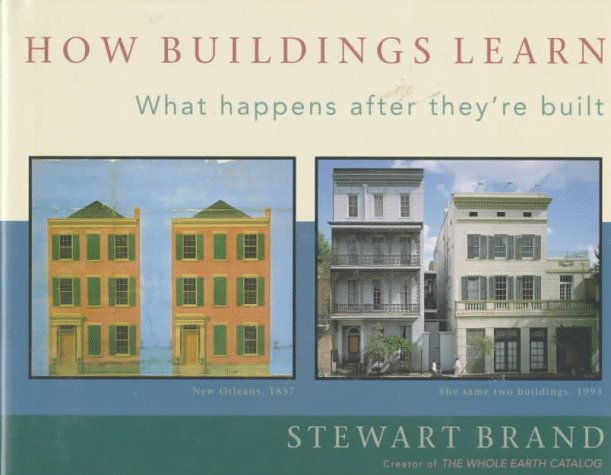
How buildings learn : what happens after they're built / Stewart Brand.
New York : Viking, Penguing Books, 1994Descripción: viii, 243 p. : ill. ; 23 x 28 cmTipo de contenido:- text
- unmediated
- volume
- 0670835153 (hc.)
- 9780140139969
- 0140139966 (pbk.)
- NA2542.4 B73 1994
| Imagen de cubierta | Tipo de ítem | Biblioteca actual | Biblioteca de origen | Colección | Ubicación en estantería | Signatura topográfica | Materiales especificados | Info Vol | URL | Copia número | Estado | Notas | Fecha de vencimiento | Código de barras | Reserva de ítems | Prioridad de la cola de reserva de ejemplar | Reservas para cursos | |
|---|---|---|---|---|---|---|---|---|---|---|---|---|---|---|---|---|---|---|
| Libro | CARIBET Biblioteca Arquitectura Colección General CARIBET | General NA2542.4 B73 1994 (Navegar estantería(Abre debajo)) | 1 | Disponible | Presupuesto 2017-2018 | 91000000054312 |
Total de reservas: 0
Descripciones mejoradas de Syndetics:
Kind of like the theory that a literary text is never closed, but is temporarily appropriated in its reading and rereading, Brand, of Whole Earth Catalog fame, proposes that buildings adapt best when constantly refined and reshaped by their occupants, and that architects can grow from artists of space into artists of time. As a resource or just as a read, Brand shows how to work with time rather than against it. He provides loads of examples and loads of photographs and drawings. 11x8.75" Annotation copyright by Book News, Inc., Portland, OR
Includes bibliographical references (p. 224-229) and index.
c.1: Amazon, Sep/12/03, 2004-138; c.2, gift, Aug/31/05.