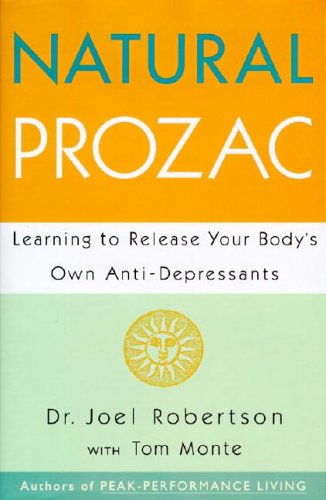
Imagen de portada de Amazon
Imagen de Amazon.com
Imagen de cubierta Syndetics
Portada de Syndetics
Imagen de OpenLibrary

Natural Prozac : learning to release your body's own anti-depressants / Joel C. Robertson with Tom Monte.

Por: Colaborador(es): Idioma: Español New York : HarperCollins Publishers, ©1997Descripción: xiii, 215 pages ; 25 cmISBN:
  • 0062513532
Tema(s): Clasificación CDD:
  • 616.85/2706 20
Clasificación LoC:
  • RC537 .R59 1997
Valoración
    Valoración media: 0.0 (0 votos)
Existencias
Imagen de cubierta Tipo de ítem Biblioteca actual Biblioteca de origen Colección Ubicación en estantería Signatura topográfica Materiales especificados Info Vol URL Copia número Estado Notas Fecha de vencimiento Código de barras Reserva de ítems Prioridad de la cola de reserva de ejemplar Reservas para cursos
Libro Biblioteca Encarnación Valdés Colección General bev 616.852706 R6491n (Navegar estantería(Abre debajo)) Disponible 80000002567686
Total de reservas: 0

Descripciones mejoradas de Syndetics:

Natural Prozac defines a bold new approach that uses the body's own natural chemistry to not only treat but also cure depression. Robertson shows readers how to develop a tailored program of diet and exercise to produce the chemicals needed to balance their own brain chemistry.

Extracto provisto por Syndetics

Natural Prozac Learning to Release Your Body's Own Anti-Depressants Chapter One The Challenges of Treating Depression Understanding the Brain and Depression In the blink of an eye, your brain interprets every experience you have and responds physically, intellectually, and emotionally, sending you a message that is at once infinitely complex and as simple as a single thought: "I feel good" or "happy" or "sad" or "safe" or "afraid" or "depressed." All your memories, abilities, talents, weaknesses, and potential as a human being lie within your brain. Everything you have ever experienced and learned --indeed, your very identity--is recorded in the tissues of a threepound sphere that is really neither very pretty nor very big. When you think about all the jobs your brain performs--well, your brain can get tired just thinking about them. A short list doesn't come close to being representative, though it does provide a basis for our awe. The brain is the regulating center of the body, interpreting billions of bits of information received from the body and your environment and then offering a staggering array of biological, intellectual, and emotional reactions too numerous and complex to name. The brain is the seat of consciousness, that state of awareness that tells us who we are, where we are, and what is happening around us. The brain is the receiver and interpreter of the senses. Everything we see, hear, touch, taste, and smell--no matter whether these stimuli come from within the body or outside it--is recorded and understood by the brain. `The brain controls all the involuntary actions that are responsible for maintaining life within the body, such as your heartbeat, nerve function, hormonal activity, immune function, assimilation of oxygen and nutrition, and elimination of waste. Every conscious and unconscious act that you perform is initiated by your brain. The brain is the seat of all intellectual activity. It also mediates all your emotional experiences and instinctive drives, such as hunger, rest, sleep, touch, sex, and companionship. And the brain is responsible for regulating your moods, including joy, hope, and depression. The American Medical Association Encyclopedia of Medicine defines depression as "feelings of sadness, hopelessness, pessimism, and a general loss of interest in life, combined with a sense of reduced emotional well-being." Other authorities state that depression is associated with sleep disturbances, with loss of concentration, energy, appetite, and activity, and with withdrawal from social behavior. People who are depressed typically feel hopeless and suffer from low self-esteem. Many lose weight; others gain weight. Some describe depression as a feeling of "emptiness" or "being numb." Some say that they have no feelings at all. Depression can suppress the immune system and result in generalized fatigue and exhaustion. Those who suffer from severe depression--a condition known as "major depression"--can experience hallucinations, delusions, and recurrent deep-seated guilt. It is easy to see that depression has a widespread effect on brain function. In fact, when we consider all the physical and psychological symptoms associated with depression and then review all the things that the brain does, we get a clear picture of how pervasive depression's effects can be on the brain and thus on your entire life. Depression, then, has its roots in this remarkable organ. Obviously, the challenge in treating depression is understanding this complex brain and trying to put it in balance. That is precisely why it should be done naturally. Every time we alter one effect artificially, we create change in another area. The challenge then becomes changing the negative brain issues specifically for me, not a depressed society or group of people, but me--my specific brain and my specific issues. This is a challenge, but it is not insurmountable. The connection between the dark cloud of depression and the physical brain lies in a set of neurotransmitters. These neurotransmitters are actually messenger chemicals that create feelings, stimulate thoughts, and trigger memories, just to name a few of the things they do. When you have an optimal amount of any single neurotransmitter in your brain, then you will experience the positive feelings associated with that neurotransmitter. A deficiency or excess of any single neurotransmitter usually results in the negative experiences associated with that brain chemical. In this book, I'm going to discuss five of these neurotransmitters: serotonin, dopamine, norepinephrine, acetylcholine, and gammaaminobutyric acid (or GABA). Of these five, three are of particular importance in depression: serotonin, norepinephrine, and dopamine. Your brain chemistry changes depending on your thoughts, expectations, and activities, the foods you eat, and the kinds of exercises you perform. In fact, every single physical act, thought, emotion, and image you call to mind triggers a corresponding change in your brain chemistry. Yet despite the fact that brain chemistry can undergo such significant changes, all of us-no matter what our mood is at any given moment--tend to maintain an internal chemical balance within pretty specific limits. We do this by maintaining a certain consistency in the ways we think, eat, and behave each day. I call this consistent pattern your brain-chemistry baseline , or simply your baseline . In, fact, you maintain your sense of identity by maintaining your baseline. Depression, as I've said, is the result of an imbalance in the chemical combination in your brain. This imbalance can become your baseline; in other words, some people's identities can become associated with depression. These people maintain their long-standing depression by sustaining the ways in which they think, eat, behave, and interact with others. Throughout this book, I will be talking about personality types that, taken to the extreme, support depression. You will have to look inside yourself to see whether these descriptions fit you and to determine which elements in your personality and behavior might be keeping you from achieving your optimal level of well-being. Natural Prozac Learning to Release Your Body's Own Anti-Depressants . Copyright © by Joel C. Robertson. Reprinted by permission of HarperCollins Publishers, Inc. All rights reserved. Available now wherever books are sold. Excerpted from Natural Prozac: Learning to Release Your Body's Own Anti-Depressants by Joel C. Robertson, Tom Monte All rights reserved by the original copyright owners. Excerpts are provided for display purposes only and may not be reproduced, reprinted or distributed without the written permission of the publisher.

Reseñas proporcionadas por Syndetics

Booklist Review

More than 21 million people worldwide use Prozac or other antidepressants. These medications alter levels of the brain chemicals that mediate mood. Brain chemistry can become imbalanced due to genetic causes, conditioned or learned patterns, or stressful or traumatic events. While medication often can change brain chemistry quickly and easily, up to two-thirds of depressed patients do not respond, experience harmful side effects, or need medication for only a short time. Perhaps more important, antidepressants do not affect the person's way of life, which often supports the imbalanced brain chemistry. Robertson, an expert in pharmacology, has treated depression for more than 20 years and here offers a drug-free approach based on altering brain chemistry with diet, behaviors, activities, and thoughts. His programs help the individual adopt certain behaviors and diets to restore harmony to brain chemistry. Only restoring the balance will ultimately cure depression. This comprehensive guide gives a new option to those suffering from depression and a wider understanding of the disorder's biochemical roots. --Penny Spokes
Compartir
logopucpr-y-vive

Contáctanos

¡Queremos saber de ti!

Tel. 787.841.2000 Ext. 1801

bibliotecavaldes@pucpr.edu

⁣Búscanos en las redes

© 2026 Desarrollado por Ignite Online • All Rights Reserved • Powered by Koha.