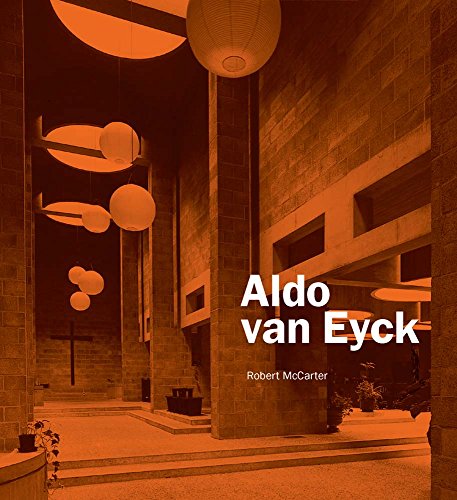

Aldo Van Eyck : Robert McCarter. txt
Editor: New Haven ; London : Yale University Press, [2015]Fecha de copyright: ♭2015Edición: NA1153.E95 M38 2015Descripción: xiii, 247 p. ill. (some color) ; plans (some color) ; 28 cmTipo de contenido:- text
- text
- unmediaded
- volume
- 0300153961
- 9780300153965
- NA1153.E95 M38 2015
- 21.62
| Imagen de cubierta | Tipo de ítem | Biblioteca actual | Biblioteca de origen | Colección | Ubicación en estantería | Signatura topográfica | Materiales especificados | Info Vol | URL | Copia número | Estado | Notas | Fecha de vencimiento | Código de barras | Reserva de ítems | Prioridad de la cola de reserva de ejemplar | Reservas para cursos | |
|---|---|---|---|---|---|---|---|---|---|---|---|---|---|---|---|---|---|---|
| Libro Col. General CARIBET | CARIBET Biblioteca Arquitectura Colección General CARIBET | General NA1153.E95 M38 2015 (Navegar estantería(Abre debajo)) | 1 | Disponible | Pres. 2016-2017 | 91000000053181 |
Descripciones mejoradas de Syndetics:
A comprehensive look at the life and work of one of the 20th century's most influential architects
Aldo van Eyck (1918-1999) was a Dutch architect, writer, and teacher who helped redefine Modern architecture in the second half of the 20th century. As an advocate for architecture's engagement with history, culture, climate, and the lived human experience of buildings and urban spaces, he created designs that privileged place and the daily rituals in the lives of its inhabitants over universal ideals. In this volume, enlivened by 300 illustrations from the Aldo van Eyck archive, Robert McCarter provides the first comprehensive study of van Eyck's 50-year career since his death, guiding readers through the architect's buildings and unrealized projects, with a focus on the interior spatial experience and on the design and construction processes. Highlighted projects include the Amsterdam Orphanage, the Roman Catholic Church in The Hague, and some of the hundreds of playgrounds he famously designed over the course of his career. McCarter also investigates how van Eyck's writings and lectures convey the importance of architecture in the everyday lives of people around the world and throughout history. By presenting his design work together with the principles on which it was founded, McCarter illuminates van Eyck's ethical interpretation of architecture's place in the world.
Includes bibliographical references (pages 241-242) and index.
Contents:
Viii Foreword The Mechanism of the Twentieth Century and the Architecture of Aldo van Eyck, by Herman Hertzberger --
Xii Acknowledgements --
Xiv Introduction Space in the image of man is place, and time in the image of man is occasion --
Chapter 1 The Vernacular of the Heart 4 --
Chapter 2 The Constant and Constantly Changing 24 --
Chapter 3 The Aesthetic of Number 52 --
Chapter 4 A House Is Like a Small City 74 --
Chapter 5 The Shape of the In-Between 114 --
Chapter 6 Labyrinthian Clarity 152 --
Chapter 7 Architecture as Built Homecoming 192 --
Conclusion If society has no form, how can architects build the counterform? 228 --
Notes 235 --
Selected Bibliography 241 --
Index 243 --
Illustration Credits 247 --
"Aldo van Eyck (1918-1999) was a Dutch architect, writer, and teacher who helped redefine Modern architecture in the second half of the 20th century. As an advocate for architecture's engagement with history, culture, climate, and the lived human experience of buildings and urban spaces, he created designs that privileged place and the daily rituals in the lives of its inhabitants over universal ideals. In this volume, enlivened by 300 illustrations from the Aldo van Eyck Archive, Robert McCarter provides the first comprehensive study of Van Eyck's 50-year career since his death, guiding readers through the architect's buildings and unrealized projects, with a focus on the interior spatial experience and on the design and construction processes..." --Front jacket flap