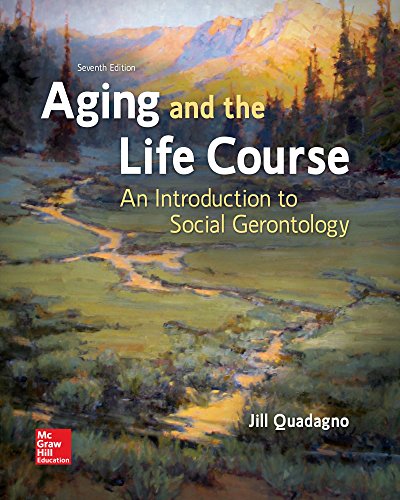

Aging and the life course : Jill Quadagno. an introduction to social gerontology /
Idioma: Español Detalles de publicación: Dubuque, IA : McGraw-Hill Education, 2017.Edición: Seventh editionDescripción: xxi, 441 pages : Illustrations ; 24 cmTipo de contenido:- 9781259870446 (hardback)
- 305.26 23
- HQ1061 .Q33 2017
- SOC026000
| Imagen de cubierta | Tipo de ítem | Biblioteca actual | Biblioteca de origen | Colección | Ubicación en estantería | Signatura topográfica | Materiales especificados | Info Vol | URL | Copia número | Estado | Notas | Fecha de vencimiento | Código de barras | Reserva de ítems | Prioridad de la cola de reserva de ejemplar | Reservas para cursos | |
|---|---|---|---|---|---|---|---|---|---|---|---|---|---|---|---|---|---|---|
| Libro | Biblioteca de Mayagüez Colección General mb | HQ1061 .Q33 2017 (Navegar estantería(Abre debajo)) | c.1 | Disponible | 50000003269551 |
Descripciones mejoradas de Syndetics:
Quadagno's groundbreaking text, Aging and the Life Course: An Introduction to Social Gerontology , examines the relationship between quality of life in old age and its experiential catalysts. Throughout the text an emphasis is placed on the intersectionality of race, class, gender, and culture, and how these classifications affect quality of life. Students will come away with a broad background for understanding crucial and current policy debates.
Digital
* Connect®--The Connect Suite effectively engages students in the course so they are better prepared for class, more active in discussion, and achieve better results. Its innovative and adaptive technology addresses a wide variety of student and instructor needs with a rich database of assignable and assessable activities, each attached to learning objectives. Connect, part of the Connect suite, is a web-based assignment and assessment platform that features a number of powerful tools that make managing assignments easier for instructors and learning and studying more engaging and efficient for students.
*Connect InsightTM--As part of the Connect Suite, InsightTM puts real-time analytics in your hands so you can take action early and keep struggling students from falling behind. Designed for your tablet or desktop computer, Insight is a series of visual displays providing at-a-glance information regarding how your section, students, and assignments are doing.
* SmartBook--As part of the Connect Suite, SmartBook is the first and only adaptive reading and learning experience that changes the way students read. It creates a personalized, interactive reading environment like no other by highlighting important concepts, while helping students identify their strengths and weaknesses. This ensures that he or she is focused on the content needed to close specific knowledge gaps, while it simultaneously promotes long term learning.
* LearnSmart--As part of the Connect Suite, LearnSmart is an adaptive learning program designed to help students learn faster, study smarter, and retain more knowledge for greater success. Millions of students have answered billions of questions in LearnSmart, making it the most widely used tool that's proven to strengthen memory recall, retain student attendance, and boost grades.
Revised edition of the author's Aging and the life course, c2014.
Includes bibliographical references and index.
Part One: DEFINING THE FIELD -- 1. The Field of Social Gerontology 2. Life Course Transitions 3. Theories of Aging 4. Demography of Aging -- Part Two: INTERDISCIPLINARY PERSPECTIVES ON AGING -- 5. Old Age and the Welfare State 6. Biological Perspectives on Aging 7. Psychological Perspectives on Aging -- Part Three: SOCIAL ASPECTS OF AGING -- 8. Family Relationships and Social Support Systems 9. Living Arrangements 10. Work and Retirement -- Part Four: HEALTH ASPECTS OF LATER LIFE -- 11. Health and Health Care 12. Caring for the Frail Elderly 13. Dying, Death, and Bereavement -- Part Five: AGING AND SOCIETY -- 14. The Economics of Aging 15. Poverty and Inequality 16. The Politics of Aging.
"Quadagno's groundbreaking text, Aging and the Life Course: An Introduction to Social Gerontology, examines the relationship between quality of life in old age and its experiential catalysts. Throughout the text an emphasis is placed on the intersectionality of race, class, gender, and culture, and how these classifications affect quality of life. Students will come away with a broad background for understanding crucial and current policy debates. Digital Connect -- The Connect Suite effectively engages students in the course so they are better prepared for class, more active in discussion, and achieve better results. Its innovative and adaptive technology addresses a wide variety of student and instructor needs with a rich database of assignable and assessable activities, each attached to learning objectives. Connect, part of the Connect suite, is a web-based assignment and assessment platform that features a number of powerful tools that make managing assignments easier for instructors and learning and studying more engaging and efficient for students. Connect InsightTM -- As part of the Connect Suite, InsightTM puts real-time analytics in your hands so you can take action early and keep struggling students from falling behind. Designed for your tablet or desktop computer, Insight is a series of visual displays providing at-a-glance information regarding how your section, students, and assignments are doing. SmartBook -- As part of the Connect Suite, SmartBook is the first and only adaptive reading and learning experience that changes the way students read. It creates a personalized, interactive reading environment like no other by highlighting important concepts, while helping students identify their strengths and weaknesses. This ensures that he or she is focused on the content needed to close specific knowledge gaps, while it simultaneously promotes long term learning. LearnSmart -- As part of the Connect Suite, LearnSmart is an adaptive learning program designed to help students learn faster, study smarter, and retain more knowledge for greater success. Millions of students have answered billions of questions in LearnSmart, making it the most widely used tool that's proven to strengthen memory recall, retain student attendance, and boost grades"-- Provided by publisher.
Tabla de contenidos provista por Syndetics
- Part 1 Defining the Field
- 1 The Field of Social Gerontology(p. 2)
- The Field of Gerontology(p. 4)
- Defining the Terms(p. 4)
- Successful Aging(p. 4)
- Conceptual Issues in Research on Aging(p. 4)
- Defining Old Age(p. 5)
- Cohorts and Generations(p. 7)
- Ageism(p. 11)
- Forms of Ageism(p. 11)
- Perpetuating Ageism through the Media(p. 13)
- A Profile of Older Americans(p. 16)
- Health(p. 16)
- Racial and Ethnic Composition(p. 16)
- Marital Status(p. 16)
- Income and Poverty(p. 17)
- Education(p. 18)
- Careers in Social Gerontology(p. 18)
- The Gerontological Specialist(p. 18)
- Expanding Career Opportunities(p. 20)
- Becoming a Gerontological Specialist(p. 21)
- 2 Life Course Transitions(p. 24)
- The Life Course Framework(p. 26)
- Methodological Issues in Research on the Life Course(p. 27)
- Age, Period, and Cohort Effects(p. 27)
- Cross-Sectional Research(p. 28)
- Longitudinal Research(p. 29)
- Qualitative Research(p. 30)
- Identifying Life Course Events(p. 30)
- The Timing of Life Course Events(p. 30)
- The Duration of Life Course Events(p. 32)
- The Sequencing of Life Course Events(p. 33)
- The Effect of Early Experiences on Adult Outcomes(p. 34)
- Demographic Change and Middle Age(p. 36)
- The Theory of Cumulative Disadvantage(p. 37)
- How Government Influences the Life Course(p. 38)
- 3 Theories of Aging(p. 44)
- The Origins of Social Gerontology(p. 47)
- Micro Theories of Aging(p. 47)
- Psychosocial Theories(p. 47)
- The Individual and the Social System(p. 51)
- Social Constructionism(p. 54)
- Macro Theories of Aging(p. 55)
- Age and Social Status(p. 55)
- Theories of Power and Inequality(p. 61)
- Critical Gerontology(p. 64)
- 4 Demography of Aging(p. 68)
- Sources of Population Data(p. 70)
- Individual Aging Processes(p. 70)
- Lifespan(p. 70)
- Life Expectancy(p. 71)
- The Sex Ratio(p. 71)
- Population Aging(p. 71)
- The Demographic Transition(p. 71)
- International Variations in Population Aging(p. 74)
- Dependency Ratios(p. 75)
- Population Trends in the U.S.(p. 76)
- The Changing Age Structure(p. 76)
- Fertility(p. 77)
- Mortality(p. 78)
- Migration(p. 81)
- Dependency Ratio(p. 83)
- Life Expectancy(p. 84)
- The U.S. Sex Ratio(p. 84)
- Part 2 Interdisciplinary Perspectives on Aging
- 5 Old Age and the Welfare State(p. 90)
- Social Programs of the Welfare State(p. 92)
- Public Assistance(p. 92)
- Social Insurance(p. 93)
- Fiscal Welfare(p. 93)
- The Organization of the Welfare State in the U.S.(p. 94)
- Income Support(p. 95)
- Health Care(p. 99)
- Support for the Disabled(p. 102)
- Long-Term Care(p. 103)
- Social Services(p. 105)
- The Age versus Need Debate(p. 107)
- 6 Biological Perspectives on Aging(p. 112)
- Theories of Biological Aging(p. 114)
- Environmental Theories of Aging(p. 114)
- Developmental/Genetic Theories of Aging(p. 115)
- The Aging Body(p. 117)
- Aging of the Exterior Body: Skin and Hair(p. 120)
- Aging of the Nervous System(p. 121)
- Aging of the Sensory Organs(p. 123)
- Aging of the Skeletal System: Bones, Cartilage, and Connective Tissues(p. 129)
- Aging of the Muscular System: Muscle Mass and Strength(p. 132)
- Aging of the Reproductive System(p. 132)
- Aging of the Cardiovascular System: Heart and Blood Vessels(p. 134)
- 7 Psychological Perspectives on Aging(p. 140)
- Aging and Cognitive Change(p. 142)
- Creativity and Wisdom(p. 142)
- Intelligence(p. 143)
- Learning and Memory(p. 146)
- Learning and Information Technology(p. 149)
- Mental Disorders(p. 150)
- Dementias(p. 150)
- Depression(p. 154)
- Personality and Adaptation(p. 155)
- Personality and Aging(p. 155)
- Personality and Health(p. 156)
- Personality and Coping(p. 156)
- Stage Theories of Adult Development(p. 157)
- Erikson's Theory of Psychosocial Development(p. 157)
- Transitions through Adulthood(p. 158)
- An Evaluation of Stage Theories(p. 162)
- Part 3 Social Aspects of Aging
- 8 Family Relationships and Social Support Systems(p. 166)
- The Social Support System(p. 168)
- Defining the Concept of Social Support(p. 168)
- Gender Differences in Social Support Systems(p. 169)
- Changing Family Structure and Social Support Systems(p. 169)
- Marital Status in Later Life(p. 170)
- The Later Stages of Marriage(p. 171)
- Marital Satisfaction over the Life Course(p. 171)
- Marital Quality and Health(p. 172)
- Marriage and Sexual Activity(p. 173)
- Gender and Marriage(p. 174)
- Divorce in Later Life(p. 174)
- Parent-Child Relationships(p. 175)
- Social Interaction and Exchange(p. 175)
- The Effect of Divorce(p. 179)
- The Effect of Remarriage(p. 180)
- The Unmarried Elderly(p. 180)
- Sibling Relationships in Later Life(p. 180)
- Godparenthood(p. 181)
- Styles of Grandparenting(p. 181)
- Grandparents Raising Grandchildren(p. 182)
- The Quality of the Grandparent-Grandchild Relationship(p. 184)
- The Grandparent Career(p. 184)
- Grandparenting after Divorce(p. 185)
- The Families of Older Gays and Lesbians(p. 186)
- Social Support for LGST Individuals(p. 188)
- Friends and Social Support Systems(p. 188)
- Dating in Later Life(p. 189)
- 9 Living Arrangements(p. 194)
- Household Structure(p. 196)
- To Move or to Stay?(p. 197)
- Geographic Mobility(p. 197)
- Aging in Place(p. 198)
- Home Ownership(p. 199)
- Housing Quality(p. 200)
- Alternative Living Arrangements(p. 203)
- Assisted Living(p. 203)
- Continuing Care Retirement Communities(p. 207)
- 10 Work and Retirement(p. 214)
- Trends in Labor Force Participation(p. 215)
- The Decline of Career Employment(p. 215)
- Labor Force Participation of Men(p. 216)
- Labor Force Participation of Women(p. 217)
- Racial and Ethnic Differences in Labor Force Participation(p. 218)
- International Trends in Labor Force Participation(p. 218)
- The Transition from Work to Retirement(p. 219)
- Bridge Jobs(p. 219)
- Phased Retirement(p. 220)
- Contingent Work(p. 222)
- Unemployment among Older Workers(p. 222)
- Factors Affecting Labor Force Withdrawal(p. 223)
- Economic Incentives(p. 223)
- Retiree Health Benefits(p. 224)
- Age Discrimination(p. 224)
- Retirement as an Individual Decision(p. 224)
- Future Trends in Retirement(p. 228)
- Being Retired(p. 229)
- Satisfaction with Retirement(p. 229)
- Daily Activities and Health(p. 230)
- Volunteering(p. 231)
- Religious Participation(p. 233)
- Part 4 Health Aspects of Later Life
- 11 Health and Health Care(p. 238)
- Adding Years to Life or Life to Years?(p. 240)
- Stages of the Epidemiologic Transition(p. 240)
- The Compression of Morbidity Thesis(p. 241)
- Social Determinants of Health(p. 242)
- Health Lifestyles(p. 242)
- Social Support Systems(p. 245)
- Socioeconomic Status(p. 246)
- Gender(p. 249)
- Race and Ethnicity(p. 249)
- The Elderly in the Health Care System(p. 252)
- Health Care Providers and the Elderly(p. 252)
- The Organization of Health Care(p. 252)
- 12 Caring for the Frail Elderly(p. 258)
- Family Care(p. 260)
- A Profile of Caregiving(p. 260)
- Gender Differences in Caregiving(p. 261)
- Caregiver Burden(p. 264)
- Work and Caregiving(p. 265)
- Caregiving and Family Relationships(p. 266)
- Home Care(p. 269)
- Home and Community-Based Services(p. 269)
- Race, Ethnicity, and Long-Term Care(p. 272)
- Private Long-Term-Care Insurance(p. 272)
- Nursing Home Care(p. 273)
- Staff Turnover in Nursing Homes(p. 273)
- Access to Nursing Home Care(p. 274)
- The Nursing Home as Total Institution(p. 275)
- 13 Dying, Death, and Bereavement(p. 284)
- Cross-Cultural and Historical Perspectives on Death(p. 286)
- Death in Non-Western Cultures(p. 286)
- Preparing for Death(p. 287)
- A Stage Theory of Dying(p. 288)
- Managing Death(p. 289)
- The Right to Die(p. 289)
- Hospice Care(p. 293)
- Bereavement(p. 296)
- Widowhood(p. 296)
- The Death of a Parent(p. 301)
- Part 5 Aging and Society
- 14 The Economic of Aging(p. 306)
- Aging Policy and the Economy(p. 308)
- The Changing Economic Status of the Aged(p. 308)
- Today's Older Generation(p. 309)
- Income inequality in Later Life(p. 311)
- The Aging of the Baby Boomers(p. 311)
- Public Income Sources(p. 313)
- The Status of Social Security(p. 313)
- The Future of the Trust Fund(p. 313)
- Restoring the Trust Fund(p. 313)
- Means Testing(p. 316)
- Privatization(p. 317)
- Private Sources of Income in Old Age(p. 318)
- Employer Pensions(p. 318)
- Personal Savings(p. 322)
- 15 Poverty and Inequality(p. 328)
- Aging and Social Stratification(p. 330)
- The Theory of Cumulative Disadvantage(p. 330)
- Income and Poverty(p. 331)
- Gender Inequality in Old Age(p. 333)
- Patterns of Gender inequality(p. 333)
- Inequality in Social Security Income(p. 335)
- Inequality in Supplemental
- Security Income(p. 339)
- Inequality in Employer Pension Coverage(p. 341)
- Race, Ethnicity, and Inequality(p. 342)
- Racial and Ethnic Differences in Poverty(p. 342)
- Racial and Ethnic Variations among the Aged(p. 342)
- 16 The Politics of Aging(p. 352)
- Political Activism among the Elderly(p. 353)
- Voting(p. 354)
- Interest Group Politics(p. 358)
- Social Movement Politics(p. 361)
- The Aged as Political Office Holders(p. 364)
- Other Forms of Political Involvement(p. 366)
- Political Debates about the Aged(p. 366)
- The Deserving Elderly(p. 366)
- The Generational Equity Debate(p. 367)
- The Entitlement Crisis(p. 368)
- The Ownership Society(p. 369)
- Glossary(p. 372)
- References(p. 382)
- Author Index(p. 415)
- Subject Index(p. 425)