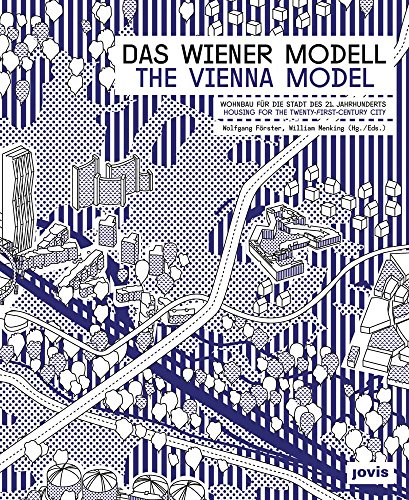

Das Wiener Modell : Wohnbau für die Stadt des 21. Jahrhunderts = The Vienna model : housing for the twenty-first-century city. / Wolfgang Förster, William Menking (Hg.) ; Texte: Sabine Bitter [and 4 others] ; Kurztexte: Susanne Bauer [and 8 others] ; Übertsetzung: Patrick Hubenthal, Christina Bösel ; Übersetzung Kurztexte: Dawn Michelle d'Atri, Steven Lindberg, Thomas Raab. txt
Editor: Berlin : Jovis , 2016Descripción: 246 p. ill. ;col. ;maps. ; plans. ; 28 cmTipo de contenido:- text
- unmediaded
- volume
- 9783868594348
- 3868594345
- Vienna model : housing for the twenty-first-century city. / txt
- 724.6
- NA7345.V6 F67 2016
| Imagen de cubierta | Tipo de ítem | Biblioteca actual | Biblioteca de origen | Colección | Ubicación en estantería | Signatura topográfica | Materiales especificados | Info Vol | URL | Copia número | Estado | Notas | Fecha de vencimiento | Código de barras | Reserva de ítems | Prioridad de la cola de reserva de ejemplar | Reservas para cursos | |
|---|---|---|---|---|---|---|---|---|---|---|---|---|---|---|---|---|---|---|
| Libro | CARIBET Biblioteca Arquitectura Colección General CARIBET | General NA7345.V6 F67 2016 (Navegar estantería(Abre debajo)) | 1 | Disponible | 91000000050104 |
Descripciones mejoradas de Syndetics:
The city of Vienna has achieved extraordinary milestones in public housing: today, over 60% of the population lives in subsidized housing, and the city itself owns 220,000 rental units--about 25% of the total housing stock. Another 200,000 affordable housing units are owned by limited-profit housing associations. The city is clearly in control of the housing market. This stands in stark contrast to the US, where the private market is the primary provider of housing. Vienna's successful model dates back to the days of "Red Vienna," when the socialist government took an active interest in designing for the masses. That interest has since evolved into a housing policy that has produced works by architects such as Josef Hoffmann, Adolf Loos and Richard Neutra. The Vienna Model shines the spotlight on 60 projects from the last 100 years, with a focus on the public art that has complemented the city's housing since the First Republic. Around 250 illustrations and accompanying texts provide a comprehensive overview of the "Vienna Model."
Include index
Vorwort Preface Michael Ludwig --
Warum Wiener Modell? Why Is Vienna a Model City? Wolfgang Fewer --
Bautragerwettbewerbe – das „4-Saulen-Modell" Developer Competitions—"The Four Pillar Model" --
IBA_WIEN – Neues soziales Wohnen IBA_WIEN: New Social Housing --
Innovation im Wohnungsbau Innovation in Housing William Menking --
Mehr als nur vier Wande More Than Just Four Walls Martina Fruhwirth --
Eine Stadt sieht sich selbst A City Sees Itself Sabine Bitter & Helmut Weber --
Kontinuitat und Innovation Continuity and Innovation --
Soziale Durchmischung Social Mixing --
ErschlieBung neuer Stadtgebiete Developing New Urban Areas --
Diversitat und Integration Diversity and Integration --
BiirgerInnenbeteiligung Citizen Participation --
Umwelt- und Klimaschutz Climate and Environmental Protection --
Nutzung und Gestaltung offentlicher Raume Use and Design of Public Spaces --
Bestandsentwicklung Developing Existing Housing Stock --
Bauen am Stadtrand Building on the Outskirts --
Die Rolle der Kunst The Role of Art --
Biografien Biographies --
Dank Acknowledgements --
Impressum Imprint --
Building on urbanistic and social aspects, Vienna has not only constructed new housing projects with distinctive qualities throughout the city but also founded and revitalized entire quarters. With their historical roots in "Red Vienna," these concepts signal dynamic opportunities to enhance the quality of life in a contemporary metropolis by creating model living environments. The Vienna Model: Housing for the Twenty-First-Century City shines the spotlight on sixty prototypical projects from the last hundred years, with a special focus on the public art that has complemented the city's housing since the First Republic. Around 300 illustrations and accompanying texts provide a comprehensive overview of the "Vienna Model."