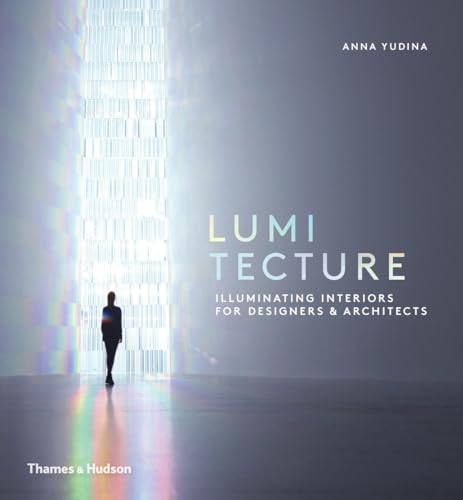

Lumitecture : illuminating interiors for designers and architects / Anna Yudina. txt
Idioma: Español Editor: New York, NY : Thames & Hudson, 2016Descripción: 254 pages : illustration (some color) 25 cmTipo de contenido:- text
- unmediated
- volume
- 9780500518342 (hardcover)
- NA2155.5.L5 Y83 2016
| Imagen de cubierta | Tipo de ítem | Biblioteca actual | Biblioteca de origen | Colección | Ubicación en estantería | Signatura topográfica | Materiales especificados | Info Vol | URL | Copia número | Estado | Notas | Fecha de vencimiento | Código de barras | Reserva de ítems | Prioridad de la cola de reserva de ejemplar | Reservas para cursos | |
|---|---|---|---|---|---|---|---|---|---|---|---|---|---|---|---|---|---|---|
| Libro | CARIBET Biblioteca Arquitectura Colección General CARIBET | General NA2115.5 L5 Y83 2016 (Navegar estantería(Abre debajo)) | 1 | Disponible | 91000000048819 |
Descripciones mejoradas de Syndetics:
A global survey of the most exciting lighting designs for interior spaces, featuring the latest interactive technologies, energy-efficient systems, and otherworldly experiences
The role of light in architecture extends well beyond practical requirements. Light can create an environment, saturate a space with emotion, and compose spatial illusions. When manipulated in the right ways, light makes an architectural space livable, shapes it, and guides the inhabitant through it. As our homes and buildings become increasingly interactive and connected to the "internet of things" (where physical objects such as a lamp or microwave are programmed in the "cloud"), the creative possibilities for lighting are growing exponentially.
This timely publication captures the most imaginative ideas for the use of light in homes and buildings. Some 200 projects are organized into three sections: lighting that transforms space, lighting that alters the experience of time, and lighting that evokes emotion or psychological change. Projects range from design solutions--practical applications and techniques for improving the ambience and function of our spaces for living and working--to highly experimental or immersive experiences that induce physiological responses or use entirely new sources of light, such as bioluminescence or rarefied gasses.
The role of light in architecture extends well beyond practical requirements. Light can create an environment, saturate a space with emotion, and compose spatial illusions. When manipulated in the right ways, light makes an architectural space livable, shapes it, and guides the inhabitant through it. As our homes and buildings become increasingly interactive and connected to the "internet of things" (where physical objects such as a lamp or microwave are programmed in the "cloud"), the creative possibilities for lighting are growing exponentially.
This timely publication captures the most imaginative ideas for the use of light in homes and buildings. Some 200 projects are organized into three sections: lighting that transforms space, lighting that alters the experience of time, and lighting that evokes emotion or psychological change. Projects range from design solutions-- practical applications and techniques for improving the ambience and function of our spaces for living and working--to highly experimental or immersive experiences that induce physiological responses or use entirely new sources of light, such as bioluminescence or rarefied gasses.