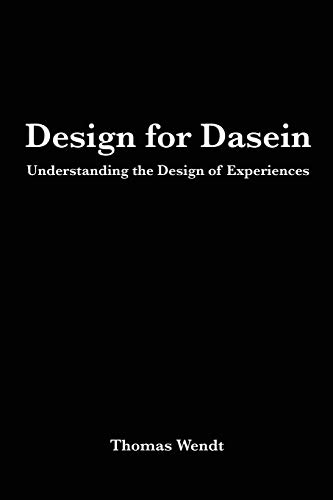

Desingn for dasein understanding the design of experiences
Idioma: Inglés Detalles de publicación: Lexington, KY Thomas Wendt 2015Descripción: 183p. ill 23cmISBN:- 9781506166537
- NC703 W463 2015
| Imagen de cubierta | Tipo de ítem | Biblioteca actual | Biblioteca de origen | Colección | Ubicación en estantería | Signatura topográfica | Materiales especificados | Info Vol | URL | Copia número | Estado | Notas | Fecha de vencimiento | Código de barras | Reserva de ítems | Prioridad de la cola de reserva de ejemplar | Reservas para cursos | |
|---|---|---|---|---|---|---|---|---|---|---|---|---|---|---|---|---|---|---|
| Libro | CARIBET Biblioteca Arquitectura Colección General CARIBET | NC703W463 2015 (Navegar estantería(Abre debajo)) | Disponible | 91000000041178 |
Descripciones mejoradas de Syndetics:
This book draws from philosophy, psychology, object studies, and design theory to articulate the intersection of design thinking and human experience.
When designers talk about related fields, they often mention anthropology, cognitive science, psychology, information science, etc., but philosophy is usually left out. Why? Why don't we talk about philosophy as a contributor to the understanding of design, especially when phenomenology, the philosophical study of human experience, has contributed so much to our understanding of the interrelation between humans and technology?
Design for Dasein attempts to apply phenomenological thinking to design in order to further inform what designers (especially what we might call "experience designers") do in their day to day work. Many activities designers perform every day can be traced back to insights from phenomenology. Activities like user testing, prototyping, sketching, interaction models, personas, interviewing, ethnography, participatory design, and processes like design thinking and lean UX all have phenomenological roots. The book will highlight these connections and explore how they contribute to designing better experiences, providing the reader with new ways of thinking about his or her work, and new strategies for designing systems for both present and future scenarios.
Includes index
Includes bibliographial references (p.166).