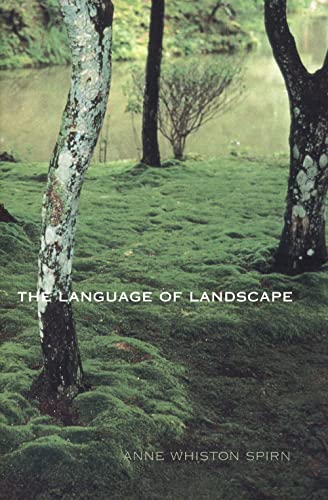

The language of landscape.
Idioma: Inglés Detalles de publicación: New Haven, Conn. Yale University Press 1998.Descripción: 326 p. ill. 24 cmISBN:- 9780300082944
- 712.21
- SB472.S685 1998.
| Imagen de cubierta | Tipo de ítem | Biblioteca actual | Biblioteca de origen | Colección | Ubicación en estantería | Signatura topográfica | Materiales especificados | Info Vol | URL | Copia número | Estado | Notas | Fecha de vencimiento | Código de barras | Reserva de ítems | Prioridad de la cola de reserva de ejemplar | Reservas para cursos | |
|---|---|---|---|---|---|---|---|---|---|---|---|---|---|---|---|---|---|---|
| Libro | CARIBET Biblioteca Arquitectura Colección General CARIBET | SB472.S685 1998 (Navegar estantería(Abre debajo)) | Disponible | 91000000041194 |
Descripciones mejoradas de Syndetics:
This eloquent and powerful book combines poetry and pragmatism to teach the language of landscape. Anne Whiston Spirn, author of the award-winning The Granite Garden: Urban Nature and Human Design , argues that the language of landscape exists with its own syntax, grammar, and metaphors, and that we imperil ourselves by failing to learn to read and speak this language. To understand the meanings of landscape, our habitat, is to see the world differently and to enable ourselves to avoid profound aesthetic and environmental mistakes.
Offering examples that range across thousands of years and five continents, Spirn examines urban, rural, and natural landscapes. She discusses the thought of renowned landscape authors--Thomas Jefferson, Frank Lloyd Wright, Frederick Law Olmsted, Lawrence Halprin--and of less well known pioneers, including Australian architect Glenn Murcutt and Danish landscape artist C. Th. Sørensen. She discusses instances of great landscape designers using landscape fluently, masterfully, and sometimes cynically. And, in a probing analysis of the many meanings of landscape, Spirn shows how one person's ideal landscape may be another's nightmare, how Utopian landscapes can be dark. There is danger when we lose the connection between a place and our understanding of it, Spirn warns, and she calls for change in the way we shape our environment, based on the notions of nature as a set of ideas and landscape as the expression of action and ideas in place.
Includes index.
Includes bibliographical references.
This book combines poetry and pragmatism to teach the language of landscape. Anne Whiston Spirn argues that the language of landscape exists with its own grammar and metaphors, and that we imperil ourselves by failing to learn to read and speak this language. To understand the meanings of landscape, our habitat, is to see the world differently and to enable ourselves to avoid profound environmental and aesthetic mistakes