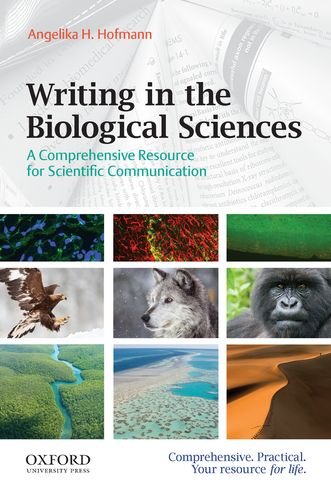

Writing in the biological sciences a comprehensive resource for scientific communication Angelika H. Hofmann, Ph.D., Yale University.
Detalles de publicación: New York Oxford University Press 2013.Descripción: xiv, 290 pages illustrations 24 cm Tipo de medio:- 9780199765287 (pbk. : acid-free paper)
- 808.06/657 23
- QH304 .H64 2013
| Imagen de cubierta | Tipo de ítem | Biblioteca actual | Biblioteca de origen | Colección | Ubicación en estantería | Signatura topográfica | Materiales especificados | Info Vol | URL | Copia número | Estado | Notas | Fecha de vencimiento | Código de barras | Reserva de ítems | Prioridad de la cola de reserva de ejemplar | Reservas para cursos | |
|---|---|---|---|---|---|---|---|---|---|---|---|---|---|---|---|---|---|---|
| Libro | Biblioteca Encarnación Valdés Colección General bev | 808.06657 H7131w (Navegar estantería(Abre debajo)) | Disponible | 80000002538497 |
Descripciones mejoradas de Syndetics:
Comprehensive. Practical. Your resource for life.Practical and easy to use, Writing in the Biological Sciences: A Comprehensive Resource for Scientific Communication presents students with all of the techniques and information they need in order to communicate their scientific ideas, insights, and discoveries effectively. Angelika H. Hofmann introduces students to the underlying principles and guidelines of professional scientific writing and then teaches them how to apply these methods when composing essential forms of scientific writing and communication.A Companion Website contains instructor's lecture slides and all images from the text in PowerPoint format (www.oup.com/us/hofmann).Ideal as a free-standing textbook for courses on writing in the biological sciences - as well as an accompanying text or reference guide in courses and laboratories with writing-intensive components - this indispensable handbook gives students the tools they need to succeed in their undergraduate science careers and beyond.
Includes bibliographical references (pages 277-280) and index.
Tabla de contenidos provista por Syndetics
- Foreword(p. ix)
- Preface(p. xi)
- Part I Scientific Writing Basics(p. 1)
- Chapter 1 Scientific Communication(p. 3)
- 1.1 Importance of Scientific Communication(p. 3)
- 1.2 Readers and Writers(p. 4)
- 1.3 Necessary Basic Skills(p. 5)
- 1.4 About this Book(p. 5)
- Chapter 2 Literature Sources(p. 7)
- 2.1 Searching the Literature(p. 7)
- 2.2 Selecting References(p. 9)
- 2.3 Citing References(p. 10)
- 2.4 Common Reference Styles(p. 13)
- 2.5 Managing Sources(p. 16)
- 2.6 Plagiarism and Taking Notes(p. 16)
- Summary(p. 21)
- Problems(p. 21)
- Chapter 3 Fundamentals of Scientific Writing, Part I-Style(p. 24)
- 3.1 Word Choice and Location(p. 25)
- 3.2 Sentences and Technical Style(p. 32)
- Summary of Writing Principles, Part I-Style(p. 40)
- Problems(p. 41)
- Chapter 4 Fundamentals of Scientific Writing, Part II-Composition(p. 44)
- 4.1 Paragraph Structure(p. 45)
- 4.2 Paragraph Organization(p. 47)
- 4.3 Condensing(p. 52)
- Summary of Writing Principles, Part II-Compositions(p. 55)
- Problems(p. 55)
- Part II Working with Data(p. 59)
- Chapter 5 Data, Figures, and Tables(p. 61)
- 5.1 General Guidelines(p. 61)
- 5.2 From Data to Results(p. 64)
- 5.3 Figures, Their Legends, and Their Titles(p. 66)
- 5.4 Tables and Their Titles(p. 73)
- 5.5 Software Resources for Figures and Tables(p. 75)
- 5.6 Basics of Statistical Analysis(p. 76)
- 5.7 Useful Resources for Statistical Analysis(p. 79)
- 5.8 Checklist(p. 79)
- Summary(p. 80)
- Problems(p. 81)
- Part III Introductory Writing(p. 85)
- Chapter 6 Laboratory Reports and Research Papers(p. 87)
- 6.1 Overall(p. 87)
- 6.2 Before You Get Started(p. 87)
- 6.3 Content and Organization(p. 88)
- 6.4 Title and Title Page(p. 90)
- 6.5 Abstract(p. 92)
- 6.6 Introduction(p. 94)
- 6.7 Materials and Methods(p. 98)
- 6.8 Results(p. 100)
- 6.9 Discussion(p. 104)
- 6.10 References(p. 108)
- 6.11 Acknowledgments(p. 108)
- 6.12 Checklist(p. 108)
- Summary(p. 110)
- Problems(p. 110)
- Chapter 7 Revising and Editing(p. 114)
- 7.1 General(p. 114)
- 7.2 Revising the First Draft(p. 114)
- 7.3 Subsequent Drafts(p. 117)
- 7.4 Checklist for Revising(p. 118)
- 7.5 Editing Someone Else's Manuscript(p. 119)
- 7.6 Checklist for Editing Someone Else's Manuscript(p. 120)
- 7.7 Submission and the Review Process(p. 122)
- Summary(p. 124)
- Chapter 8 Sample Reports(p. 125)
- 8.1 General(p. 125)
- 8.2 Sample Weekly Lab Report(p. 125)
- 8.3 Sample Project Paper(p. 130)
- Chapter 9 Reading, Summarizing, and Critiquing a Scientific Research Article(p. 146)
- 9.1 Content of a Scientific Research Article(p. 146)
- 9.2 Reading a Research Paper(p. 147)
- 9.3 Writing a Summary of a Research Paper(p. 148)
- 9.4 Critiquing a Research Paper(p. 150)
- Summary(p. 151)
- Chapter 10 Term Papers and Review Articles(p. 153)
- 10.1 General Advice(p. 153)
- 10.2 Source Material(p. 154)
- 10.3 Organization(p. 154)
- 10.4 Abstract(p. 156)
- 10.5 Introduction(p. 157)
- 10.6 Main Analysis Section(p. 159)
- 10.7 Conclusion(p. 161)
- 10.8 References(p. 162)
- 10.9 Checklist(p. 162)
- Summary(p. 163)
- Problems(p. 164)
- Chapter 11 Answering Essay Questions(p. 165)
- 11.1 General(p. 165)
- 11.2 Preparing for an Essay Exam(p. 165)
- 11.3 Answering an Essay Question(p. 166)
- 11.4 Time Management Tips(p. 173)
- 11.5 Checklist(p. 173)
- Summary(p. 173)
- Part IV Advanced Scientific Documents and Presentations(p. 175)
- Chapter 12 Oral Presentations(p. 177)
- 12.1 Organization of a Scientific Talk(p. 177)
- 12.2 Preparing for a Talk(p. 178)
- 12.3 Delivery of a Talk(p. 184)
- 12.4 Question and Answer Period(p. 187)
- 12.5 Useful Resources(p. 188)
- 12.6 Checklist(p. 188)
- Summary(p. 189)
- Problems(p. 190)
- Chapter 13 Posters(p. 193)
- 13.1 Content and Organization of a Poster(p. 193)
- 13.2 Preparing a Poster(p. 196)
- 13.3 Presenting a Poster(p. 201)
- 13.4 Useful Resources(p. 202)
- 13.5 Complete Sample Poster(p. 202)
- 13.6 Checklist for a Poster(p. 203)
- Summary(p. 203)
- Problems(p. 204)
- Chapter 14 Research Proposals(p. 205)
- 14.1 General(p. 205)
- 14.2 Content and Organization(p. 205)
- 14.3 Individual Sections of a Research Proposal(p. 206)
- 14.4 Checklist(p. 210)
- Summary(p. 210)
- Problems(p. 211)
- Chapter 15 Job Applications(p. 214)
- 15.1 Curricula Vitae (CVs) and Résumés(p. 214)
- 15.2 Cover Letters(p. 218)
- 15.3 Personal Statement(p. 219)
- 15.4 Letter of Recommendation(p. 226)
- 15.5 Checklist for a Job Application(p. 227)
- Summary(p. 227)
- Appendix A Commonly Confused and Misused Words(p. 229)
- Appendix B MS Word Basics and Top 20 MS Word Tips(p. 242)
- Appendix C Excel Basics and Top 20 Excel Tips(p. 246)
- Appendix D Powerpoint Basics and Top 20 Powerpoint Tips(p. 253)
- Appendix E Ms Office Cheat Sheet(p. 257)
- Answers to Problems(p. 259)
- Glossary of English Grammar Terms(p. 273)
- Bibliography(p. 277)
- Credits(p. 281)
- Index(p. 283)