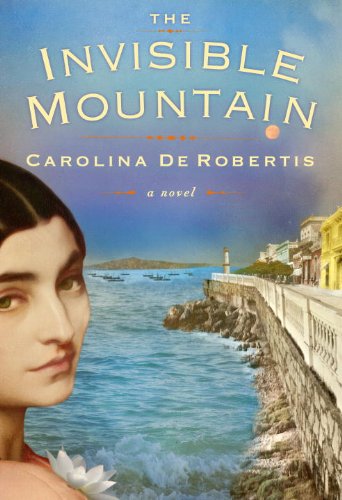

The invisible mountain Carolina De Robertis.
Detalles de publicación: New York Alfred A. Knopf 2009.Edición: 1st edDescripción: 364 p. 25 cmISBN:- 9780307271631
- 0307271633
- U 863.64 D4371i 22
- PS3604.E129 I58 2009
| Imagen de cubierta | Tipo de ítem | Biblioteca actual | Biblioteca de origen | Colección | Ubicación en estantería | Signatura topográfica | Materiales especificados | Info Vol | URL | Copia número | Estado | Notas | Fecha de vencimiento | Código de barras | Reserva de ítems | Prioridad de la cola de reserva de ejemplar | Reservas para cursos | |
|---|---|---|---|---|---|---|---|---|---|---|---|---|---|---|---|---|---|---|
| Libro | Biblioteca Encarnación Valdés Colección General bev | U 863.64 D4371i (Navegar estantería(Abre debajo)) | Disponible | 80000002529033 |
Descripciones mejoradas de Syndetics:
A gripping and lyrical story--at once expansive and lush with detail--this debut novel is a deeply intimate exploration of the search for love and authenticity, power and redemption, in the lives of three women, and a penetrating portrait of a small, tenacious nation, Uruguay, shaken in the gales of the twentieth century.
On the first day of the millennium, a small town gathers to witness a miracle and unravel its portents for the century: the mysterious reappearance of a lost infant, Pajarita. Later, as a young woman in the capital city--Montevideo, brimming with growth and promise--Pajarita begins a lineage of fiercely independent women. Her daughter, Eva, survives a brutal childhood to pursue her dreams as a rebellious poet and along the hazardous precipices of erotic love. Eva's daughter, Salome, driven by an unrelenting idealism, commits clandestine acts that will end in tragedy as unrest sweeps Uruguay. But what saves them all is the fierce fortifying connection between mother and daughter that will bring them together to face the future.
From Peron's glittering Buenos Aires to the rustic hills of Rio de Janeiro, from the haven of a corner butchershop in Montevideo to U.S. embassy halls, the Firielli family traverses a changing South America and the uncharted terrain of their relationships with one another.
Extracto provisto por Syndetics
Reseñas proporcionadas por Syndetics
Publishers Weekly Review
The history of Uruguay through the 20th century sparks personal tragedies amid political intrigues and cultural upheavals in this enchanting, funny and heartbreaking debut novel. Three generations of women populate this sweeping saga: Pajarita, the miracle child who at the dawn of the new century disappears and then reappears in a tree, born twice, as the residents of her small town say; Eva, Pajarita's daughter, who suffers a cruel childhood and learns to spin her painful experiences into a new life of art and adventure as a poet; and Salome, seduced by communism and nearly losing everything fighting for the cause she believes will save her country. This novel is beautifully written yet deliberate in its storytelling. It gains momentum as the women's lives spin increasingly out of control while Uruguay sinks into war, economic instability and revolution. An extraordinary first effort whose epic scope and deft handling reverberate with the deep pull of ancestry, the powerful influence of one's country and the sacrifices of reinvention. (Aug.) (c) Copyright PWxyz, LLC. All rights reservedBooklist Review
*Starred Review* Words, so beautifully employed by first novelist De Robertis, seem inadequate to capture the essence of this twentieth-century Uruguayan woman-centered family saga, although its bare bones are straightforward. Pajarita, who had a miraculous second birth, learns herbal healing from the aunt who raises her, a talent that supports her family during the absences of her Venetian husband. Eva, Pajarita's daughter, grows up loving words and writing poems, which sustains her through sexual assault when she's 11, into marriage with the doctor who treats her hysterical paralysis, and eventual reunion with her true love. Salome, Eva's daughter, is inspired by Che Guavara to give up university study for the revolutionary Tupamaros, which leads to her arrest, torture, and imprisonment, during which she bears a daughter conceived during a rape. With its historically accurate framework, this novel also portrays Montevideo so vividly that the city itself functions as a character. De Robertis is a skilled storyteller in relating the stories of these stalwart women, but it is her use of language from the precision of poetry to the sensuality of sex that makes this literary debut so exceptional.--Leber, Michele Copyright 2009 BooklistNotas de autor provistas por Syndetics
CAROLINA DE ROBERTIS was raised in England, Switzerland, and California by Uruguayan parents. Her debut novel, The Invisible Mountain , was an international best seller that was translated into fifteen languages; it was an O, The Oprah Magazine 2009 Terrific Read, a San Francisco Chronicle Best Book of the Year, and was the recipient of Italy's Rhegium Julii Prize. She is the recipient of a 2012 fellowship from the National Endowment for the Arts. Her fiction and literary translations have appeared in Granta, Zoetrope: All-Story, and the Virginia Quarterly Review, among other publications. She lives in Oakland, California.www.carolinaderobertis.com