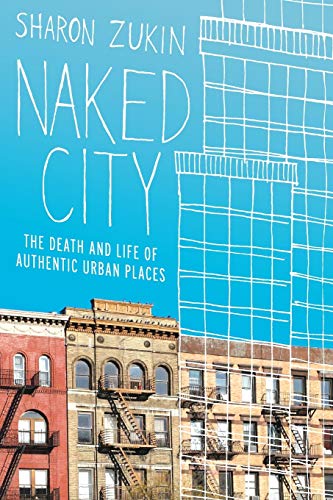

Naked City : the death and life of authentic urban places. / Sharon Zukin. txt
Oxford : New York : Oxford University Press, 2009Descripción: xv, 294 p. ill. ; 23 cmTipo de contenido:- text
- unmediaded
- volume
- 9780199794461
- 9780195382853
- 307.14
- HN80.N5 Z85 2009
| Imagen de cubierta | Tipo de ítem | Biblioteca actual | Biblioteca de origen | Colección | Ubicación en estantería | Signatura topográfica | Materiales especificados | Info Vol | URL | Copia número | Estado | Notas | Fecha de vencimiento | Código de barras | Reserva de ítems | Prioridad de la cola de reserva de ejemplar | Reservas para cursos | |
|---|---|---|---|---|---|---|---|---|---|---|---|---|---|---|---|---|---|---|
| Libro | CARIBET Biblioteca Arquitectura Colección General CARIBET | General HN80.N5 Z85 2009 (Navegar estantería(Abre debajo)) | 1 | Disponible | 91000000040634 |
Descripciones mejoradas de Syndetics:
As cities have gentrified, educated urbanites have come to prize what they regard as "authentic" urban life: aging buildings, art galleries, small boutiques, upscale food markets, neighborhood old-timers, funky ethnic restaurants, and old, family-owned shops. These signify a place's authenticity, in contrast to the bland standardization of the suburbs and exurbs. But as Sharon Zukin shows in Naked City, the rapid and pervasive demand for authenticity - evident in escalating real estate prices, expensive stores, and closely monitored urban streetscapes - has helped drive out the very people who first lent a neighborhood its authentic aura: immigrants, the working class, and artists. Zukin traces this economic and social evolution in six archetypal New York areas - Williamsburg, Harlem, the East Village, Union Square, Red Hook, and the city's community gardens - and travels to both the city's first IKEA store and the World Trade Center site. She shows that for followers of Jane Jacobs, this transformation is a perversion of what was supposed to happen. Indeed, Naked City is a sobering update of Jacobs' legendary 1961 book, The Death and Life of Great American Cities. Like Jacobs, Zukin looks at what gives neighborhoods a sense of place, but argues that over time, the emphasis on neighborhood distinctiveness has become a tool of economic elites to drive up real estate values and effectively force out the neighborhood "characters" that Jacobs so evocatively idealized.
Includes bibliographical references and index.
Preface , ix --
Introduction : The City That Lost Its Soul 1 --
Uncommon Spaces --
1 How Brooklyn Became Cool 35 --
2 Why Harlem Is Not a Ghetto 63 --
3 Living Local in the East Village 95 --
Common Spaces --
4 Union Square and the Paradox of Public Space 125 --
5 A Tale of Two Globals : Pupusas and IKEA in Red Hook 159 --
6 The Billboard and the Garden : A Struggle for Roots 193 --
Conclusion : Destination Culture and the Crisis of Authenticity 219 --
Notes 247 --
Index 281 --
As cities have gentrified, educated urbanites have come to prize what they regard as "authentic" urban life: aging buildings, art galleries, small boutiques, upscale food markets, neighborhood old-timers, funky ethnic restaurants, and old, family owned shops. These signify a place's authenticity, in contrast to the bland standardization of the suburbs and exurbs. But as Sharon Zukin shows in Naked City, the rapid and pervasive demand for authenticity evident in escalating real estate prices, expensive stores, and closely monitored urban streetscapes has helped drive out the very people who first lent a neighborhood its authentic aura: immigrants, the working class, and artists. Zukin traces this economic and social evolution in six archetypal New York City neighborhoods, Zukin shows how the emphasis on distinctiveness has become a tool of economic elites to drive up real estate values and force out the neighborhood ''characters'' that people often idealize. With a journalist's eye and the understanding of a longtime observer, Zukin's panoramic survey of the city explains how our desire to consume authentic experience has become a central force in making more esclusive --