
| Imagen de cubierta | Tipo de ítem | Biblioteca actual | Biblioteca de origen | Colección | Ubicación en estantería | Signatura topográfica | Materiales especificados | Info Vol | URL | Copia número | Estado | Notas | Fecha de vencimiento | Código de barras | Reserva de ítems | Prioridad de la cola de reserva de ejemplar | Reservas para cursos | |
|---|---|---|---|---|---|---|---|---|---|---|---|---|---|---|---|---|---|---|
| Referencia | Biblioteca Encarnación Valdés Sala de Referencia bev | 611 K172a4 (Navegar estantería(Abre debajo)) | Disponible | 80000002513524 |
Descripciones mejoradas de Syndetics:
Why use this coloring book?
50 years. 14 languages. Millions of copies. The #1 best-selling Human Anatomy coloring book.
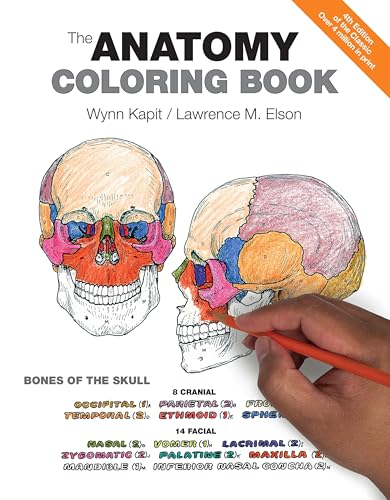
For half a century, The Anatomy Coloring Book has transformed the way people learn anatomy. Now celebrating its 50th anniversary in its 4th Edition, this groundbreaking classic has reached millions of learners around the world and remains the #1 best-selling human anatomy coloring book.
Its enduring success began with a brilliantly simple idea: when you actively color what you are learning, you don't just see anatomy; you engage with it. Detailed anatomical illustrations combined with the physical act of coloring engage the eyes, hands, and mind, helping complex structures and relationships become clearer, more meaningful, and easier to remember.
From students discovering anatomy for the first time to future healthcare professionals and lifelong learners, generations have used The Anatomy Coloring Book to turn a challenging subject into an active learning experience.
Fifty years later, the idea is as powerful as ever. Pick up a colored pencil and discover why millions of learners have made The Anatomy Coloring Bookthe classic it is today.
Color it. Understand it. Remember it.
Includes bibliographical references and index.
Tabla de contenidos provista por Syndetics
- Preface
- Acknowledgments
- Introduction to Coloring
- Orientation to the Body
- 1 Anatomic Planes & Sections
- 2 Terms of Position & Direction
- 3 Systems of the Body (1)
- 4 Systems of the Body (2)
- 5 Cavities & Linings
- Cells & Tissues
- 6 The Generalized Cell
- 7 Cell Division / Mitosis
- 8 Tissues: Epithelial
- 9 Tissues: Fibrous Connective Tissues
- 10 Tissues: Supporting Connective Tissues
- 11 Tissues: Muscle
- 12 Tissues: Skeletal Muscle Microstructure
- 13 Tissues: Nervous
- 14 Integration of Tissues
- Integumentary System
- 15 The Integument: Epidermis
- 16 The Integument: Dermis
- Skeletal & Articular Systems
- 17 Long Bone Structure
- 18 Endochondral Ossification
- 19 Axial / Appendicular Skeleton
- 20 Classification of Joints
- 21 Terms of Movements
- 22 Bones of the Skull (1)
- 23 Bones of the Skull (2)
- 24 Temporomandibular Joint
- 25 Vertebral Column
- 26 Cervical & Thoracic Vertebrae
- 27 Lumbar, Sacral, & Coccygeal Vertebrae
- 28 Bony Thorax
- 29 Upper Limb: Pectoral Girdle & Humerus
- 30 Upper Limb: Glenohumeral (Shoulder)
- Joint
- 31 Upper Limb: Bones of the Forearm
- 32 Upper Limb: Elbow & Related Joints
- 33 Upper Limb: Bones / Joints of the Wrist Hand
- 34 Upper Limb: Bones / Joints in Review
- 35 Lower Limb: Hip Bone, Pelvic Girdle, & Pelvis
- 36 Lower Limb: Male & Female Pelves
- 37 Lower Limb: Sacroiliac & Hip Joints
- 38 Lower Limb: Bones of the Thigh & Leg
- 39 Lower Limb: Knee Joint
- 40 Lower Limb: Ankle Joint & Bones of the Foot
- 41 Lower Limb: Bones & Joints in Review
- Muscular System
- 42 Introduction to Skeletal Muscle
- 43 Integration of Muscle Action
- 44 Head: Muscles of Facial Expression
- 45 Head: Muscles of Mastication
- 46 Neck: Anterior & Lateral Muscles
- 47 Torso: Deep Muscles of the Back &Posterior Neck
- 48 Torso: Muscles of the Bony Thorax & Posterior Abdominal Wall
- 49 Torso: Muscles of the Anterior Abdominal
- Wall & Inguinal Region
- 50 Torso: Muscles of the Pelvis
- 51 Torso: Muscles of the Perineum
- 52 Upper Limb: Muscles of Scapular
- Stabilization
- 53 Upper Limb: Muscles of the Musculotendinous Cuff
- 54 Upper Limb: Movers of the Shoulder Joint
- 55 Upper Limb: Movers of Elbow & Radioulnar
- Joints
- 56 Upper Limb: Movers of Wrist & Hand Joints
- 57 Upper Limb: Movers of Hand Joints
- (Intrinsics)
- 58 Upper Limb: Review of Muscles
- 59 Lower Limb: Muscles of the Gluteal Region
- 60 Lower Limb: Muscles of the Posterior
- Thigh
- 61 Lower Limb: Muscles of the Medial Thigh
- 62 Lower Limb: Muscles of the Anterior Thigh
- 63 Lower Limb: Muscles of the Anterior & Lateral Leg
- 64 Lower Limb: Muscles of the Posterior Leg
- 65 Lower Limb: Muscles of the Foot (Intrinsics)
- 66 Lower Limb: Review of Muscles
- 67 Functional Overview
- Nervous System
- 68 Organization
- 69 Functional Classification of Neurons
- 70 Synapses & Neurotransmitters
- 71 Neuromuscular Integration
- Central Nervous System
- 72 Development of the Central Nervous System (CNS)
- 73 Cerebral Hemispheres
- 74 Tracts / Nuclei of Cerebral Hemispheres
- 75 Diencephalon
- 76 Brain Stem / Cerebellum
- 77 Spinal Cord
- 78 Ascending Tracts (Pathways)
- 79 Descending Tracts
- Central Nervous System: Cavities & Coverings
- 80 Ventricles of the Brain
- 81 Meninges
- 82 Circulation of Cerebrospinal Fluid (CSF)
- Peripheral Nervous System
- 83 Cranial Nerves
- 84 Spinal Nerves & Nerve Roots
- 85 Spinal Reflexes
- 86 Distribution of Spinal Nerves
- 87 Brachial Plexus & Nerves to the Upper Limb
- 88 Lumber & Sacral Plexuses: Nerves to the Lower Limb
- 89 Dermatomes
- 90 Sensory Receptors
- Autonomic (Visceral) Nervous System
- 91 ANS: Sympathetic Division (1)
- 92 ANS: Sympathetic Division (2)
- 93 ANS: Parasympathetic Division
- Special Senses
- 94 Visual System (1)
- 95 Visual System (2)
- 96 Visual System (3)
- 97 Auditory & Vestibular Systems (1)
- 98 Auditory & Vestibular Systems (2)
- 99 Taste & Smell
- Cardiovascular System
- 100 Blood & Blood Elements
- 101 Scheme of Blood Circulation
- 102 Blood Vessels
- 103 Mediastinum, Walls, & Coverings of the Heart
- 104 Chambers of the Heart
- 105 Cardiac Conduction System & the ECG
- 106 Coronary Arteries & Cardiac Veins
- 107 Arteries of the Head & Neck
- 108 Arteries of the Brain
- 109 Arteries & Veins of the Upper Limb
- 110 Arteries of the Lower Limb
- 111 Aorta, Branches, & Related Vessels
- 112 Arteries to Gastrointestinal Tract & Related Organs
- 113 Arteries of the Pelvis & Perineum
- 114 Review of Principal Arteries
- 115 Veins of the Head & Neck
- 116 Caval & Azygos Systems
- 117 Veins of the Lower Limb
- 118 Hepatic Portal System
- 119 Review of Principal Veins
- Lymphatic System
- 120 Lymphatic Drainage & Lymphocyte Circulation
- Immune (Lymphoid) System
- 121 Introduction
- 122 Innate & Adaptive Immunity
- 123 Thymus & Red Marrow
- 124 Spleen
- 125 Lymph Node
- 126 Mucosal Associated Lymphoid Tissue (M.A.L.T.)
- Respiratory System
- 127 Overview
- 128 External Nose, Nasal Septum, & Nasal Cavity
- 129 Paranasal Air Sinuses
- 130 Pharynx & Larynx
- 131 Lobes & Pleura of the Lungs
- 132 Lower Respiratory Tract
- 133 Mechanism of Respiration
- Digestive System
- 134 Overview
- 135 Oral Cavity & Relations
- 136 Anatomy of a Tooth
- 137 Pharynx & Swallowing
- 138 Peritoneum
- 139 Esophagus and Stomach
- 140 Small Intestine
- 141 Large intestine
- 142 Liver
- 143 Biliary System & Pancreas
- Urinary System
- 144 Urinary Tract
- 145 Kidneys & Related Retroperitoneal Structures
- 146 Kidney & Ureter
- 147 The Nephron
- 148 Tubular Function & Renal Circulation
- Endocrine System
- 149 Introduction
- 150 Pituitary Gland & Hypothalamus
- 151 Pituitary Gland & Target Organs
- 152 Thyroid & Parathyroid Glands
- 153 Adrenal (Suprarenal) Glands
- 154 Pancreatic Islets
- Reproductive System
- 155 Male Reproductive System
- 156 Testis
- 157 Male Urogenital Structures
- 158 Female Reproductive System
- 159 Ovary
- 160 Uterus, Uterine Tubes, & Vagina
- 161 Menstrual Cycle
- 162 Breast (Mammary Gland)
- Bibliography and References
- Appendix A Answer Keys
- Appendix B Innervation of Skeletal Muscles
- Glossary
- Index
Notas de autor provistas por Syndetics
Wynn Kapit graduated from the University of Miami, attended the Art Center School in Los Angeles, and received a Masters in Painting from the University of California at Berkley. He also took a class in human anatomy at San Francisco City College.While taking that class, he realized that he could coloring the subject's drawings helped him learn the topic. Kapit, a former graphic designer, and Lawrence Elson, the class instructor, created The Anatomy Coloring Book (1977) which also served as a foundation for The Physiology Coloring Book (1987) and The Geography Coloring Book (1991).
(Bowker Author Biography)