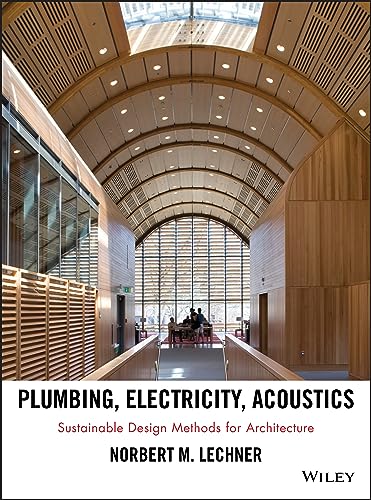

Plumbing, electricity, acoustics sustainable design methods for architecture Norbert Lechner.
Idioma: Inglés Detalles de publicación: Hoboken, N.J. John Wiley & Sons c2012.Descripción: xi, 289 p. ill. 29 cmISBN:- 9781118014752 (alk. paper)
- 1118014758 (alk. paper)
- 696 23
- TH6031 .L43 2012
| Imagen de cubierta | Tipo de ítem | Biblioteca actual | Biblioteca de origen | Colección | Ubicación en estantería | Signatura topográfica | Materiales especificados | Info Vol | URL | Copia número | Estado | Notas | Fecha de vencimiento | Código de barras | Reserva de ítems | Prioridad de la cola de reserva de ejemplar | Reservas para cursos | |
|---|---|---|---|---|---|---|---|---|---|---|---|---|---|---|---|---|---|---|
| Libro | CARIBET Biblioteca Arquitectura Colección General CARIBET | TH6031 .L43 2012 (Navegar estantería(Abre debajo)) | Disponible | 91000000035154 |
Descripciones mejoradas de Syndetics:
Discover sustainable methods for designing crucial building systems for architects.
This indispensable companion to Norbert Lechner's landmark volume Heating, Cooling, Lighting: Sustainable Design Methods for Architects, Third Edition completes the author's mission to cover all topics in the field of sustainable environmental control. It provides knowledge appropriate for the level of complexity needed at the schematic design stage and presents the most up-to-date information available in a concise, logical, accessible manner and arrangement. Although sustainability deals with many issues, those concerning energy and efficiency are the most critical, making an additional goal of this book one of providing architects with the skills and knowledge needed to create buildings that use electricity and water efficiently. Guidelines and rules-of-thumb are provided to help designers make their buildings use less energy, less water, and less of everything else to achieve their primary objectives.
In addition, this book:
Addresses ways to reduce electricity usage through more efficient lighting systems and appliances and by incorporating automatic switches and control systems that turn off systems not in use. Covers the design of well-planned effluent treatment systems that protect against potential health hazards while also becoming a valuable source of reclaimed water and fertilize.r Provides coverage of fire protection and conveyance systems, including very efficient types of elevators and escalators and designs that encourage the use of stairs or ramps.Complete with case studies that illustrate how these systems are incorporated into large-project plans, Plumbing, Electricity, Acoustics is an indispensable resource for any architect involved in a sustainable design project.
Includes index.
Tabla de contenidos provista por Syndetics
- Preface(p. ix)
- Acknowledgments(p. xi)
- 1 Electricity û Basic Concepts(p. 1)
- 1.1 Introduction(p. 2)
- 1.2 History of Electricity(p. 2)
- 1.3 The Water Analogy(p. 4)
- 1.4 OhmÆs Law(p. 6)
- Types of Electricity(p. 6)
- Power Factor(p. 9)
- Types of Circuits(p. 11)
- Power Generators in Series and Parallel(p. 15)
- Voltage Drop(p. 16)
- Electrical Power(p. 18)
- Electrical Energy(p. 19)
- Paying for Electricity(p. 20)
- Reduction in Maximum Demand(p. 22)
- Transformers(p. 23)
- Electricity and Safety(p. 24)
- Electromagnetic Fields (EMF)(p. 26)
- Conclusion(p. 26)
- Electrical Distribution in Buildings(p. 27)
- Introduction(p. 28)
- A Brief Historical Perspective(p. 28)
- Centralized Electrical Power(p. 30)
- Decentralized and Private Sources of Electricity(p. 31)
- Electrical Distribution in Small Buildings(p. 32)
- Electrical Distribution in Large Buildings(p. 36)
- Switches, Fuses, and Circuit Breakers(p. 39)
- Conduits and Raceways(p. 42)
- Office Landscapes(p. 43)
- Electrical Safety Systems(p. 47)
- Low-Voltage Circuits(p. 50)
- Emergency Power(p. 51)
- Communication and Building Control Wiring(p. 53)
- Electrical Construction Drawings(p. 56)
- Lighting Protection(p. 56)
- Sustainability(p. 58)
- Conclusion(p. 59)
- PlumbingùWater Supply(p. 61)
- Introduction(p. 62)
- Brief History of Water Supply(p. 63)
- Sources of Drinking Water(p. 64)
- Water Use(p. 67)
- Private Water Supply(p. 68)
- Rainwater Harvesting(p. 71)
- Water Distribution in Buildings(p. 79)
- Water Quality(p. 85)
- Water Efficiency(p. 85)
- Hot Water(p. 88)
- Hot Water Conservation(p. 97)
- Conclusion(p. 103)
- Introduction(p. 106)
- Short History of Sanitary Drainage(p. 106)
- Basic Principles of Drainage(p. 114)
- Basic Concepts of Plumbing Fixtures(p. 115)
- Drainage Piping(p. 116)
- Water Closets and Alternatives(p. 121)
- Composting Toilets(p. 125)
- On-Site Septic Tank Systems(p. 126)
- On-Site Aerobic Systems(p. 128)
- Special and Innovative Treatment Systems(p. 130)
- Constructed Wetlands(p. 131)
- Biologic Machines(p. 134)
- Graywater Systems(p. 136)
- Alternative Community Sewage Systems(p. 139)
- Stormwater(p. 141)
- Special Drainage Systems(p. 152)
- Case Study(p. 153)
- Conclusions(p. 155)
- Introduction(p. 158)
- A Short History of Architectural Acoustics(p. 159)
- The Physics of Sounds(p. 161)
- The Biology of Sounds(p. 170)
- Perception of Sound(p. 175)
- Sound and Health(p. 179)
- Sound-Absorbing Materials(p. 180)
- Applications of Sound-Absorbing Materials(p. 182)
- Sound Transmission(p. 188)
- Design for Low Sound Transmission(p. 189)
- Acceptable Noise Levels(p. 194)
- Open-Plan Offices(p. 196)
- Impact Noise(p. 198)
- Mechanical Systems Noise Control(p. 199)
- Theaters, Classrooms and Auditoriums(p. 202)
- Rules for Drawing Ray Diagrams(p. 205)
- Electronic Sound Systems(p. 206)
- Noise Outdoors(p. 206)
- Conclusions(p. 210)
- Introduction(p. 214)
- A Short History of Fires in Buildings(p. 216)
- Fire Principles(p. 221)
- Fire Prevention(p. 224)
- Passive Fire Protection(p. 225)
- Detection(p. 228)
- Alarms(p. 229)
- Safe Egress(p. 232)
- Fire Suppression(p. 235)
- Non-Water Fire Suppression Systems(p. 242)
- Smoke Control(p. 243)
- Fire Codes(p. 249)
- Elevators and Fires(p. 250)
- Lightning Protection(p. 250)
- Conclusion(p. 251)
- Introduction(p. 254)
- A Short History of the Elevator(p. 254)
- Elevator Types(p. 261)
- Elevator Design(p. 265)
- Escalators(p. 271)
- Moving Walkways and Ramps(p. 275)
- Vertical Transport and Health(p. 276)
- Special Lifts for People(p. 280)
- Material Conveying Systems(p. 282)
- Conclusion(p. 284)
Notas de autor provistas por Syndetics
NORBERT M. LECHNER is Professor Emeritus in the College of Architecture, Design, and Construction at Auburn University and was a registered architect in the state of Alabama. His articles have appeared in Architectural Lighting and Solar Today . In addition to writing, he has lectured and held workshops in the United States, Europe, Asia, and the Middle East.