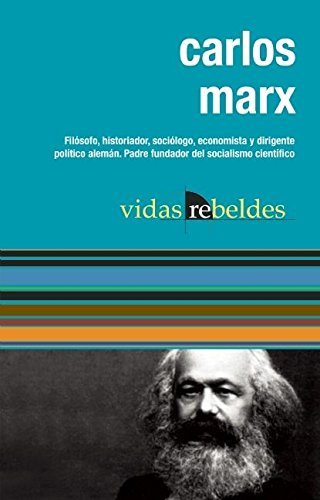

Carlos Marx compilado por Julio Antonio Fernández Estrada.
Idioma: Español Lenguaje original: Alemán Series Vidas rebeldesDetalles de publicación: México, D.F. Ocean Sur 2010.Edición: 1. edDescripción: 156 p. 20 cmISBN:- 9781921438806 (pbk.)
- 1921438800 (pbk.)
- 335.4 22
- 335.4 14
- HX39.5 .A228 2010
| Imagen de cubierta | Tipo de ítem | Biblioteca actual | Biblioteca de origen | Colección | Ubicación en estantería | Signatura topográfica | Materiales especificados | Info Vol | URL | Copia número | Estado | Notas | Fecha de vencimiento | Código de barras | Reserva de ítems | Prioridad de la cola de reserva de ejemplar | Reservas para cursos | |
|---|---|---|---|---|---|---|---|---|---|---|---|---|---|---|---|---|---|---|
| Libro | Biblioteca Encarnación Valdés Colección General bev | 335.4 M3921c 2010 (Navegar estantería(Abre debajo)) | Disponible | 80000002494014 |
Descripciones mejoradas de Syndetics:
This new Vidas Rebeldes title is a concise anthology of the key writings of Karl Marx on philosophy, history, and economics, offering a fresh perspective beyond the dogmatism in which Marxism has been buried by his supporters and foes alike, releasing Marx from his long imprisonment as a stone idol.
Includes bibliographical references(p.135-138).
Presents a collection of writings that illustrate the views of the philosopher and political thinker who originated the communist movement, including excerpts from "Capital" and the "Communist Manifesto."
Reseñas proporcionadas por Syndetics
Library Journal Review
Ernesto "Che" Guevara needs no introduction; he is the stuff of legends, countless books, films, and pop culture references. Julio Antonio Mella, on the other hand, is less familiar to American audiences, but his leadership of Cuba's first Communist Party earned him praise and criticism from those on both sides of the political divide. Born in Cuba in 1903, to a Dominican tailor and an Irish woman, Mella fancied himself quite the revolutionary, even before his tragic death at the age of 25 bestowed upon him the convenience of martyrdom. It's no small wonder, then, why these two figures would be included in a series of anthologies intended to historicize the writings of those who have brought about radical change. Of course, no collection on radical thinking would be complete without work by Karl Marx, and his inclusion here is very much a tribute to his seminal writings, including poetry, which are featured here along with testimonies by Friedrich Engels, Jose Marti, and daughter Eleanor Marx. Readers with an appetite for primary-source materials and reference guides will be delighted by the selection of essays and journal entries, capturing critical moments in these revolutionaries' lives. Rounded out by time lines, detailed notes, and bibliographies, these anthologies will find a wide readership among college students, academics, and university librarians.-Michael Sosa, Brooklyn, NY (c) Copyright 2010. Library Journals LLC, a wholly owned subsidiary of Media Source, Inc. No redistribution permitted.Notas de autor provistas por Syndetics
Karl Heinrich Marx, one of the fathers of communism, was born on May 5, 1818 in Trier, Germany. He was educated at a variety of German colleges, including the University of Jena.He was an editor of socialist periodicals and a key figure in the Working Man's Association. Marx co-wrote his best-known work, "The Communist Manifesto" (1848), with his friend, Friedrich Engels. Marx's most important work, however, may be "Das Kapital" (1867), an analysis of the economics of capitalism.
He died on March 14, 1883 in London, England.
(Bowker Author Biography)