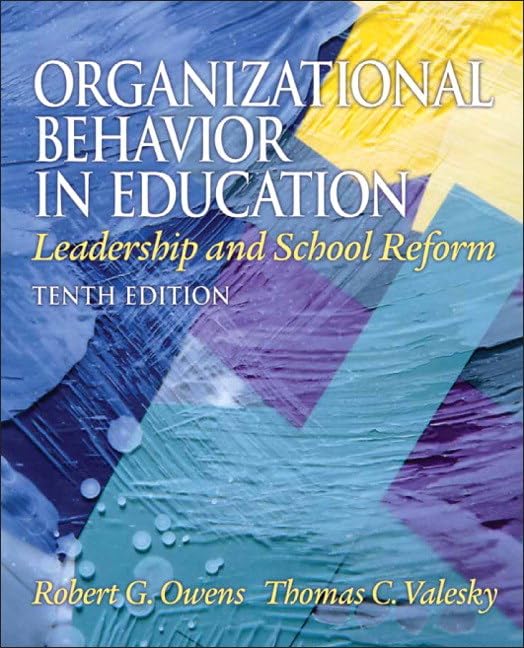

Organizational behavior in education: adaptive leadership and school reform / Robert G. Owens, Thomas C. Valesky.
Detalles de publicación: Boston, MA: Pearson Education, c2011.Edición: 10th edDescripción: 377 p. : ill. ; 24 cmTipo de contenido:- 9780137017461
| Imagen de cubierta | Tipo de ítem | Biblioteca actual | Biblioteca de origen | Colección | Ubicación en estantería | Signatura topográfica | Materiales especificados | Info Vol | URL | Copia número | Estado | Notas | Fecha de vencimiento | Código de barras | Reserva de ítems | Prioridad de la cola de reserva de ejemplar | Reservas para cursos | |
|---|---|---|---|---|---|---|---|---|---|---|---|---|---|---|---|---|---|---|
| Libro | Biblioteca de Mayagüez Colección General mb | LB2806 .O9 2011 (Navegar estantería(Abre debajo)) | Disponible | 50000003238465 |
Descripciones mejoradas de Syndetics:
An authoritative and timely examination of organizational behavior and how leaders can create effective school cultures.
Well-established as a standard textbook in the preparation of effective and thoughtful school administrators, Organizational Behavior in Education continues its tradition of offering students of educational administration the most current thinking and the most in-depth exploration of organizational leadership as it relates to decision-making, organizational change, managing conflict, and motivating others. As readers are challenged to develop and analyze the successful implementation of school reform, they gain a professional understanding of the organizational theory and research that are the bedrock of modern practice. The thoroughly revised tenth edition of Organizational Behavior in Education updates the research and theory behind organizational effectiveness in schools as it pertains to change, leadership, and new issues in school reform including comprehensive school reform models, charter schools, and school vouchers. This new material contains current emerging developments in the fast-paced world of contemporary school reform and keeps students abreast of emerging trends.Includes bibliographical references and indexes.
eigm 03/2013
Tabla de contenidos provista por Syndetics
- Preface
- Educational Leadership Policy Standards: the New ISLLC Standards For 2008
- ISLLC Functions By Chapter
- Chapter 1 In Search of a Vision
- Critical Incident: the Vision For South Shore High School
- ASSUMPTIONS, BELIEFS, BEHAVIORS
- THE NATURE OF SCIENTIFIC PROGRESS
- IMPACT OF BEHAVIORAL SCIENCE
- Psychoanalytic Psychology
- Sociological and Psychological Points of View
- Cognitive Psychology
- Social Psychology
- Field Theory of Behavior
- SCHOOLS AS EDUCATIVE ORGANIZATIONS
- Organizational Theory
- Theory Defined and Described
- Two Major Perspectives on Educational Organizations
- Bureaucratic Theory
- Human Resources Development Theory
- Theory X and Theory Y
- THE RELEVANCE TO SCHOOL LEADERSHIP TODAY
- VISION AND EDUCATIONAL LEADERSHIP
- THE NO CHILD LEFT BEHIND ACT OF 2001
- RESEARCH IN EDUCATION
- The Framingham Heart Study
- The Tennessee STAR Study
- Research and NCLB
- LEADERSHIP AS COACHING
- Coaching as a Method of Teaching
- Conclusion
- REFLECTIVE ACTIVITIES
- SUGGESTED READING
- Chapter 2 Guiding Concepts of Practice
- Critical Incident: Controversy at the Principals' Meeting
- TWO PRINCIPAL SOURCES OF CONFLICT
- The "Great Debate": Traditional versus Progressive Education
- The Beginnings of the Great Educational Debate
- The Backlash of the 1950s
- The Neoprogressives Emerge in the 1960s
- THE CONTEMPORARY DEBATE ON SCHOOLING
- A PARADIGM SHIFT IN EDUCATION
- A Passion for Equality
- The Traditional Paradigm of Intelligence
- A New Paradigm of Intelligence or the Lake Wobegon Syndrome?
- MULTIPLE INTELLIGENCES THEORY
- Gardner's Multiple Intelligences Theory (MIT)
- Perkins's Learnable Intelligence Theory
- Smart Schools
- Emotional Intelligence
- Sustainability: the Debate Continues
- Sustainability
- THEORY OF ACTION
- THEORY OF PRACTICE
- THE GAME PLAN: A COACHING METAPHOR
- Conclusion
- REFLECTIVE ACTIVITIES
- SUGGESTED READING
- Chapter 3 Mainstreams of Organizational Thought
- Critical Incident --A Philosophical Disagreement on Administration
- ORGANIZATIONAL BEHAVIOR
- Organization and Behavior
- Why Study Organizational Behavior?
- IMPACT OF THE INDUSTRIAL REVOLUTION
- Frederick W. Taylor and Scientific Management
- The Beginning of Modern Organizational Theory
- Emergence of Bureaucratic Organizational Theory
- THE RISE OF CLASSICAL ORGANIZATIONAL THEORY
- Scientific Management versus Classical Organizational Theory
- Organizational Concepts of Classical Theory
- Classical and Neoclassical Administrative Concepts
- THE HUMAN RELATIONS MOVEMENT
- The Western Electric Studies
- Sociometry
- Behavior Patterns in Groups
- Leadership as a Group Function
- The Paradox of Organizational Structure
- THE ORGANIZATIONAL THEORY MOVEMENT
- Human Relations and Organizational Behavior
- Conclusion
- REFLECTIVE ACTIVITIES
- SUGGESTED READING
- Chapter 4 Organizational Theory
- Critical Incident: A Tale of Two Principals
- ORGANIZATIONAL STRUCTURE AND PEOPLE
- General Systems Theory
- Social Systems Theory
- A Contextual Approach
- ROLE THEORY
- Role Conflict
- Role Ambiguity
- Role Set
- Functional Roles in the Group
- Role Related to Social Systems Theory
- Equilibrium
- Homeostasis
- Feedback
- SOCIOTECHNICAL SYSTEMS THEORY
- CONTINGENCY THEORY
- Rational Planning Models
- Open System Related to Contingency Theory
- Response to Technological Change
- Interaction with the External Environment
- Contingency Theory and Organizational Behavior in Schools
- Conclusion
- REFLECTIVE ACTIVITIES
- SUGGESTED READING
- Chapter 5 The Human Dimension of Organization
- Critical Incident: Turning Madison High Around
- RECONCEPTUALIZING THE NATURE OF ORGANIZATIONS
- A NEW PARADIGM OF ORGANIZATIONAL THEORY
- RISE OF QUALITATIVE RESEARCH METHODS
- Educational Organizations as Loosely Coupled Systems
- Educational Organizations as Dual Systems
- BUILDING HUMAN CAPITAL
- Human Resources as Assets
- The Dark Side of Leadership
- Human Resources Development
- ORGANIZATIONAL CULTURE AS A BEARER OF AUTHORITY
- FIVE BASIC ASSUMPTIONS OF EFFECTIVE SCHOOLS
- Professional Development
- Conclusion
- The Effort to Create an Administrative Science
- Centrality of the Human Dimension of Organization
- Where We Are and Where We Are Going
- REFLECTIVE ACTIVITIES
- SUGGESTED READING
- Chapter 6 Organizational Culture and Organizational Climate
- Critical Incident: Two Schools: Two Different Cultures
- HUMAN RESOURCES DEVELOPMENT
- Defining and Describing Organizational Culture and Climate
- Research on Organizational Culture
- Organizational Culture and Organizational Climate Compared and Contrasted
- Organizational Culture
- Two Major Themes in a Definition of Organizational Culture
- Specifying What Organizational Culture Is
- HOW ORGANIZATIONAL CULTURE IS CREATED
- Symbolism and Culture
- Organizational Climate
- The Affective Aspects of Culture and Climate
- Multiple Cultures
- HOW ORGANIZATIONAL CLIMATE IS CREATED
- Group Norms
- Person Environment Interaction
- Concept of Behavior Settings
- Describing and Assessing Organizational Culture in Schools
- RELATIONSHIP BETWEEN ORGANIZATIONAL CULTURE AND ORGANIZATIONAL EFFECTIVENESS
- Cause and Effect
- FOUR MANAGEMENT SYSTEMS
- Conclusion
- REFLECTIVE ACTIVITIES
- SUGGESTED READING
- Chapter 7 Organizational Change
- Critical Incident: the Man for the Job!
- SCHOOL REFORM AND CHANGE
- Power Relationships and School Restructuring
- Aims of Educational Reform
- THE TRADITION OF CHANGE IN AMERICAN EDUCATION
- Natural Diffusion Processes
- Planned, Managed Diffusion
- THREE STRATEGIES OF PLANNED CHANGE
- Empirical-Rational Strategies of Change
- Research, Development, and Diffusion (R, D, and D)
- The "Agricultural Model"
- Assumptions and Implications of KPU Approaches to Change
- Other Empirical-Rational Strategies
- Power-Coercive Strategies of Change
- Normative-Reeducative or Organizational Self-Renewal Strategies
- The Rand Study of Federal Programs Supporting Educational Change
- A Normative-Reeducative Strategy
- Organizational Health
- Organizational Self-Renewal
- The Learning Organization
- A Sociotechnical View
- Force-Field Analysis
- RESEARCH ON THE EFFECTIVENESS OF ORGANIZATIONAL DEVELOPMENT
- TWO EMERGING QUESTIONS
- Can the Schools Do It Alone?
- Full-Service Schools
- Is School Reform Enough?
- Conclusion
- REFLECTIVE ACTIVITIES
- SUGGESTED READING
- Chapter 8 Leadership
- Critical Incident: Leadership At North River Middle School
- ADAPTIVE LEADERSHIP
- LEADERSHIP AND MANAGEMENT
- POWER AND LEADERSHIP
- Leadership Different from Command
- Power Defined
- TWO-FACTOR LEADERSHIP THEORY ABANDONED
- LEADERSHIP AS A RELATIONSHIP WITH FOLLOWERS
- Your Understanding of Human Nature Is Critical
- TRANSFORMATIONAL LEADERSHIP
- Transforming Leadership Compared and Contrasted with Transactional Leadership
- Moral Leadership
- A Progression
- A Process of Growth and Development
- Leadership and Vision
- Whose Vision Is It, Anyway?
- MANIPULATION AND EMPOWERMENT
- Critical Theory
- IMPORTANT CONCEPTS ABOUT LEADERSHIP FOR THE EDUCATIONAL LEADER
- Distributed Leadership
- Professional Learning Communities and Parental Involvement
- Sustainable Leadership
- Conclusion
- REFLECTIVE ACTIVITIES
- SUGGESTED READING
- Chapter 9 Decision Making
- Critical Incident: Deciding How to Decide
- INDIVIDUAL VERSUS ORGANIZATIONAL DECISION MAKING
- RATIONALITY IN DECISION MAKING
- Rational Decision-Making Models
- LIMITS ON RATIONALITY IN DECISION MAKING
- The Gap between Theory and Practice
- Five Leadership Styles
- Seven Situation Issues
- Decision-Process Flowchart
- The Nature of Managerial and Administrative Work
- How Administrators Think
- The Influence of Organizational Culture on Decision Making
- Closing the Gap between Theory and Practice
- THEORY OF PRACTICE
- Human Resources Development
- PartICIPATIVE DECISION MAKING
- Participative Decision Making and Empowerment
- PartICIPATIVE OR DEMOCRATIC?
- An Explicit Decision-Making Process
- Who Identifies the Problem?
- Emergent and Discrete Problems
- Who Should Participate?
- Desire of Individuals to Participate
- TEAM ADMINISTRATION
- Participation Requires High Level of Skills
- A PARADIGM FOR DECISION MAKING
- Total Teamwork System
- Conclusion
- REFLECTIVE ACTIVITIES
- SUGGESTED READING
- Chapter 10 Conflict in Organizations
- Critical Incident: Conflict in the 1th Grade Team
- THE NATURE OF CONFLICT IN ORGANIZATIONS
- Definition of Conflict
- Conflict Different from Attacks
- Contemporary Views of Conflict
- Effects of Organizational Conflict
- The Criterion: Organizational Performance
- THE DYNAMICS OF ORGANIZATIONAL CONFLICT
- Hostility
- A Contingency View
- A Process View of Conflict
- A Structural View of Conflict
- An Open-Systems View of Conflict
- APPROACHES TO ORGANIZATIONAL CONFLICT
- The Win-Lose Orientation to Conflict
- A Contingency Approach to Conflict
- Diagnosing Conflict
- A CONTINGENCY APPROACH TO DIAGNOSIS OF CONFLICT
- Conclusion
- REFLECTIVE ACTIVITIES
- SUGGESTED READING
- Chapter 11 Motivation
- Critical Incident: Changes at Washington High School
- THE MEANING AND PATTERNS OF MOTIVATION
- First Pattern: Direction in Making Choices
- Second Pattern: Persistence
- Third Pattern: Intensity
- THE EXTRINSIC-INTRINSIC DEBATE
- Extrinsic, or Behaviorist, Views
- Intrinsic Views of Motivation
- INDIVIDUAL AND GROUP MOTIVATION
- THE WESTERN ELECTRIC STUDIES REVISITED
- The Illumination Studies
- The Relay Inspection Group Studies
- Central Findings of the Studies
- Impact of the Studies
- Contemporary Views of the Western Electric Studies
- INDIVIDUAL DIFFERENCES
- In Praise of Diversity
- Archetypes
- HUMAN INTELLIGENCE
- TEMPERAMENT AND ORGANIZATIONAL BEHAVIOR
- The Four Psychological Types
- The Myers-Briggs Type Indicator (MBTI)
- Four Basic Dimensions of Human Personality
- Introversion-Extraversion (Attitude)
- Sensation-Intuition (Processes of Perception) and Thinking-Feeling (Processes of Judgement
- Perceiving-Judging (Dealing with the Outside World)
- Final Thoughts on Temperament and Organizational Behavior
- INTRINSIC MOTIVATION
- Cognitive Views of Motivation
- Achievement Motivation
- McClelland and the "Spirit of Capitalism"
- Social Cognitive Theory and Self Efficacy
- The Humanistic Perspective
- Abraham Maslow: Motivation as a Hierarchy of Needs
- Herzberg's Two-Factor Theory of Motivation
- Comments on Herzberg's Two-Factor Theory
- Integration of Herzberg's and Maslow's Theories
- Conclusion: GENERAL PRINCIPLES
- REFLECTIVE ACTIVITIES
- SUGGESTED READINGS
- Chapter 12 School Reform
- Critical Incident: District Test Scores Decline Once Again
- MARKET-BASED SCHOOL REFORM
- Origin of Market Based Reforms
- Economic Theory and School Reform
- School Reform as Investment Opportunity
- Current Status of Charter Schools
- Vouchers
- Privatization in Higher Education
- STANDARDS-BASED SCHOOL REFORM
- Have Higher Standards Worked?
- WHOLE SCHOOL REFORM
- Increasing School Autonomy
- Support for School Leaders
- Research Support for CSR Models
- Response to Intervention (RTI)
- TEACHER EDUCATION AND SCHOOL REFORM
- National Network for Educational Renewal (NNER)
- The American Council on Education Initiative
- The Flexner Report on Medical Education as Precedent
- A Broader, Bolder Approach to Education
- Conclusion
- REFLECTIVE ACTIVITIES
- SUGGESTED READING
- Notes
- Name Index
- Subject Index
Notas de autor provistas por Syndetics
Robert G. Owens began his professional career as the teaching principal of a three-room school. After serving as principal for eighteen years in a variety of school environments, he became a university professor. His research and service have always focused on, and been centered in, the practice of improving the organizational effectiveness of schools.
Thomas C. Valesky began his career in education serving as teacher, high school counselor, elementary principal, and superintendent both in the United States and abroad. He is currently program leader and professor for the Educational Leadership program at Florida Gulf Coast University. His work has resulted in numerous journal publications and the co-authorship of two books, Training for Quality School-based Decision Making (Rowman & Littlefield, 2003) and Challenge to change: The Memphis experience with school-based decision making (National Education Association, 1994).