Descripciones mejoradas de Syndetics:
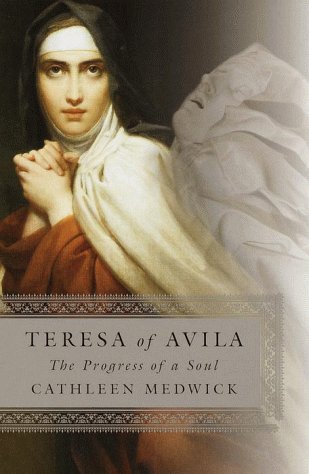
A refreshingly modern reconsideration of Saint Teresa (1515-1582), one of the greatest mystics and reformers to emerge within the sixteenth-century Catholic Church, whose writings are a keystone of modern mystical thought. From the very beginning of her life in a convent, following the death of her mother and the marriage of her older sister, it was clear that Teresa's expansive nature, intensity, and energy would not be easily confined. Cathleen Medwick shows us a powerful daughter of the Church and her times who was a very human mass of contradictions: a practical and no-nonsense manager, and yet a flamboyant and intrepid presence who bent the rules of monastic life to accomplish her work--while managing to stay one step ahead of the Inquisition. And she exhibited a very personal brand of spirituality, often experiencing raptures of an unorthodox, arguably erotic, nature that left her frozen in one position for hours, unable to speak. Out of a concern for her soul and her reputation, her superiors insisted that she account for every voice and vision, as well as the sins that might have engendered them, thus giving us the account of her life that is now considered a literary masterpiece. Medwick makes it clear that Teresa considered her major work the reform of the Carmelites, an enterprise requiring all her considerable persuasiveness and her talent for administration. We see her moving about Spain with the assurance (if not the authority) of a man, in spite of debilitating illness, to establish communities of nuns who lived scrupulously devout lives, without luxuries. In an era when women were seldom taken seriously, she even sought and received permission to found two religious houses for men. In this fascinating account Cathleen Medwick reveals Teresa as both more complex and more comprehensible than she has seemed in the past. She illuminates for us the devout and worldly woman behind the centuries-old iconography of the saint. From the Hardcover edition.
Includes bibliographical references (p. [267]-270) and index.
Reseñas proporcionadas por Syndetics
Library Journal Review
A dozen biographies on Spanish reformer and mystic St. Teresa of Avila (1515-82), were published in English in the 1990s testifying to her enduring attraction. Tracing the indomitable Teresa's own writings, Medwick (an editor at Vogue and House & Garden) recounts the Carmelite nun's efforts to establish new convents throughout Spain while dealing with misunderstandings, illnesses, politics, and treachery. Clear writing in a modern idiom marks this well-researched biography, unencumbered by heavy footnoting. The author's long admiration for her subject is evident in her deft handling of the saint's many complexities. A map and chronology would have enhanced the text, and the occasional slip (Teresa would not be "saying Mass") is easily overlooked in the wealth of seamless information provided. This is a good introduction to a fascinating personality by a non-Catholic who leaves others to probe Teresa's spirituality and theology more deeply. Recommended for general collections.ÄAnna M. Donnelly, St. John's Univ., Jamaica, NY (c) Copyright 2010. Library Journals LLC, a wholly owned subsidiary of Media Source, Inc. No redistribution permitted.
Publishers Weekly Review
A fascination with what she calls the "journey" of the 16th-century Spanish saint sustains Medwick's disappointing biography of Teresa of Avila. The saint was both a profound searcher of the self who succumbed to rapturous interludes and a harried organization freak who struggled to bring about her vision of cloistered community while buffeted by illness and accusations. Medwick, a former editor for Vogue and Vanity Fair, rightly characterizes Teresa as "a daughter of the church," but her laudatory effort to situate her subject in the religious culture of contemporary Spain falls short of its objective. Medwick's Teresa is domesticated and ahistorical, disconnected from the world in which she lived. Medwick eschews analysis for summary, resulting in a rather superficial portrait of the saint. Far too often, also, it is unclear whose voice we are hearing, Medwick's or Teresa's. Unfortunately, the "journey" that Medwick recounts here is far less complex and penetrating than Teresa's actual one, as revealed by her life and writings. (Dec.) (c) Copyright PWxyz, LLC. All rights reserved
CHOICE Review
The 1990s witnessed a blossoming of new scholarship on Teresa of Avila, works including Alison Weber's Teresa of Avila and the Rhetoric of Femininity (1990), Carole Slade's St. Teresa of Avila; Author of a Heroic Life (1995),and Gillian T. W. Ahlgrens Teresa of Avila and the Politics of Sanctity (CH, Dec'96). The Progress of a Soul draws on the long tradition of Teresa scholarship, including the most recent works, to produce a lively, readable portrait that captures and integrates the divergent strains of Teresa's experience and identity: writer, diplomat, mystic, religious reformer, administrator, loyal and demanding friend and mentor, daughter, sister, aunt, "holy anorexic," and above all, spiritual pilgrim. Medwick, a professional writer rather than a specialist in religious studies, follows an extensive line of "secular" interpreters of Teresa, from Richard Crashaw and Gian Lorenzo Bernini, to George Eliot, Vita Sackville-West, and Luce Irigaray. The procession of interpreters interests Medwick almost as much as Teresa herself. Medwick has written an accessible yet meticulous study of Teresa that underscores why this 16th-century Spanish nun remains a compelling figure four centuries later. Appropriate for general readers and all academic levels. D. Campbell; Colby College
Booklist Review
So many biographies and studies have been written about Teresa of Avila that it leads one to ask, why another? This first female Doctor of the Church has been hailed as a saint, decried as a heretic, lauded by feminists, reviled by feminists. She has caused such a sensation over the past few centuries it is no wonder she has been studiously psychoanalyzed and her story revised and retold over and over again. This latest addition to the corpus of biographies is a good one, however. The author, who states firmly she is a nonobservant Jew, has no real agenda other than to tell the tale of a remarkable, humorous, and very vibrant woman who stirred up people's emotions since her birth and especially after her death in 1582. Emphasis is placed on the deeds of the saint and her interactions with some of the era's leaders. Medwick's scholarship is good and not too heady or theological. Her sources are basic, and her style is forthright and concise. --Michael Spinella