
| Imagen de cubierta | Tipo de ítem | Biblioteca actual | Biblioteca de origen | Colección | Ubicación en estantería | Signatura topográfica | Materiales especificados | Info Vol | URL | Copia número | Estado | Notas | Fecha de vencimiento | Código de barras | Reserva de ítems | Prioridad de la cola de reserva de ejemplar | Reservas para cursos | |
|---|---|---|---|---|---|---|---|---|---|---|---|---|---|---|---|---|---|---|
| Libro | Biblioteca Encarnación Valdés Colección de Puerto Rico | 325.7295 M828p (Navegar estantería(Abre debajo)) | Disponible | 80000002416017 |
Descripciones mejoradas de Syndetics:
In the eighteenth century, when society's passion for 'taking the waters' coincided with increasingly dangerous continental travel, Cheltenham's chalybeate springs were endowed with almost magical curative qualities by speculators anxious to emulate Bath's legendary sucess. In what was still an obscure agricultural community below the Cotswold Hills a cabal of entrepreneurs raised fancy pump rooms in which the great and the good might dance and flirt. With George III's visit Cheltenham became the most fashionable resort in England, where wealthy arrivals were greeted by a band in the street and deposed European royalty (carrying bloodied momentoes) took refuge. The Duke of Wellington danced in what is now Lloyds bank and William Cobbett came to sneer at 'the lame and lazy, the gourmandising and guzzling.' In this entertaining and beautifully illustrated book, Stephen Morris captures the essence of the town: its creamy-white villas and elegant avenues, its modest but lovely streets and its extraordinary history.
"Praeger special studies. Praeger scientific."
Includes index.
Bibliography: p. 225-245.
Reseñas proporcionadas por Syndetics
CHOICE Review
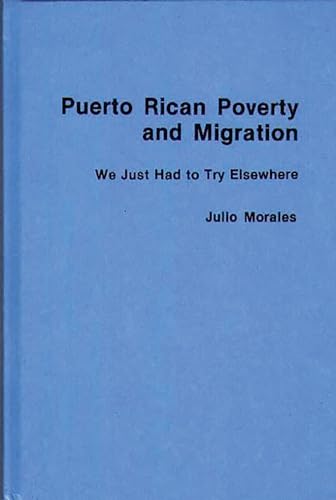
An expansion of the author's doctoral dissertation in social welfare (Brandeis), this book is based on 196 interviews with Hispanic families in the Waltham area during 1975-76. The author (University of Connecticut), examines patterns of migration, language, discrimination, employment, health, and race. The author urges that policies towards minorities be based on human needs, not pluralist notions of political participation. Excerpts from interviews are provided together with translation of interviews in Spanish. Useful for academic libraries and research collections. Bibliography cited by author is strongest in areas related to Hispanic migration and weakest in theory and comparative social science literature.-R.M. Levine, University of MiamiNotas de autor provistas por Syndetics
rales /f Julio