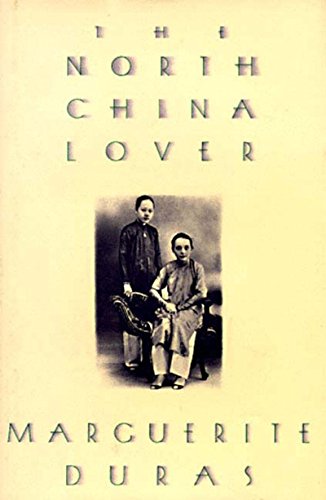

The North China lover Marguerite Duras ; translated by Leigh Hafrey.
Idioma: Inglés Lenguaje original: Francés Detalles de publicación: New York New Press Distributed by W.W. Norton c1992.Descripción: 231 p. 22 cmISBN:- 1565840186
- 843/.912 20
- PQ2607.U8245 A62713 1992
| Imagen de cubierta | Tipo de ítem | Biblioteca actual | Biblioteca de origen | Colección | Ubicación en estantería | Signatura topográfica | Materiales especificados | Info Vol | URL | Copia número | Estado | Notas | Fecha de vencimiento | Código de barras | Reserva de ítems | Prioridad de la cola de reserva de ejemplar | Reservas para cursos | |
|---|---|---|---|---|---|---|---|---|---|---|---|---|---|---|---|---|---|---|
| Libro | Biblioteca de Mayagüez Colección General mb | PQ2607 .U8245 A62713 1992 (Navegar estantería(Abre debajo)) | Disponible | 50000003230728 |
Descripciones mejoradas de Syndetics:
Far more daring and truthful than any of her other novels, The North China Lover is a fascinating retelling of the dramatic experiences of Duras's adolescence that shaped her most famous work. Initially conceived as notes toward a screenplay for The Lover , this later novel, written toward the end of her life, emphasizes the tougher aspects of her youth in Indochina and possesses the intimate feel of a documentary.
Both shocking and enthralling, the story Duras tells is "so powerfully imagined (or remembered) that it . . . lingers like a strong perfume" ( Publishers Weekly ). Hailed by the French critics as a return to "the Duras of the great books and the great days," it is a mature and complex rendering of a formative period in the author's life.
Reseñas proporcionadas por Syndetics
Publishers Weekly Review
The veteran French author, who scored a considerable success with The Lover, here zeroes in much more closely on the passionate affair between her young self, a French teenager at a school in Indo-China in the early 1930s, and the spoiled young son of a Chinese millionaire. Beginning as bare notes toward a film script (Duras wrote the script for Hiroshima, Mon Amour), the story quickly takes on its own intense, exotic flavor. The febrile sexuality of the young girls at the school, the languid emotionalism of the Chinese lover, the splendid cars, the melancholy American dance music, the open roads across the rice paddies under wide rainy skies, the cinemas and nightclubs, and finally the ocean liner that takes her tragic family back to F'rance-Duras evokes all this with the utmost economy but the most telling atmospheric force. No doubt her lean, haunting prose reads even more beautifully in the original French, but Duras's story is so powerfully imagined (or remembered) that its blend of passion and cynicism lingers like a strong perfume. Irresistible for grownup romantics. (Oct.) (c) Copyright PWxyz, LLC. All rights reservedNotas de autor provistas por Syndetics
Marguerite Duras was born in Gia-Dinh, Indochina on April 4, 1914. After attending school in Saigon, she moved to Paris, France to study law and political science. After graduation, she worked as a secretary in the French Ministry of the Colonies until 1941. During World War II, she joined the Resistance and published her first books. After the liberation, she became a member of the French Communist Party, and though she later resigned, she always described herself as a Marxist.Her first book, Les Impudents, was published in 1943. During her lifetime, she wrote more than 70 novels, plays, screenplays and adaptations. Her novels include The Sea Wall, The Lover, The Lover from Northern China, The War, and That's All. In 1959, she wrote her first film scenario, Hiroshima, Mon Amour, and has since been involved in a number of other films, including India Song, Baxter, Vera Baxter, Le Camion (The Truck), and The Lover. She died on March 4, 1996 at the age of 81.
(Bowker Author Biography)