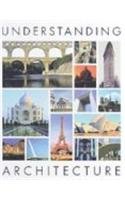
Imagen de portada de Amazon
Imagen de Amazon.com
Imagen de cubierta Syndetics
Portada de Syndetics
Imagen de OpenLibrary

Understanding architecture Marco Bussagli. txt

Por: New York I.B.Tauris & Co. Ltd 2005Descripción: 383 p. ill. (some col.) 28 cmTipo de contenido:
  • text
Tipo de medio:
  • unmediaded
Tipo de soporte:
  • volume
ISBN:
  • 0765680718
  • 9780765680716
Títulos uniformes: Tema(s): Clasificación CDD:
  • 22 720.9
Clasificación LoC:
  • NA200 B87 2005
Valoración
    Valoración media: 0.0 (0 votos)
Existencias
Imagen de cubierta Tipo de ítem Biblioteca actual Biblioteca de origen Colección Ubicación en estantería Signatura topográfica Materiales especificados Info Vol URL Copia número Estado Notas Fecha de vencimiento Código de barras Reserva de ítems Prioridad de la cola de reserva de ejemplar Reservas para cursos
Libro CARIBET Biblioteca Arquitectura Colección General CARIBET General NA200 B87 2005 (Navegar estantería(Abre debajo)) 1 Disponible 91000000026286
Total de reservas: 0

Descripciones mejoradas de Syndetics:

This text examines the concept of freedom in the context of American labour history. Nine essays develop themes in this history which show that "liberty of contract" and "inalienable rights" form two contradictory traditions concerning freedom.

Includes index.

Tabla de contenidos provista por Syndetics

  • Volume 1 What is Architecture?
  • People and Space
  • Natural Environment and Human Environment
  • From Territory to City
  • A Brief History of Urban Planning
  • Building for Beauty
  • Music and Architecture
  • Architecture and the Theory of Proportions
  • Architecture and Anthropomorphism
  • Architecture and Industrial Design
  • Architecture and Decoration
  • Architecture and Nature
  • The Garden
  • Buildings and Typologies
  • Habitations
  • Religious Buildings
  • Public Buildings
  • Military Construction
  • Towers, Skyscrapers, and Lighthouses
  • Collective Architecture
  • Manufacturing Facilities
  • Service Facilities
  • Transportation Infrastructures
  • Commercial Buildings
  • Tombs and Cemeteries
  • Techniques, Materials, and Structures
  • Building with Wood
  • Building with Stone
  • Building with Brick
  • Reinforced Concrete and Prefabricated Buildings
  • Building with Iron, Steel, and Glass
  • Columns and Other Vertical Elements
  • Capitals
  • The Architrave and other Horizontal Elements
  • The Arch
  • Vaults and Ceilings
  • The Dome
  • Facades
  • Doors, Portails, and Porticoes
  • Windows and Stained Glass
  • Plans and Planimetry
  • Styles
  • Antiquity
  • The Architectural Orders
  • Christian and Byzantine Architecture
  • Barbarian Architecture
  • Islamic Architecture
  • Arab-Norman, Moorish, and Mozarabic Architecture
  • Romanesque Architecture
  • Gothic Architecture
  • Chinese Architecture
  • Renaissance Architecture
  • From Mannerism to Baroque
  • From Late Baroque to Rocco
  • Early Indian Architecture
  • Pre-Columbian Architecture
  • Neoclassical Architecture
  • Neo-Gothic, or Gothic Revival Architecture
  • Eclecticism
  • Modernism and Art Nouveau
  • Japanese Architecture
  • Modern Classicism
  • Avant-garde Architecture
  • The Modern Movement
  • The International Style
  • Contemporary Architecture
  • Index
  • Volume 2 Civilizations, Architectural Achievements, Outstanding Figures
  • Neolithic Populations and Ethnographic Cultures
  • The Egyptians
  • The Pyramids
  • The Civilizations of the Indus Valley
  • In the Land Between Two Rivers
  • The Peoples of the Iranian Plateau
  • Persepolis
  • Crete and Mycenae
  • The Etruscans
  • The Seven Wonders of the Ancient World
  • Greece and Rome: Architecture Compared
  • The Acropolis of Athens
  • The Roman Forums
  • Aqueducts
  • The Great Sanctuaries
  • Theaters and Amphitheaters
  • The Pantheon
  • The Mausoleum of Santa Costanza
  • Constantinople
  • Hagia Sophia
  • Theodoric's Mausoleum
  • The Dome of the Rock in Jerusalem
  • Rock-Cut Architecture
  • The Palatine Chapel at Aquisgrana
  • The Umayyad Castles
  • Angkor
  • Borobudur
  • Khajuraho
  • Hildesheim
  • Cluny and Citeaux
  • Fontenay
  • Durham
  • Modena
  • Pisa
  • Aries
  • Conques
  • St. Mark's Basilica
  • Monreale
  • Santiago de Compostela
  • Chartres
  • Benedetto Antelami
  • Villard de Honnecourt
  • The Duomo of Siena and the Duomo of Orvieto
  • Todi
  • Bruges
  • Canterbury
  • Lubeck
  • Arnolfo di Cambio and Giotto
  • The Parler Family
  • The Alhambra
  • Peking and the Forbidden City
  • Filippo Brunelleschi
  • Palazzo Ducale in Urbino
  • Leon Battista Alberti
  • Donato Bramante
  • Raphael
  • Michelangelo Buonarroti
  • St. Peter's Basilica
  • Olmecs, Toltecs, Aztecs, Mayas, and Incas
  • Andrea Palladio
  • Gianlorenzo Bernini
  • Francesco Borromini
  • The Royal Palace of Versailles
  • The Taj Mahal
  • Christopher Wren
  • Johann Balthasar Neumann
  • Thomas Jefferson
  • Etienne-Louis Boullee and Claude-Nicolas Ledoux
  • Giacomo Quarenghi
  • Giuseppe Valadier
  • John Nash
  • Giuseppe Sacconi and the Vittoriano
  • Eugene-Emmanuel Viollet-le-Duc
  • The Houses of Parliament
  • Gustave Eiffel
  • Charles Rennie Mackintosh
  • Antoni Gaudi
  • Antonio Sant'Elia
  • Louis Henry Sullivan
  • Frank Lloyd Wright
  • The Katsura Imperial Villa
  • Marcello Piacentini
  • Le Corbusier
  • Walter Gropius
  • Ludwig Miles van der Rohe
  • Alvar Aalto
  • Brasilia
  • The Sydney Opera House
  • Kenzo Tange
  • Arata Isozaki
  • The Louvre and Ieoh Ming Pei
  • Robert Venturi
  • Frank Owen Gehry
  • Renzo Piano
  • Santiago Calatrava
  • Index

Reseñas proporcionadas por Syndetics

Library Journal Review

First published in Italian in 2003, this expansive text is something of a packaging puzzle. Beautifully produced, it contains a large amount of quality information in text and images. Short articles, frequent headings, and 1000 color graphics suggest an appeal to young adults, and the LC cataloging in publication confirms it. Most articles are two-page spreads with four relevant graphics. Yet, the translated text includes many long and complex sentences. The first volume introduces basic architecture concepts, types of buildings, materials, techniques, and historical styles. The second volume is a series of short articles on significant architects, buildings, and complexes throughout history. While Bussagli (Rome: Art and Architecture) includes examples from around the world, the emphasis is on Europe. All this could serve good adult-reference purposes, but the book lacks a bibliography. Overall, an unfocused effort; not recommended.-David R. Conn, Surrey P.L., B.C. (c) Copyright 2010. Library Journals LLC, a wholly owned subsidiary of Media Source, Inc. No redistribution permitted.

School Library Journal Review

Gr 7 Up-This smart, insightful narrative with outstanding graphics provides a nuanced survey of world architecture from Neolithic huts c. 4000 B.C.E. to the contemporary soaring structures of Santiago Calatrava. The crisp presentation includes abundant color photographs, renderings, diagrams, floor plans, and site plans, all exquisitely reproduced and seamlessly melded with bulleted text in uniform two- to four-page spreads. The first volume, What Is Architecture? is divided into "People and Space," "Buildings and Typologies," "Techniques, Materials, and Structures," and "Styles." The second, Civilizations, Architectural Achievements, Outstanding Figures, provides a chronological overview of selected masterpieces and the people and cultures that produced them. Unfortunately, access is hindered by the lack of a comprehensive index (an index that includes only personal names appears in each volume). Students will need to consult the contents pages for building types, materials and structures, and styles, such as skyscrapers, the arch, or "Islamic Architecture" (e.g., a student researching pyramids would find a relevant entry under architectural achievements in the table of contents). This set is a good choice for art history collections in need of a concise architecture overview. For a heftier tome, see Marian Moffett's A World History of Architecture (McGraw-Hill, 2003).-Mary Ann Carcich, Hampton Bays Public Library, NY (c) Copyright 2010. Library Journals LLC, a wholly owned subsidiary of Media Source, Inc. No redistribution permitted.

Booklist Review

This beautifully illustrated English translation of Capire l'architettura0 was produced in Italy. Volume 1, What Is Architecture?0 has four parts: "People and Space," "Buildings and Typologies," "Techniques, Materials, and Structures," and "Styles." Each is divided into numerous spreads of roughly two to four pages, such as "Music and Architecture," "Religious Buildings," "The Arch," and "Chinese Architecture." The section on styles runs the full gamut of well-known styles from antiquity to contemporary architecture in roughly chronological order. Volume 2, Civilizations, Architectural Achievements, Outstanding Figures0 , features 95 two-page spreads ranging from "Neolithic Populations and Ethnographic Cultures" to "Santiago Calatrava" Along the way are entries on Persepolis, Angkor, Canterbury, Raphael, Thomas Jefferson, the Katsura Imperial Villa, and Brasilia Although the set is given juvenile literature subject headings by the Library of Congress, the mostly color illustrations (two or three photos per page on average) will appeal to all ages and aptitudes. The text, however, though clear and well-organized, abounds in technical architectural terms that will be unfamiliar to readers of any age who are not architecture aficionados. The second paragraph of the entry on domes, for instance, includes the terms calotte, pendentives0 , and squinches,0 among others. Although many such terms are identified in nearby diagrams, a glossary would have been helpful. Moreover, while the table of contents makes finding Hagia Sophia or Chartres Cathedral easy enough, the index is limited to personal names and a small number of architects' studios and movements. With photos that may inspire some to travel and others to careers as architects, the set is suitable for high-school and public libraries. A highly recommended lower-cost alternative is Jonathan Glancey's The Story of Architecture 0 (DK, 2000); at about two-thirds the length of Understanding Architec0 ture, its pictures will also inspire, and its glossary and index make it more useful as a reference source. --Craig Bunch Copyright 2005 Booklist
Compartir
logopucpr-y-vive

Contáctanos

¡Queremos saber de ti!

Tel. 787.841.2000 Ext. 1801

bibliotecavaldes@pucpr.edu

⁣Búscanos en las redes

© 2026 Desarrollado por Ignite Online • All Rights Reserved • Powered by Koha.