Imagen de Amazon.com

Portada de Syndetics
Imagen de OpenLibrary
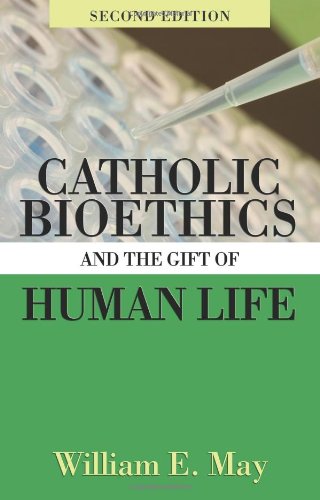
Catholic bioethics and the gift of human life William E. May.
Detalles de publicación: Huntington, Ind. Our Sunday Visitor 2008 ; 2000Edición: 2nd edDescripción: 382 pages ; 23 cmTipo de contenido:- text
- unmediated
- volume
- 9781592763306
- 9780879736835
- 174.957 M4661c2
- R 725.56 .M325
| Imagen de cubierta | Tipo de ítem | Biblioteca actual | Biblioteca de origen | Colección | Ubicación en estantería | Signatura topográfica | Materiales especificados | Info Vol | URL | Copia número | Estado | Notas | Fecha de vencimiento | Código de barras | Reserva de ítems | Prioridad de la cola de reserva de ejemplar | Reservas para cursos | |
|---|---|---|---|---|---|---|---|---|---|---|---|---|---|---|---|---|---|---|
| Libro | Biblioteca Encarnación Valdés Colección General bev | 174.957 M4661c2 (Navegar estantería(Abre debajo)) | Disponible | 80000002466616 | ||||||||||||||
| Libro BET | Biblioteca Escuela de Teología Colección General BET | R 725.56 .M325 2000 (Navegar estantería(Abre debajo)) | Disponible | 41000000004086 |
Total de reservas: 0
Descripciones mejoradas de Syndetics:
What the Church teaches and why on issues of euthanasia, invitro fertilization, genetic counseling, assisted suicide, living wills, persistent vegetative state, organ transplants, and more.
Includes bibliographical references (p. 361-365) and index.
Tabla de contenidos provista por Syndetics
- Introduction to the Second Edition(p. 17)
- Chapter 1 Church Teaching and Major Issues In Bioethics(p. 21)
- 1 John Paul II's Encyclical Evangelium Vitae(p. 22)
- A Chapter One: "Present-Day Threats to Human Life"(p. 22)
- B Chapter Two: "The Christian Message Concerning Life"(p. 24)
- C Chapter Three: "God's Holy Law"(p. 26)
- D Chapter Four: "For a New Culture of Human Life"(p. 32)
- Conclusion(p. 35)
- 2 The Vatican Instruction on Respect for Human Life in Its Origin and on the Dignity of Procreation (Donum Vitae)(p. 35)
- A Introduction(p. 35)
- B Part I: Respect for Human Embryos(p. 36)
- C Part II: Interventions Upon Human Procreation(p. 37)
- (1) Heterologous Artificial Insemination(p. 37)
- (2) Homologous Artificial Insemination(p. 38)
- D Part III: Moral Law and Civil Law(p. 39)
- Conclusion(p. 40)
- 3 Declaration on Procured Abortion(p. 40)
- A Introduction(p. 40)
- B In the Light of Faith(p. 41)
- C In the Additional Light of Reason(p. 41)
- D Reply to Some Objections(p. 42)
- E Morality and the Law(p. 43)
- F Conclusion(p. 43)
- 4 Declaration on Euthanasia(p. 43)
- A Introduction(p. 44)
- B Part I: The Value of Human Life(p. 44)
- C Part II: Euthanasia(p. 44)
- D Part III: The Meaning of Suffering for Christians and the Use of Painkillers(p. 45)
- E Part IV: Due Proportion in the Use of Remedies(p. 45)
- Conclusion to Chapter One(p. 46)
- Endnotes for Chapter One(p. 46)
- Chapter 2 Making True Moral Judgments and Good Moral Choices(p. 49)
- 1 The Meaning of a "Human Act"; Its Existential and Religious Significance; the Sources of Its Moral Character(p. 50)
- A The Meaning of a "Human Act"(p. 50)
- B The Existential, Religious Significance of Human Acts as Freely Chosen(p. 51)
- C The Sources of the Morality of a Human Act(p. 52)
- 2 Kinds of Human Dignity; Human Freedom and God's Wise and Loving Plan for Human Existence(p. 54)
- A Kinds of Human Dignity(p. 54)
- B Human Freedom of Choice and God's Wise and Loving Plan for Human Existence(p. 55)
- 3 The Relationship Between the "Good" and Human Choices and Action; the First Principles of Natural Law(p. 56)
- 4 Normative Truths of Natural Law(p. 58)
- 5 Steps in Making True Moral Judgments(p. 62)
- 6 The "Fulfillment" or "Perfection" of Natural Law Through the Redemptive Work of Christ(p. 63)
- Endnotes for Chapter Two(p. 64)
- Chapter 3 Generating Human Life: Marriage and the New Reproductive Technologies(p. 67)
- Introduction(p. 67)
- 1 Part One: Fornication, Adultery, and the Generation of Human Life(p. 68)
- 2 Part Two: Marriage and the Generation of Human Life(p. 68)
- A Marriage, Marital Rights, and Capacities(p. 69)
- B The Meaning of the Marital Act(p. 70)
- C "Begetting" Human Life Through the Marital Act(p. 72)
- 3 Part Three: Generating Human Life Through New Reproductive Technologies(p. 73)
- A The Teaching of Pius XII and the Pontifical Academy for Life(p. 73)
- B The New Reproductive Technologies(p. 75)
- (1) Artificial Fertilization(p. 75)
- (a) Artificial Insemination(p. 75)
- (b) In Vitro Fertilization and Embryo Transfer(p. 76)
- (c) Alternative Technologies Using Male and Female Gametic Cells(p. 79)
- (2) Cloning or Agametic Reproduction(p. 80)
- C An Ethical and Theological Evaluation of the New Reproductive Technologies(p. 80)
- (1) Ethical Reasons Why Non-Marital Ways of Generating New Human Life Are Intrinsically Immoral(p. 80)
- (2) The Basic Theological Reason Why Human Life Ought To Be Generated Only in and Through the Marital Act(p. 87)
- 4 Part Four: "Assisted" Insemination/Fertilization(p. 88)
- A Basic Criteria(p. 88)
- B Acknowledged Instances of Assisted Insemination or Fertilization(p. 90)
- (1) Use of Perforated Condom to Circumvent Hypospadias(p. 90)
- (2) Low Tubal Ovum Transfer (LTOT)(p. 90)
- (3) Moving Sperm Deposited in the Vagina Into the Uterus and Fallopian Tubes(p. 91)
- C Controverted Technologies(p. 91)
- (1) Temporary Removal of Sperm or of Ova to "Wash" and "Capacitate" Them(p. 91)
- (2) Accumulating Sperm From a Series of Marital Acts and Introducing Them Into the Wife's Vagina in Conjunction With a Marital Act(p. 92)
- (3) Gamete Intrafallopian Tube Transfer (GIFT) and Tubal Ovum Transfer with Sperm (TOTS)(p. 93)
- D Conclusion to Part Four; a Word About Fertility Drugs(p. 94)
- 5 Part Five: "Rescuing" Frozen Embryos(p. 95)
- A Does Donum Vitae Itself Provide an Answer?(p. 96)
- B Truths Accepted by All Parties to the Debate(p. 98)
- C Central Moral Considerations(p. 98)
- D Reasons Supporting an Affirmative Answer(p. 100)
- E Objections(p. 101)
- (1) It Is Intrinsically Evil for a Woman to Allow Herself to Become Pregnant by Means Other Than the Conjugal Act(p. 102)
- (a) Geach on the "Moral Object" Necessarily Entailed in HET(p. 104)
- (b) Tonti-Filippini on HET as Marital Infidelity(p. 105)
- (c) Pacholczyk on Pregnancy as Integral to Procreation and HET as Violating the Integrity of Marriage(p. 106)
- (d) Austriaco's Argument Based on the Father's Role in Conception/Pregnancy(p. 108)
- (e) Summarizing Conclusion to the Objection That HET Is Intrinsically Evil Because It Violates Marriage or the Conjugal Act or a Woman's Reproductive Integrity(p. 109)
- (2) It Is Intrinsically Evil for an Unmarried Woman to Become Pregnant With an Abandoned and Orphaned Embryo and Give It Up for Adoption After Birth(p. 109)
- Conclusion(p. 112)
- Endnotes for Chapter Three(p. 113)
- Chapter 4 Contraception and Respect for Human Life(p. 127)
- Introduction(p. 127)
- 1 Pope John Paul II on the Roots of the Culture of Death and Contraception's Relationship to It(p. 131)
- 2 Contraception vs. "Recourse to the Rhythm of the Cycle": Their Anthropological and Moral Differences, One Ultimately Entailing "Irreconcilable Concepts of the Human Person and of Human Sexuality"(p. 132)
- A Contraception: Its Underlying Anthropology and Moral Methodology(p. 133)
- B Recourse to the Rhythm of the Cycle: Its Underlying Anthropology and Moral Methodology(p. 139)
- 3 Contraception: An Anti-Life Act(p. 141)
- 4 Contraception: Both Anti-Love and Anti-Life(p. 144)
- 5 Sterilization(p. 147)
- A Why Contraceptive Sterilization Is Morally Wrong(p. 147)
- B Medical Dangers of Tubal Ligation(p. 148)
- C Moral Dangers of Contraception and Sterilization(p. 148)
- D What to Do if One Has Been Sterilized?(p. 149)
- 6 Condoms and Prevention of HIV(p. 150)
- A It Is Intrinsically Evil for Spouses to Use Condoms as a Means of Preventing Their Intercourse From Transmitting HIV Because Such Intercourse Is Not Per Se Apt for Generation and Is Hence "Non-Marital"(p. 151)
- B Such Use of Condoms by Spouses Is Intrinsically Wrong Because It Renders Such Acts "Non-Marital" by Making Them Unfit for "One Flesh" Union(p. 152)
- C Such Use Is Also Intrinsically Wrong Because It Is Frequently Done With Contraceptive Intent(p. 153)
- D Such Use Cannot Be Approved as "The Lesser of Two Evils"(p. 153)
- Appendix Preventing Conception When in Danger of Rape or After Rape(p. 154)
- Endnotes for Chapter Four(p. 156)
- Chapter 5 Abortion and Human Life(p. 165)
- Introduction: Structure of This Chapter(p. 165)
- 1 Resume and Clarification of Church Teaching(p. 166)
- A The Definition of Abortion(p. 167)
- B "Ensoulment" or Infusion of the Immortal Soul(p. 167)
- C "Direct" vs. "Indirect" Abortion(p. 168)
- 2 Some Relevant Scientific Data(p. 170)
- 3 It Is Reasonable to Believe That Most People Begin at Fertilization and Unreasonable to Deny This(p. 172)
- A Personhood Requires Exercisable Cognitive Abilities(p. 175)
- B Personhood Depends on Sense Organs and a Brain: The "Delayed Hominization" Theory(p. 179)
- C Individual Personhood Cannot Be Established Before Implantation(p. 182)
- 4 The Special Moral Gravity of Abortion, a Woman's "Right" to Abortion, the Difference Between a "Right" and a "Liberty"(p. 186)
- A The Unique Moral Gravity of Abortion(p. 186)
- B A Woman's "Right" to an Abortion(p. 188)
- C The Difference Between a "Right" and a "Liberty"(p. 190)
- 5 Abortion as "Removal" vs. Abortion as "Killing"(p. 192)
- A Lee's Analysis and Position(p. 193)
- B Critique(p. 195)
- 6 The Management of Ectopic Pregnancies(p. 199)
- A Ectopic Pregnancies and Their Frequency(p. 199)
- B Medically Available Procedures for Coping With Ectopic Pregnancies(p. 199)
- C The Ethical and Religious Directives(p. 200)
- D Current Debates Over Management of Ectopic Pregnancies(p. 201)
- Conclusion to Chapter Five(p. 202)
- Endnotes for Chapter Five(p. 202)
- Chapter 6 Experimentation on Human Subjects(p. 213)
- 1 Introduction: The Cardinal Principle of Free and Informed Consent(p. 213)
- A Basic Types of Experimentation(p. 214)
- B The Key Principle or "Canon of Loyalty": The Principle of Free and Informed Consent(p. 215)
- (1) The Principle of Free and Informed Consent and Relevant Teaching of the Magisterium(p. 216)
- (2) Interpreting This Principle(p. 217)
- (3) Other Ethical Principles/Norms Governing Biomedical Research on Human Subjects(p. 219)
- 2 Proxy Consent: Its Meaning, Justification, and Limits(p. 220)
- A Proxy Consent in the Therapeutic Situation(p. 220)
- B Voluntary Consent in the Non-Therapeutic Situation: Can This Ever Be Morally Required?(p. 221)
- C Proxy Consent in the Non-Therapeutic Situation(p. 222)
- (1) Arguments For and Against(p. 222)
- (2) Relevant Magisterial Teaching(p. 226)
- (3) Conclusion to "Proxy" Consent for Non-Competent or "Voiceless" Subjects to Participate in Non-Therapeutic Experimentations(p. 228)
- 3 Research on the Unborn, in Particular, Embryonic Stem-Cell Research(p. 229)
- A What Are Human Embryonic Stem Cells and Why Are They Sought for Research?(p. 229)
- B Why Research on Embryonic Stem Cells Is Gravely Immoral(p. 230)
- C Propaganda vs. Facts(p. 231)
- D Legitimate Sources of Stem Cells for Research(p. 232)
- E Proposed New Sources for Embryonic Stem Cells in Ways That Do Not Require the Killing of Human Beings During the Embryonic Stage of Their Existence(p. 232)
- (1) Pluripotent Stem Cells From Adult Skin Cells(p. 232)
- (2) The President's Council on Bioethics 2005 "White Paper"(p. 233)
- (3) Hurlbut's Altered Nuclear Transfer Proposal(p. 233)
- (4) Altered Nuclear Transfer-Oocyte Assisted Reprogramming(p. 234)
- (5) Pluripotent Cells in Amniotic Fluid(p. 236)
- (6) Pluripotent Stem Cells From Mice(p. 236)
- 4 Genetic Therapy(p. 237)
- A Gene Therapy: Its Definition and Types(p. 237)
- B How Gene Therapy "Works"(p. 238)
- C Strategies for Gene Therapy(p. 239)
- D Delivering Therapeutic Genes(p. 239)
- E The Morality of Somatic Cell Gene Therapy(p. 240)
- F Germ-Line "Therapy"(p. 241)
- 5 Prenatal and Pre-Implantation Screening(p. 241)
- A Prenatal Diagnosis and Screening(p. 241)
- (1) Moral Misuse of Prenatal Screening(p. 242)
- (2) Morally Good Uses of Prenatal Testing(p. 243)
- (3) Conclusion(p. 244)
- B Pre-Implantation Diagnosis and Screening(p. 244)
- 6 Genetic Counseling(p. 246)
- 7 The Human Genome Project(p. 248)
- Endnotes for Chapter Six(p. 249)
- Chapter 7 Euthanasia, Assisted Suicide, and Care of the Dying(p. 259)
- Introduction: The Contemporary Movement for Euthanasia and Assisted Suicide(p. 259)
- 1 Clarifying the Terminology(p. 261)
- 2 The "Ethics of Euthanasia"(p. 264)
- A Voluntary Active Euthanasia(p. 264)
- (1) The "Principle of Autonomy"(p. 264)
- (2) "Personal" Life vs. "Biological" Life(p. 265)
- B Nonvoluntary Euthanasia(p. 266)
- (1) "Quality of Life" Judgments Justifying Nonvoluntary Euthanasia(p. 266)
- (2) Nonpersonhood and Nonvoluntary Euthanasia(p. 267)
- C The Legal or Jurisprudential Issue(p. 268)
- D Summary and Conclusion: The "Ethics of Euthanasia"(p. 269)
- 3 Critique of the "Ethics of Euthanasia"(p. 270)
- A Autonomy and Voluntary Euthanasia vs. the Sanctity of Life(p. 270)
- B "Quality of Life" Judgments and Justice(p. 273)
- C Dualism and Euthanasia(p. 273)
- D Voluntary Active Euthanasia and the Law(p. 274)
- 4 The "Ethics of Benemortasia"(p. 275)
- A The Intrinsic Good of Human Life and the Evil of Intentional Killing(p. 276)
- B Criteria for Distinguishing Between "Ordinary" ("Proportionate") and "Extraordinary" ("Disproportionate") Treatments(p. 277)
- (1) Relevant Church Teaching and Its Interpretation(p. 277)
- (2) Interpreting Pius XII's Statement: Kevin O'Rourke's View Criticized(p. 278)
- (3) Legitimate vs. Illegitimate "Quality of Life" Judgments(p. 280)
- (4) Richard McCormick's "Quality of Life" Position(p. 281)
- (5) Criteria for Determining Whether Treatments Are "Ordinary" ("Proportionate") or "Extraordinary" ("Disproportionate")(p. 282)
- C Summary: The Presuppositions of the "Ethics of Benemortasia"(p. 284)
- 5 Caring for the Permanently Unconscious and Persons in the "Persistent Vegetative State"(p. 285)
- Introduction(p. 285)
- A Comments on the "'Persistent' Vegetative State"(p. 285)
- B Responses Prior to Pope John Paul II's Address(p. 287)
- (1) Responses by U.S. Bishops(p. 287)
- (2) The Theological Position Claiming That Tubal Feeding of PVS Patients Is Not Morally Required(p. 288)
- (3) The Position Holding That Artificially Providing Food to PVS Persons Is Obligatory(p. 289)
- C Pope John Paul II's Address of March 20, 2004(p. 291)
- (1) Context and Key Themes(p. 291)
- (2) Comments(p. 292)
- D Negative Responses to This Address(p. 292)
- E My Defense of John Paul II's Address(p. 294)
- (1) Compatibility of the March 20 Address With "Traditional Catholic Teaching"(p. 294)
- (2) Does John Paul II Impose Excessively Grave Burdens on Families?(p. 295)
- F Definitive Defense by the Congregation for the Doctrine of the Faith's August 1, 2007, "Responses to Certain Questions of the United States Conference of Catholic Bishops Concerning Artificial Nutrition and Hydration"(p. 296)
- 6 Advance Directives(p. 302)
- A The Living Will(p. 302)
- B The Durable Power of Attorney(p. 303)
- Endnotes for Chapter Seven(p. 305)
- Chapter 8 Defining Death and Organ Transplantaton(p. 315)
- Introduction(p. 315)
- 1 The State of the Question Up to 2000(p. 318)
- A Pope John Paul II on Death Prior to 2000(p. 318)
- (1) The Value of Human Life, Including Bodily Life(p. 318)
- (2) The Definition of Death(p. 318)
- (3) Human Death and Organ Transplants(p. 319)
- B The Conclusions of the "Working Group" of Scientists(p. 319)
- (1) The Clinical Definition of Death(p. 319)
- (2) Clinical Indications That Death Has Occurred(p. 319)
- (3) Artificial Prolongation of Organ Functions(p. 320)
- C The Rationale for Identifying "Brain Death" With Human Death(p. 320)
- (1) Historical Background(p. 320)
- (2) The Consensus on "Brain Death": The Report of the President's Commission(p. 321)
- (3) The Presuppositions Underlying This Consensus(p. 321)
- D Alan Shewmon's Challenge to "Brain Death"(p. 323)
- (1) Evidence Challenging the Claim That the Brain Is the Central Integrating Organ(p. 323)
- (2) Criteria for Determining the "Integrative Unity" of the Human Body(p. 324)
- (3) New Criteria for Determining That Death Has Occurred(p. 324)
- 2 Pope John Paul II's Address of August 29, 2000, and Shewmon's Commentary Thereon(p. 325)
- A Pope John Paul II's Address of August 29, 2000, to the Eighteenth Meeting of the Transplantation Society(p. 325)
- (1) The Text of the Papal Address(p. 325)
- (2) Comment(p. 330)
- B Shewmon's Commentary on the Holy Father's Address(p. 331)
- 3 Important Recent Developments in the Debate Over "Brain Death"(p. 335)
- A The President's Council on Bioethics(p. 335)
- (1) Meeting of September 6, 2007(p. 336)
- (2) Meeting of November 9, 2007(p. 340)
- B Other Developments(p. 344)
- (1) Shewmon's Post-2000 Position(p. 344)
- (2) James DuBois's Views(p. 348)
- 4 Evaluative Conclusion to This Debate(p. 351)
- 5 Significant Developments in the First Part of 2008(p. 352)
- 6 Organ Transplants From the Living (Inter Vivos)(p. 353)
- Endnotes for Chapter Eight(p. 357)
- Bibliography and Resources(p. 361)
- Index(p. 367)