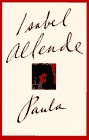
Imagen de portada de Amazon
Imagen de Amazon.com
Imagen de cubierta Syndetics
Portada de Syndetics
Imagen de OpenLibrary

Paula Isabel Allende.

Por: Detalles de publicación: New York Rayo-Harper Collins Publishers c2002.Descripción: 366 p. 24 cmTipo de contenido:
Tipo de medio:
Tipo de soporte:
ISBN:
  • 0060172533
Tema(s): Clasificación LoC:
  • PQ8098.1 .L54 P37 2002
Premios: Haga clic para abrir en una nueva ventana
Valoración
    Valoración media: 0.0 (0 votos)
Existencias
Imagen de cubierta Tipo de ítem Biblioteca actual Biblioteca de origen Colección Ubicación en estantería Signatura topográfica Materiales especificados Info Vol URL Copia número Estado Notas Fecha de vencimiento Código de barras Reserva de ítems Prioridad de la cola de reserva de ejemplar Reservas para cursos
Libro Biblioteca de Mayagüez Colección General mb PQ8098.1 .L54 P37 2002 (Navegar estantería(Abre debajo)) Disponible 50000003210829
Total de reservas: 0

Descripciones mejoradas de Syndetics:

One of the most popular and acclaimed of Latin American authors presents an unforgettable memoir. An exquisitely rendered, deeply moving mother-daughter story that doubles as Allende's autobiography, Paula is a prodigious evocation and a hymn to life, written from the heart.

eigm 01/2012

eigm 01/2012

Extracto provisto por Syndetics

Paula A Memoir Chapter One December 1991 to May 1992 Listen, Paula. I am going to tell you a story, so that when you wake up you will not feel so lost. The legend of our family begins at the end of the last century, when a robust Basque sailor disembarked on the coast of Chile with his mother's reliquary strung around his neck and his head swimming with plans for greatness. But why start so far back? It is enough to say that those who came after him were a breed of impetuous women and men with sentimental hearts and strong arms fit for hard work. Some few irascible types died frothing at the mouth, although the cause may not have been rage, as evil tongues had it, but, rather, some local pestilence. The Basque's descendants bought fertile land on the outskirts of the capital, which with time increased in value; they became more refined and constructed lordly mansions with great parks and groves; they wed their daughters to rich young men from established families; they educated their children in rigorous religious schools; and thus over the course of the years they were integrated into a proud aristocracy of landowners that prevailed for more than a century--until the whirlwind of modern times replaced them with technocrats and businessmen. My grandfather was one of the former, the good old families, but his father died young of an unexplained shotgun wound. The details of what happened that fateful night were never revealed, but it could have been a duel, or revenge, or some accident of love. In any case, his family was left without means and, because he was the oldest, my grandfather had to drop out of school and look for work to support his mother and educate his younger brothers. Much later, when he had become a wealthy man to whom others doffed their hats, he confessed to me that genteel poverty is the worst of all because it must be concealed. He was always well turned out--in his father's clothes, altered to fit, the collars starched stiff and suits well pressed to disguise the threadbare cloth. Those years of penury tempered his character; in his credo, life was strife and hard work, and an honorable man should not pass through this world without helping his neighbor. Still young, he already exhibited the concentration and integrity that were his characteristics; he was made of the same hard stone as his ancestors and, like many of them, had his feet firmly on the ground. Even so, some small part of his soul drifted toward the abyss of dreams. Which was what allowed him to fall in love with my grandmother, the youngest of a family of twelve, all eccentrically and deliciously bizarre--like Teresa, who at the end of her life began to sprout the wings of a saint and at whose death all the roses in the Parque Japones withered overnight. Or Ambrosio, a dedicated carouser and fornicator, who was known at moments of rare generosity to remove all his clothing in the street and hand it to the poor. I grew up listening to stories about my grandmother's ability to foretell the future, read minds, converse with animals, and move objects with her gaze. Everyone says that once she moved a billiard table across a room, but the only thing I ever saw move in her presence was an insignificant sugar bowl that used to skitter erratically across the table at tea time. These gifts aroused certain misgivings, and many eligible suitors were intimidated by her, despite her charms. My grandfather, however, regarded telepathy and telekinesis as innocent diversions and in no way a serious obstacle to marriage. The only thing that concerned him was the difference in their ages. My grandmother was much younger than he, and when he first met her she was still playing with dolls and walking around clutching a grimy little pillow. Because he was so used to seeing her as a young girl, he was unaware of his passion for her until one day she appeared in a long dress and with her hair up, and then the revelation of a love that had been gestating for years threw him into such a fit of shyness that he stopped calling. My grandmother divined his state of mind before he himself was able to undo the tangle of his own feelings and sent him a letter, the first of many she was to write him at decisive moments in their lives. This was not a perfumed billet-doux testing the waters of their relationship, but a brief note penciled on lined paper asking him straight out whether he wanted to marry her and, if so, when. Several months later they were wed. Standing before the altar, the bride was a vision from another era, adorned in ivory lace and a riot of wax orange blossoms threaded through her chignon. When my grandfather saw her, he knew he would love her obstinately till the end of his days. To me, they were always Tata and Meme. Of their children, only my mother will figure in this story, because if I begin to tell you about all the rest of the tribe we shall never be finished, and besides, the ones who are still living are very far away. That's what happens to exiles; they are scattered to the four winds and then find it extremely difficult to get back together again. My mother was born between the two world wars, on a fine spring day in the 1920s. She was a sensitive girl, temperamentally unsuited to joining her brothers in their sweeps through the attic to catch mice they preserved in bottles of Formol. She led a sheltered life within the walls of her home and her school; she amused herself with charitable works and romantic novels, and had the reputation of being the most beautiful girl ever seen in this family of enigmatic women. From the time of puberty, she had lovesick admirers buzzing around like flies, young men her father held at bay and her mother analyzed with her tarot cards; these innocent flirtations were cut short when a talented and equivocal young man appeared and effortlessly dislodged his rivals, fulfilling his destiny and filling my mother's heart with uneasy emotions. That was your grandfather Tom s, who disappeared in a fog, and the only reason I mention him, Paula, is because some of his blood flows in your veins. This clever man with a quick mind and merciless tongue was too intelligent and free of prejudice for that provincial society, a rara avis in the Santiago of his time. It was said that he had a murky past; rumors flew that he belonged to the Masonic sect, and so was an enemy of the Church, and that he had a bastard son hidden away somewhere, but Tata could not put forward any of these arguments to dissuade his daughter because he lacked proof, and my grandfather was not a man to stain another's reputation without good reason. In those days Chile was like a mille-feuille pastry. It had more castes than India, and there was a pejorative term to set every person in his or her rightful place: roto, pije, arribista, si£tico, and many more, working upward toward the comfortable plateau of "people like ourselves." Birth determined status. It was easy to descend in the social hierarchy, but money, fame, or talent was not sufficient to allow one to rise, that required the sustained effort of several generations. Tomas's honorable lineage was in his favor, even though in Tata's eyes he had questionable political ties. By then the name Salvador Allende, the founder of Chile's Socialist Party, was being bruited about; he preached against private property, conservative morality, and the power of the large landowners. Tomas was the cousin of that young deputy. Paula A Memoir . Copyright © by Isabel Allende. Reprinted by permission of HarperCollins Publishers, Inc. All rights reserved. Available now wherever books are sold. Excerpted from Paula: A Memoir by Isabel Allende All rights reserved by the original copyright owners. Excerpts are provided for display purposes only and may not be reproduced, reprinted or distributed without the written permission of the publisher.

Reseñas proporcionadas por Syndetics

Library Journal Review

In this first book in HarperCollins's new Spanish-language series, the noted novelist considers her daughter's death. (c) Copyright 2010. Library Journals LLC, a wholly owned subsidiary of Media Source, Inc. No redistribution permitted.

Publishers Weekly Review

Allende is a mesmerizing novelist (The House of the Spirits; The Stories of Eva Luna) who here takes on a double challenge. Writing nonfiction for the first time, she interweaves the story of her own life with the slow dying of her 28-year-old daughter, Paula. A magician with words, Allende makes this grim scenario into a wondrous encounter with the innermost sorrows and joys of another human being. In 1991, while living in Madrid with her husband, Paula was felled by porphyria, a rare blood disease, and, despite endless care by her mother and husband, lapsed into an irreversible coma. Her mother, as she watched by Paula's bedside, began to write this book, driven by a desperation to communicate with her unconscious daughter. She writes of her own Chilean childhood, the violent death of her uncle, Salvador Allende, and the family's flight to Venezuela from the oppressive Pinochet regime. Allende explores her relationship with her own mother, documented in the hundreds of letters they exchanged since she left home. Allende later married-and divorced-an undemanding and loyal man and became a fierce feminist, rebelling against the constraints of traditional Latin American society. Eventually, hope waning, Allende and her son-in-law take the comatose Paula to California, where the author lives with her second husband. The climactic scenes of Paula's death in the rambling old house by the Pacific Ocean seem to take place in another time and space. Only a writer of Allende's passion and skill could share her tragedy with her readers and leave them exhilarated and grateful. QPB selection. (May) (c) Copyright PWxyz, LLC. All rights reserved

Booklist Review

/*STARRED REVIEW*/Readers particularly fond of Latin American fiction have appreciated this remarkable Chilean writer over the course of her career; others may have become aware of her by way of the recent movie version of her first novel, The House of the Spirits. But all Allende readers will embrace her latest book, which began as a letter to her grown daughter, who, in 1991, sank into an irreversible coma. As Allende sat at her daughter's bedside, as weeks turned into months and Paula remained comatose, she wrote down her family's history as a present for Paula upon her awakening--which, tragically, never happened. The letter grew to book length, and Allende now shares it with us. It's a vivid, dynamic account of her parents' and grandparents' lives and a remembrance of her own childhood, adolescence, and womanhood. She was born into a privileged Chilean family, and she has lived in various places around the world, about which she writes so lyrically. "La Paz," she records, "is an extraordinary city, so near heaven, and with such thin air, that you can see the angels at dawn. Your heart is always about to burst, and your gaze is lost in the consuming purity of endless vistas." As an adult in Chile, she worked in journalism and television; she's quite gripping when she discusses Chile under her uncle Salvador Allende's socialist regime and her family's terror after his deposition. Thereafter, she lived in Venezuela and the U.S., the places where her fiction writing career began and developed. Allende has an exciting life story to tell, and while her beloved daughter was not to be the recipient, it is, nonetheless, a gift to the rest of us. (Reviewed Mar. 15, 1995)0060172533Brad Hooper

Notas de autor provistas por Syndetics

Isabel Allende was born in 1942 in Lima, Peru, the daughter of a Chilean diplomat. When her parents separated, young Isabel moved with her mother to Chile, where she spent the rest of her childhood. She married at the age of 19 and had two children, Paula and Nicolas. Her uncle was Salvador Allende, the president of Chile. When he was overthrown in the coup of 1973, she fled Chile, moving to Caracas, Venezuela.

While living in Venezuela, Allende began writing her novels, many of them exploring the close family bonds between women. Her first novel, The House of the Spirits, has been translated into 27 languages, and was later made into a film. She then wrote Of Love and Shadows, Eva Luna, and The Stories of Eva Luna, all set in Latin America. The Infinite Plan was her first novel to take place in the United States. She explores the issues of human rights and the plight of immigrants and refugees in her novel, In The Midst of Winter. In Paula, Allende wrote her memoirs in connection with her daughter's illness and death. She delved into the erotic connections between food and love in Aphrodite: A Memoir of the Senses.

In addition to writing books, Allende has worked as a TV interviewer, magazine writer, school administrator, and a secretary at a U.N. office in Chile. She received the 1996 Harold Washington Literacy Award. She lives in California. Her title Maya's Notebook made The New York Times Best Seller List in 2013.

(Bowker Author Biography)

Compartir
logopucpr-y-vive

Contáctanos

¡Queremos saber de ti!

Tel. 787.841.2000 Ext. 1801

bibliotecavaldes@pucpr.edu

⁣Búscanos en las redes

© 2026 Desarrollado por Ignite Online • All Rights Reserved • Powered by Koha.