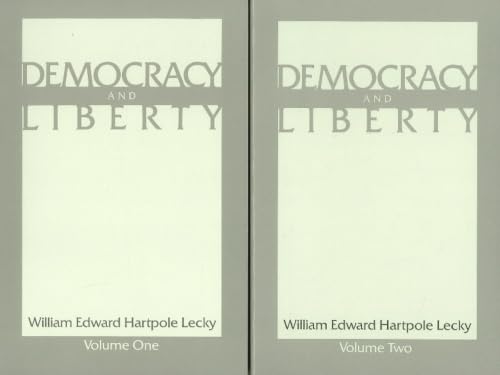

Democracy and liberty by William Edward Hartpole Lecky ; [photograph by Louis Mercier].
Detalles de publicación: Indianapolis, Ind. Liberty Classics 1981.Edición: Liberty Classics edDescripción: 2 v. port. 24 cmISBN:- 0913966800 (set)
- 9780913966808 (set)
- 0913966827 (v. 1)
- 9780913966822 (v. 1)
- 0913966835 (v. 2)
- 9780913966839 (v. 2)
- 321.8 19
- JC 423 .L4 1981
| Imagen de cubierta | Tipo de ítem | Biblioteca actual | Biblioteca de origen | Colección | Ubicación en estantería | Signatura topográfica | Materiales especificados | Info Vol | URL | Copia número | Estado | Notas | Fecha de vencimiento | Código de barras | Reserva de ítems | Prioridad de la cola de reserva de ejemplar | Reservas para cursos | |
|---|---|---|---|---|---|---|---|---|---|---|---|---|---|---|---|---|---|---|
| Libro | Biblioteca de Derecho Mons. Fremiot Torres Oliver Colección General biblioteca derecho | JC 423 .L4 1981 (Navegar estantería(Abre debajo)) | 1 | v. 1 | Disponible | 70000000891659 | ||||||||||||
| Libro | Biblioteca de Derecho Mons. Fremiot Torres Oliver Colección General biblioteca derecho | JC 423 .L4 1981 (Navegar estantería(Abre debajo)) | 2 | v. 2 | Disponible | 70000000891660 |
Descripciones mejoradas de Syndetics:
"When democracy turns, as it often does, into a corrupt plutocracy, both national decadence and social revolution are being prepared." So wrote the Irish-born historian, W E H Lecky (1838-1903) in this devastating assault on mass democracy. Lecky spoke for the landed gentry and the upper middle classes of late Victorian England when he warned his countrymen that an unfettered democracy would destroy the balance of interests in the community and thereby undermine the Constitution. "A tendency to democracy," said Lecky, "does not mean a tendency to parliamentary government, or even a tendency toward greater liberty." Indeed, the type of democracy emerging in Britain seemed to be the rudiment of socialism.
Originally published: London : Longmans, Green, 1896.
Includes bibliographical references and index.
Tabla de contenidos provista por Syndetics
- Introduction(p. xxiii)
- Preface(p. xxxiii)
- Chapter 1
- English Representative Government in the Eighteenth Century
- Objects to be attained(p. 3)
- Taxation and representation(p. 4)
- Power of landed property(p. 4)
- And of the commercial classes(p. 5)
- Aristocratic influence(p. 5)
- Diversities in the size of constituencies and qualification of electors(p. 7)
- The small boroughs(p. 7)
- Dislike to organic change(p. 7)
- Merits of English government(p. 9)
- The founders of the American Republic aimed at the same ends(p. 9)
- Judge Story on the suffrage(p. 11)
- Rousseau's conception of government essentially different(p. 12)
- Review of the French constitutions, 1789-1830(p. 13)
- Ascendency of the middle class in France, 1830-1848(p. 15)
- English Reform Bill of 1832-Its causes(p. 15)
- Fears it excited not justifed by the event(p. 19)
- Place of the middle class in English government(p. 20)
- The period from 1832-1867(p. 20)
- Votes not always a true test of opinion(p. 21)
- Motives that govern the more ignorant voters(p. 21)
- Dangers of too great degradation of the suffrage(p. 23)
- Growth of Rousseau's doctrine in England-The Irish representation(p. 25)
- University representation(p. 26)
- The new form of sycophancy(p. 27)
- Attacks on plural voting(p. 28)
- Equal electoral districts(p. 29)
- Taxation passing wholly under the control of numbers(p. 29)
- Successful parliaments mainly elected on a high suffrage(p. 30)
- Instability of democracies(p. 31)
- When they are least dangerous(p. 32)
- French Democracy
- Favourable circumstances under which it has been tried(p. 32)
- Manhood suffrage in 1848(p. 33)
- Restricted in 1851(p. 33)
- Re-established by Louis Napoleon-The Coup d'Etat and the plebiscite(p. 33)
- Universal suffrage under the Second Empire(p. 34)
- Last days of the Empire(p. 35)
- Democracy and the Franco-German War(p. 36)
- The Third Republic(p. 37)
- Weakness of the President(p. 37)
- Decline of political ideals(p. 38)
- Ministerial instability(p. 39)
- The permanent service(p. 40)
- The Republic and liberty(p. 41)
- French Finance, 1814-1878(p. 43)
- French Finance during the Republic(p. 48)
- Forms of corruption and extravagance(p. 49)
- Good credit of France(p. 51)
- Financial dangers(p. 52)
- Scherer on French political life(p. 53)
- Lowered political tone(p. 54)
- American Democracy
- Characteristics of the American Constitution(p. 55)
- Its framers dreaded democracy(p. 57)
- Advantageous circumstances of America(p. 58)
- Growth of democratic influence in the Presidential elections(p. 59)
- Elections for the Senate-Characteristics of that body(p. 60)
- The lowering of suffrage(p. 61)
- Elected judges-The 'Molly Maguires'(p. 63)
- Corruption of the judicature(p. 65)
- Growth of the spoils system(p. 67)
- Political assessments on office-holders(p. 70)
- Connection of the spoils system with democracy(p. 71)
- American party warfare(p. 73)
- Attempts to restrict the spoils system(p. 75)
- The ballot in America(p. 76)
- Lax naturalisation-The Know-nothing party(p. 78)
- The Irish vote(p. 79)
- Enfranchisement of negroes(p. 80)
- Corruption in New York(p. 81)
- Municipal corruption general in the great cities(p. 83)
- Measures of Reform
- Judges made more independent(p. 87)
- Power of local legislatures limited(p. 87)
- Increased authority of the mayors(p. 88)
- Mr. Bryce on American corruption(p. 91)
- American acquiescence in corruption(p. 97)
- The best life apart from politics(p. 97)
- Summary by Mr. Bryce(p. 98)
- Protective strength of the Constitution(p. 99)
- American optimism(p. 100)
- Influence of the separation of Church and State on political morals(p. 101)
- Public spirit during the War of Secession(p. 102)
- And after its conclusion(p. 103)
- Excellence of general legislation in the United States(p. 104)
- Tocqueville's judgments-Changes since he wrote(p. 105)
- Corruption in railroad management(p. 106)
- Abolition of slavery-Its influence on foreign policy(p. 108)
- Intellectual side of American civilisation(p. 109)
- Democracy not favourable to the higher intellectual life(p. 112)
- The prospects of the Republic(p. 113)
- Protection(p. 114)
- The Pension List(p. 115)
- Lessons to be drawn from American experience(p. 116)
- Chapter 2
- Majorities required in different nations for constitutional changes(p. 117)
- Attempt to introduce the two-thirds majority system in New South Wales(p. 118)
- Small stress placed in England on legislative machinery(p. 118)
- The English belief in government by gentlemen(p. 119)
- Declining efficiency of parliamentary government throughout Europe(p. 122)
- England has not escaped the evil(p. 123)
- Increasing power and pretensions of the House of Commons(p. 124)
- The Parish Councils Bill of 1894(p. 125)
- Excess of parliamentary speaking-Its causes(p. 125)
- Its effects on public business(p. 126)
- Growth of the caucus fatal to the independence of the House of Commons(p. 127)
- The relation of the House to Government-Disintegration of parties(p. 128)
- Results of the group system(p. 129)
- Increase of log-rolling(p. 130)
- And of the appetite for organic change(p. 131)
- Both parties have contributed to this(p. 132)
- Conservatism in English Radicalism(p. 132)
- Growth of class bribery(p. 132)
- Rendered easy by our system of taxation(p. 133)
- Sir Cornewall Lewis on the best taxation-Indirect taxation(p. 133)
- Remissions of direct taxation sometimes the most beneficial(p. 134)
- Exaggeration of Free Trade-The corn registration duty-The London coal dues(p. 135)
- The abolition of the income tax made an election cry in 1874-History of this election(p. 136)
- Appeals to class cupidity by the Irish Land League(p. 142)
- Its success has strengthened the tendency to class bribery(p. 143)
- Irish Land Question
- Peculiar difficulties to be dealt with in Ireland(p. 143)
- Tenants' improvements-Sharman Crawford's proposals(p. 144)
- The Devon Commission(p. 144)
- Abortive attempts to protect improvements(p. 145)
- Land Act of 1860(p. 146)
- And of 1870-Its merits and demerits(p. 146)
- Paucity of leases and tenants' improvements-How viewed in Ireland(p. 151)
- Rents in Ireland before 1870 not generally extortionate(p. 152)
- But such rents did exist, and most tenancies were precarious(p. 154)
- The Act of 1881(p. 155)
- Absolute ownership of land under the Incumbered Estates Act(p. 155)
- Circumstances under which this Act had been carried-Its nature(p. 155)
- It guaranteed complete ownership under a parliamentary title(p. 157)
- Confiscation of Landlord Rights by the Act of 1881
- The purchased improvements(p. 158)
- Fixity of tenure given to the present tenant(p. 158)
- Which could not honestly be done without compensating the owner(p. 158)
- Inseparable rights of ownership destroyed(p. 159)
- The New Land Court and its proceedings(p. 159)
- 'Judicial decisions'(p. 162)
- Rights of the Legislature over landed property-Mill(p. 162)
- Dishonest character of Irish land legislation(p. 163)
- The defence of the Act of 1881(p. 164)
- Misconception of its effects(p. 165)
- The language of Mr. Gladstone(p. 166)
- The Act failed to pacify Ireland-Effects of the Home Rule agitation(p. 167)
- The Land Act of 1887(p. 168)
- Tendency of subversive principles in legislation to grow(p. 170)
- Landlord claim for compensation(p. 171)
- Effects of the land legislation on Irish capital and contracts(p. 172)
- On the ultimate position of tenants(p. 173)
- Moral effects of this legislation(p. 174)
- The Evicted Tenants Bill(p. 175)
- The worst form of robbery, legal robbery(p. 177)
- Dangers of the Irish precedent(p. 178)
- Mr. George's comparison of Irish and American landlordism(p. 179)
- Where should State intervention stop?(p. 180)
- Other Attacks on Property
- Theories of Mr. George(p. 180)
- Mill's doctrine of the 'unearned increment'(p. 181)
- English land no longer the source of English food(p. 183)
- Attacks on national debts(p. 184)
- On mining royalties(p. 185)
- On literary property(p. 185)
- Nationalisation of railroads, &c(p. 187)
- Cautions in dealing with such questions-Is democracy suited to the task?(p. 188)
- The worship of majorities(p. 189)
- Old and New Jesuitism(p. 190)
- Influence of philosophical speculation on politics(p. 190)
- Character in public life-How far democratic election secures it(p. 192)
- The Home Rule alliance-Compared with the coalition of North and Fox(p. 193)
- Effects of the lowering of the suffrage on political morality(p. 195)
- And of the incrased hurry of modern life(p. 195)
- Personal and class interests in politics(p. 195)
- Inadequate sense of the criminality of political misdeeds(p. 196)
- The ethics of party(p. 197)
- Nonconformist ministers and Mr. Parnell(p. 200)
- Relative importance of private and public morals in politics(p. 201)
- Growth of the professional politician(p. 202)
- Democratic local government-Its good and evil(p. 2020)
- Place of wealth in modern politics(p. 203)
- Measures that must stengthen the professional politician(p. 204)
- High standard of political integrity in Great Britain(p. 205)
- Probity of the permanent service(p. 206)
- Better side of the House of Commons(p. 206)
- Competitive examinations-Their drawbacks(p. 206)
- Their great use in restraining corruption(p. 208)
- The character of a nation not always shown by its public life(p. 209)
- Evidence that English character has not declined-Its moral and philanthropic side(p. 209)
- Its robuster qualities(p. 210)
- The governing capacity-Egypt and India(p. 211)
- Dangers to India in democratic government(p. 212)
- High character of English municipal government(p. 213)
- Political influence of the provincial towns(p. 214)
- Influence of the telegraph on politics-Provincial press(p. 214)
- Modern England not barren in great men(p. 215)
- Chapter 3
- Democracy an inevitable fact(p. 217)
- Is not uniformly favourable to liberty(p. 217)
- Illustrations from Roman and French history(p. 217)
- Equality naturally hostile to liberty(p. 217)
- Love of democracy for authoritative regulation(p. 218)
- Effects of the increase of State power-Taxation and liberty(p. 219)
- Other dangers to liberty(p. 219)
- Party system hastened the transformation(p. 220)
- Some Suggested Remedies
- Change in the Irish representation(p. 221)
- Class representation-Its history and decline(p. 223)
- Representation of minorities(p. 225)
- An educational franchise(p. 231)
- Mill's suggestions for mitigating dangers of universal suffrage(p. 232)
- Repudiated by modern Radicalism-The 'fancy' franchises(p. 233)
- The Swiss Referendum-Its history and influence(p. 234)
- Its recent adoption in the United States(p. 238)
- Attempt to introduce it into Belgium(p. 241)
- Arguments for and against it(p. 242)
- Belief that a low suffrage is naturally conservative(p. 248)
- Extension of the power of committees-The American committee system(p. 249)
- The French system(p. 253)
- English parliamentary committees-Devolution(p. 253)
- Proposal that Governments should only resign on a vote of want of confidence(p. 253)
- Arguments against it(p. 253)
- Probability that democratic Parliaments will sink in power(p. 254)
- Democratic local government-Success of English local government(p. 255)
- Largely due to property qualifications(p. 255)
- Almost all of them now abolished-Act of 1894(p. 256)
- This is the more serious on account of the great increase in taxation(p. 257)
- The local debt(p. 258)
- Increase of State Taxation in Europe-Its Causes
- Military expenditure-Standing armies(p. 258)
- Buckle's prediction of the decline of wars(p. 259)
- The commercial spirit now favours territorial aggrandisement(p. 261)
- Growing popularity of universal military service(p. 261)
- Arguments in its defence(p. 261)
- Importance of the question to the English race(p. 264)
- Arguments against it(p. 264)
- Conscription and universal suffrage connected(p. 266)
- But the the military system may come into collision with the parliamentary system(p. 267)
- National education-Its social and political effects(p. 268)
- Primary education assuming the character of secondary education(p. 272)
- Sanitary reform(p. 272)
- Reformatories and prison reform(p. 277)
- Increased taxation due to increased State regulation-Herbert Spencer's views(p. 278)
- Necessity for some extension of State control(p. 278)
- Advantages of State action in some fields(p. 279)
- Government credit-Enterprises remunerative to the State(p. 280)
- Unremunerative forms of literature and art(p. 281)
- Subsidies to the theatre(p. 281)
- Dangers of State regulation and subsidies(p. 281)
- Change in the character of democracy since Joseph Hume(p. 282)
- Motives that have led to State aggrandisement(p. 283)
- Mr. Goschen on its extent(p. 283)
- Attempts to push it still further-The Manchester school repudiated(p. 284)
- Tendency to throw all taxation on one class(p. 284)
- Tocqueville and Young on English taxes in the eighteenth century(p. 285)
- Progressive taxes of Pitt(p. 285)
- Abolition of taxes on the necessaries of life(p. 285)
- Bentham, Mill, and Montesquieu on exempted incomes(p. 287)
- Lord Derby's description of English taxation(p. 287)
- Taxation mainly on the rich and chiefly for the benefit of the poor(p. 287)
- Adam Smith on the rules for taxation(p. 288)
- Thiers on the same subject(p. 288)
- Advantages of taxation of luxuries(p. 289)
- Growing popularity of graduated taxation-Its early history(p. 290)
- Taxation in Switzerland, the Netherlands, and New Zealand(p. 291)
- In France and the United States(p. 292)
- Arguments against graduated taxation(p. 292)
- Probability that it will increase(p. 295)
- Its effect on the disposition of landed property(p. 295)
- On the position and habits of the upper classes(p. 296)
- On personal property(p. 299)
- Wealth dissociated from duties(p. 300)
- Democracy not indifferent to wealth(p. 303)
- Chapter 4
- Aristocracies And Upper Chambers
- Dangers of government by a single Chamber(p. 305)
- Countries where it exists(p. 306)
- Lessons derived from the Commonwealth(p. 307)
- From the United States(p. 307)
- From France(p. 308)
- Early History of the House of Lords
- Effects of the Reformation and the Rebellion(p. 308)
- Of the Revolution of 1688(p. 309)
- Importance of the small boroughs in sustaining its influence(p. 309)
- The Peerage Bill of Stanhope(p. 310)
- The Scotch Union(p. 310)
- The Resolution of 1711(p. 310)
- Creations of George III.-The Irish Union(p. 311)
- Position of the spiritual peers(p. 312)
- The House of Lords under George III. Not unpopular(p. 313)
- Power of personal interest on its members before 1832(p. 314)
- Their influence in the House of Commons(p. 315)
- Attitude of the peers towards the Reform Bill of 1832(p. 315)
- Change in their position effected by the Bill(p. 316)
- Importance of the House of Lords in making legislation harmonise with the popular will(p. 316)
- In diminishing the too great influence of party in legislation(p. 317)
- In protecting minorities(p. 317)
- Its ecclesiastical policy(p. 318)
- Its general moderation(p. 319)
- Attacks on the Lords after the Reform Bill of 1832(p. 319)
- The Hereditary Element
- Advantages of special education for politics(p. 320)
- Influences that maintain the character of the British aristocracy(p. 321)
- Their energy and power of adaptation(p. 325)
- Large amount of ability among them(p. 326)
- Advantages the nation derives from an aristocracy(p. 327)
- Representative character of the House of Lords(p. 328)
- Popularity of the aristocracy in England(p. 330)
- Its good and evil sides(p. 331)
- Aristocracy and plutocracy(p. 331)
- Debility and apathy of the House of Lords(p. 336)
- Causes of Debility
- The small quorum-Proxies(p. 337)
- Discouraging influences in the House(p. 338)
- Jealousy of the House of Commons of Bills originating in the Lords(p. 339)
- Financial impotence of the Lords(p. 339)
- Sole right of the Commons to originate Money Bills(p. 340)
- The Lords deprived of their old right of amending them(p. 340)
- Difficulty of maintaining this rule-Its relaxation(p. 341)
- The right of rejecting Money Bills(p. 343)
- Repeal of the paper duties in 1860(p. 343)
- The different provisions of the Budget combined in one Bill(p. 348)
- Connection of taxation and representation(p. 349)
- Powers of foreign Senates over finance(p. 350)
- Dangers of the concentration of all financial power in one House-Its mitigations in England(p. 350)
- The House of Lords cannot overthrow Ministers(p. 351)
- Its Judicial Functions
- Its origin and abuses(p. 352)
- Attempts to make lawyers life peers(p. 353)
- The peerage of Lord Wensleydale (1856)(p. 353)
- Later attempts to create life peers(p. 356)
- Lord Selborne's Court of Appeal (1873)(p. 356)
- Lord Cairns's new Appellate Court in the House of Lords(p. 357)
- Success of this measure(p. 358)
- Its modification in 1887(p. 358)
- Excessive and increasing number of new peerages(p. 358)
- Elements from which they are drawn(p. 359)
- Imperfect recognition of non-political eminence(p. 361)
- One-sided political influence in the House of Lords(p. 363)
- This fact a recent one-Its causes(p. 364)
- Parliamentary history, 1892-1895(p. 364)
- The crusade against the Lords(p. 365)
- The election of 1895, and its lessons(p. 368)
- The importance of a reform of the House of Lords not diminished(p. 369)
- Foreign Upper Houses
- The Roman Senate(p. 370)
- The Senate of the United States(p. 371)
- The French Senate(p. 378)
- The German Bundesrath(p. 379)
- Upper Houses in Prussia, Austria, and Italy(p. 380)
- In Spain and Switzerland(p. 381)
- In the Netherlands(p. 382)
- In Belgium(p. 383)
- Colonial Constitutions
- Their general character(p. 384)
- The Canadian Senate-The Newfoundland Constitution(p. 385)
- African colonial Governments-The island colonies(p. 385)
- Upper Chambers in Australia and New Zealand(p. 386)
- Proposals for Reforming the House of Lords
- Advantages of retaining a limited hereditary element(p. 387)
- Life peers(p. 389)
- Proposals for a larger introduction of the representative principle(p. 389)
- The limitation of the veto(p. 391)
- Right of ministers to sit in both Houses(p. 393)
- Advantages and disadvantages of carrying unfinished legislation into a second session(p. 394)
- This should at least be done in the case of amendments in the Lords(p. 396)
- Chapter 5 Nationalities
- Changes in the basis of international politics(p. 397)
- The rights of nationalities in the French Revolution(p. 398)
- Completely ignored after the fall of Napoleon(p. 398)
- Signs of revival before 1830-French Revolution of that year(p. 399)
- And of 1848(p. 400)
- Italian writers on nationality(p. 400)
- Nationality not necessarily a democratic idea(p. 401)
- Ambiguities about the elements that constitute it(p. 402)
- Plebiscites(p. 402)
- Good and evil sides of the doctrine of nationalities(p. 404)
- Not applicable to uncivilised nations(p. 404)
- Plebiscites frequently deceptive(p. 404)
- Dangers of pushing the nationality doctrine to its full consequences(p. 406)
- America a Test Case
- Its annexations(p. 407)
- The secession of the South(p. 408)
- Analysis of English opinion on the War of Secession(p. 409)
- The Northern case for repressing the revolt(p. 413)
- Nearly all European predictions about the war proved false(p. 413)
- The Italian Question
- Impulse it gave to the doctrine of nationalities(p. 414)
- Invasions of Naples and Rome(p. 414)
- The Peace of Villafrance and the Roman question(p. 415)
- The Italian policy of England(p. 415)
- Lord J. Russell's estimate of the plebiscites(p. 417)
- Success of the English policy(p. 417)
- Policy of Napoleon III.-And of England(p. 418)
- The unity of Italy dearly purchased(p. 419)
- The unity of Germany-The agglomeration of race elements(p. 421)
- Conflicting tendencies towards agglomeration and towards local unities(p. 422)
- Increased value attached to national languages(p. 423)
- The military system accentuates national differences(p. 423)
- Difficulties of reconciling local aspirations with imperial interests(p. 424)
- Influences that are weakening the nationalist spirit(p. 424)
- Chapter 6 Democracy And Religious Liberty
- Nations differ in their conceptions of liberty and in the kinds of liberty they value(p. 426)
- Importance of taking stock of our conceptions of liberty(p. 430)
- Religious Freedom
- Its growth in English law(p. 430)
- And in public opinion-Causes of increased tolerance(p. 431)
- Contrast between Catholic opinion in England and that in Rome and Canada(p. 432)
- Abolition of religious disqualifications in the United States(p. 433)
- In France, Belgium, and Prussia(p. 433)
- Slow progress of the movement in England-The Catholic question(p. 434)
- Disqualifications of Nonconformists, Jews, Atheists, &c., gradually abolished(p. 434)
- Higher education thrown open to Dissenters-Its effects(p. 435)
- The Established Church-Arguments for and against it changed(p. 438)
- The modern case for an establishment(p. 438)
- Strengthened by abolition of disqualifications(p. 440)
- Enlargement of the limits of the Church-Relation of Nonconformists to it(p. 441)
- Subscription to Articles-Indelibility of orders-Decisions of Privy Council(p. 442)
- Decline of intolerance in continental legislations-Sweden(p. 444)
- Austria(p. 444)
- Spain and Portugal(p. 445)
- Limitation or modification of religious liberty(p. 446)
- India
- Early religious policy of the East India Company(p. 447)
- Admission of missionaries in 1813(p. 448)
- Prohibition of infanticide and human sacrifices(p. 448)
- Abolition of the suttee(p. 449)
- Attitude of Government towards caste and idolatrous worship(p. 451)
- Measures of 1833 and 1838(p. 452)
- Changes in the laws of inheritance and marriage(p. 452)
- Memorandum of Colonel Herbert Edwardes(p. 453)
- Queen's Proclamation in 1858(p. 454)
- Philanthropic tendencies hostile to the old beliefs(p. 454)
- Indian education and its effects(p. 455)
- Mormonism
- Polygamy not its original doctrine(p. 456)
- Early history of Mormonism(p. 456)
- Murder of Joseph Smith(p. 457)
- Emigration to the Salt Lake(p. 458)
- Utah becomes an American Territory-Its early history(p. 458)
- Should polygamy be tolerated?(p. 460)
- Congress undertakes to stamp it out-The Edmunds law(p. 462)
- Other measures against polygamy(p. 464)
- Conflicting opinions about their success(p. 465)
- Influences within Mormonism hostile to polygamy(p. 466)
- Polygamy abandoned by the Mormons(p. 467)
- Utah made a State(p. 469)
- Anglo-Saxon democracy favourable to religious liberty(p. 470)
- The sentiment of nationality sometimes hostile to it(p. 470)
- The Anti-Semite movement(p. 471)
- The Russian persecution(p. 472)