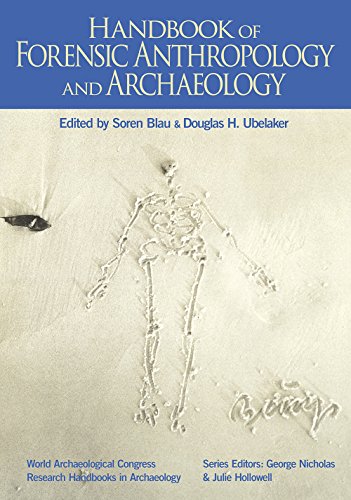
Imagen de portada de Amazon
Imagen de Amazon.com
Imagen de cubierta Syndetics
Portada de Syndetics
Imagen de OpenLibrary

Handbook of forensic anthropology and archaeology Soren Blau and Douglas H. Ubelaker, editors.

Colaborador(es): Series Detalles de publicación: Walnut Creek, Calif. Left Coast Press c2009.Descripción: 534 p. ill. 26 cmISBN:
  • 9781598740745 (hardcover : alk. paper)
  • 1598740741 (hardcover : alk. paper)
Tema(s): Clasificación CDD:
  • 614.17 H2361 22
Clasificación LoC:
  • GN69.8 .H34 2008
Recursos en línea:
Contenidos:
1. Forensic anthropology and archaeology: introduction to a broader view Soren Blau and Douglas H. Ubelaker -- pt. 1. History of the disciplines. -- 2. Forensic anthropology and archaeology: past and present, a United Kingdom perspective Margaret Cox -- 3. Forensic anthropology and archaeology: perspectives from Italy Cristina Cattaneo -- 4. Forensic anthropology: perspectives from France Eric Baccino -- 5. A history of forensic anthropology in Spain José L. Prieto -- 6. The application of forensic anthropology to the investigation of political violence in South America Luis Fondebrider -- 7. Historical development of forensic anthropology: perspectives from the United States Douglas H. Ubelaker -- 8. Forensic anthropology: Canadian content and contributions Mark Skinner and Kristina Bowie -- 9. The development and current state of forensic anthropology: an Australian perspective Denise Donlon -- 10. Historical perspectives on forensic anthropology in Indonesia Etty Indriati -- pt. 2. Forensic archaeology. -- 11. The search for and detection of human remains Thomas D. Holland and Samuel V. Connell -- 12. Excavation and recovery in forensic archaeological investigations Paul N. Cheetham and Ian Hanson -- pt. 3. Forensic anthropology. -- 13. Differentiating human from non-human skeletal remains Dawn Mulhern 14. Dating of anthropological skeletal remains of forensic interest Shari Forbes and Kimberly Nugent -- 15. Analysis of commingled human remains John Byrd and Bradley J. Adams -- 16. The assessment of ancestry and the concept of race Norman J. Sauer and Jane C. Wankmiller -- 17. Anthropological estimation of sex Valeria Silva Braz -- 18. Skeletal age estimation Tracy L. Rogers -- 19. Histological age estimation Christian M. Crowder -- 20. Stature estimation P. Willey -- 21. Antemortem trauma Eugénia Cunha and João Pinheiro --
22. Perimortem trauma Louise Loe -- 23. Forensic taphonomy Stephen P. Nawrocki -- 24. Burned human remains Tim Thompson -- 25. Craniofacial identification: techniques of facial approximation and craniofacial superimposition Carl N. Stephan -- 26. Biomolecular applications Lori Baker -- 27. Forensic odontology John Gerald Clement -- pt. 4. The crime and disaster scene: case studies in forensic archaeology and anthropology. -- 28. Domestic homicide investigations: an example from the United States Dawnie Wolfe Steadman, William Basler, Michael J. Hochrein, Dennis F. Klein, and Julia C. Goodin -- 29. Domestic homicide investigations in the United Kingdom John Hunter -- 30. Forensic anthropology in disaster response Paul S. Sledzik -- 31. Medico-legal investigations of atrocities committed during the Solomon Islands "Ethnic Tensions" Melanie Archer and Malcolm J. Dodd -- 32. Disaster anthropology: the 2004 Asian tsunami Sue Black -- 33. The role of the anthropologist in disaster victim identification: the Bali incidents of 2002 and 2004 Christopher A. Briggs and Alanah M. Buck -- 34. Dealing with the remains of conflict: an international response to crimes against humanity, forensic recovery, identification, and repatriation in the former Yugoslavia Jon Sterenberg -- 35. Forensic anthropology and archaeology in Guatemala Ambika Flavel and Caroline Barker -- 36. Grave challenges in Iraq Derek Congram and Jon Sterenberg -- pt. 5. The professional forensic anthropologist. -- 37. More than just bare bones: ethical considerations for forensic anthropologists Soren Blau -- 38. How to do forensic archaeology under the auspices of the United Nations and other large organizations Richard Wright and Ian Hanson -- 39. Contribution of quantitative methods in forensic anthropology: a new era Ann H. Ross and Erin H. Kimmerle -- 40. The expert witness and the court of law Maciej Henneberg -- 41. Legal aspects of identification David Ranson -- 42. Global perspectives on issues in forensic anthropology Douglas H. Ubelaker and Soren Blau.
Valoración
    Valoración media: 0.0 (0 votos)
Existencias
Imagen de cubierta Tipo de ítem Biblioteca actual Biblioteca de origen Colección Ubicación en estantería Signatura topográfica Materiales especificados Info Vol URL Copia número Estado Notas Fecha de vencimiento Código de barras Reserva de ítems Prioridad de la cola de reserva de ejemplar Reservas para cursos
Libro Biblioteca Encarnación Valdés Colección General bev 614.17 H2361 (Navegar estantería(Abre debajo)) Disponible 80000002441841
Total de reservas: 0

Descripciones mejoradas de Syndetics:

Over the last 10 years interest in the disciplines of forensic anthropology and archaeology has exploded. In order to provide archaeologists and their students with a reliable understanding of these disciplines, this authoritative volume draws contributions from fifty experienced practitioners from around the world to offer a solid foundation in both the practical and ethical components of forensic work. Over 40 chapters weave together historical development, current field methods in analyzing crime, natural disasters and human atrocities, an array of laboratory techniques, key case studies, legal, professional, and ethical issues, and promising future directions, all from a global perspective. This volume will be the benchmark for the understanding of anthropological and archaeological forensics for years to come.

Includes bibliographical references and index.

1. Forensic anthropology and archaeology: introduction to a broader view Soren Blau and Douglas H. Ubelaker -- pt. 1. History of the disciplines. -- 2. Forensic anthropology and archaeology: past and present, a United Kingdom perspective Margaret Cox -- 3. Forensic anthropology and archaeology: perspectives from Italy Cristina Cattaneo -- 4. Forensic anthropology: perspectives from France Eric Baccino -- 5. A history of forensic anthropology in Spain José L. Prieto -- 6. The application of forensic anthropology to the investigation of political violence in South America Luis Fondebrider -- 7. Historical development of forensic anthropology: perspectives from the United States Douglas H. Ubelaker -- 8. Forensic anthropology: Canadian content and contributions Mark Skinner and Kristina Bowie -- 9. The development and current state of forensic anthropology: an Australian perspective Denise Donlon -- 10. Historical perspectives on forensic anthropology in Indonesia Etty Indriati -- pt. 2. Forensic archaeology. -- 11. The search for and detection of human remains Thomas D. Holland and Samuel V. Connell -- 12. Excavation and recovery in forensic archaeological investigations Paul N. Cheetham and Ian Hanson -- pt. 3. Forensic anthropology. -- 13. Differentiating human from non-human skeletal remains Dawn Mulhern 14. Dating of anthropological skeletal remains of forensic interest Shari Forbes and Kimberly Nugent -- 15. Analysis of commingled human remains John Byrd and Bradley J. Adams -- 16. The assessment of ancestry and the concept of race Norman J. Sauer and Jane C. Wankmiller -- 17. Anthropological estimation of sex Valeria Silva Braz -- 18. Skeletal age estimation Tracy L. Rogers -- 19. Histological age estimation Christian M. Crowder -- 20. Stature estimation P. Willey -- 21. Antemortem trauma Eugénia Cunha and João Pinheiro --

22. Perimortem trauma Louise Loe -- 23. Forensic taphonomy Stephen P. Nawrocki -- 24. Burned human remains Tim Thompson -- 25. Craniofacial identification: techniques of facial approximation and craniofacial superimposition Carl N. Stephan -- 26. Biomolecular applications Lori Baker -- 27. Forensic odontology John Gerald Clement -- pt. 4. The crime and disaster scene: case studies in forensic archaeology and anthropology. -- 28. Domestic homicide investigations: an example from the United States Dawnie Wolfe Steadman, William Basler, Michael J. Hochrein, Dennis F. Klein, and Julia C. Goodin -- 29. Domestic homicide investigations in the United Kingdom John Hunter -- 30. Forensic anthropology in disaster response Paul S. Sledzik -- 31. Medico-legal investigations of atrocities committed during the Solomon Islands "Ethnic Tensions" Melanie Archer and Malcolm J. Dodd -- 32. Disaster anthropology: the 2004 Asian tsunami Sue Black -- 33. The role of the anthropologist in disaster victim identification: the Bali incidents of 2002 and 2004 Christopher A. Briggs and Alanah M. Buck -- 34. Dealing with the remains of conflict: an international response to crimes against humanity, forensic recovery, identification, and repatriation in the former Yugoslavia Jon Sterenberg -- 35. Forensic anthropology and archaeology in Guatemala Ambika Flavel and Caroline Barker -- 36. Grave challenges in Iraq Derek Congram and Jon Sterenberg -- pt. 5. The professional forensic anthropologist. -- 37. More than just bare bones: ethical considerations for forensic anthropologists Soren Blau -- 38. How to do forensic archaeology under the auspices of the United Nations and other large organizations Richard Wright and Ian Hanson -- 39. Contribution of quantitative methods in forensic anthropology: a new era Ann H. Ross and Erin H. Kimmerle -- 40. The expert witness and the court of law Maciej Henneberg -- 41. Legal aspects of identification David Ranson -- 42. Global perspectives on issues in forensic anthropology Douglas H. Ubelaker and Soren Blau.

Tabla de contenidos provista por Syndetics

  • Editor Essay: Fugue- The Interrelationship of Cultural Property Laws in Federal Lands Management
  • Interviews with John Henry Merryman and Joseph L. Sax
  • Two Ways of Looking at Cultural Property
  • Interviewed
  • Practice Area Sections
  • Federal Land Management
  • State and Local
  • Sherry Hutt with Anita Canovas
  • Tribes, Tribal Land, Indian Arts
  • Marine Environment
  • Museum
  • Art Market
  • International Cultural Property
  • Enforcement Actions
  • Articles
  • The philosophy of collecting and the international market
  • What every museum trustee should know now: Recent court decisions and the legal implications of trusteeship
  • The Lower Elwa Klallam Tribe v. State of Washington: A case study of
  • Section 106 and regard for native american human remains
  • Cultural resource damage on public lands: what the statistics show
  • Into the mind of looters
  • Historical review of cultural property criminal cases
  • Resources
  • Law School Update: LCCHP Law School Survey Report
  • Review of Books, Articles and other Resources
  • Tribute: Recognizing Career Achievements in Resource Protection
  • Table of Cases

Reseñas proporcionadas por Syndetics

CHOICE Review

Sponsored by the World Archaeological Congress, this handbook examines, in 40-plus chapters, the complementary fields of forensic anthropology and forensic archaeology. In part 1, "History of the Disciplines," contributors distinguish between the two disciplines. They examine each in succession in parts 2 and 3, "Forensic Archaeology" and "Forensic Anthropology." Part 4, "The Crime and Disaster Scene," offers selected case studies. In this volume, 50 international experts discuss basic anthropologic determinations and how they are made, and provide insight into the role of forensic specialists in criminal cases. They also describe the role of forensic anthropologists in cases of fragmented human remains. Forensic anthropologists play a pivotal role in disasters, and this volume presents information on disaster science in general, the role of forensic anthropologists, and case studies of recent disasters. Among the topics discussed in part 5, "The Professional Forensic Archaeologist and Forensic Anthropologist," are ethical considerations, limitations of evidence, and the use of statistics. This is a fascinating work, important for students and experts alike in both archaeology and anthropology. Summing Up: Highly recommended. Upper-level undergraduates through professionals/practitioners. J. A. Gibson Kaplan University

Notas de autor provistas por Syndetics

Soren Blau, B.A.(Hons.), M.Sc., Ph.D. has worked in the Centre for Human Identification (now Human Identification Services - HIS) at the Victorian Institute of Forensic Medicine (VIFM) as a forensic anthropologist since January 2005 and is currently the manager of the HIS. She is an honorary Senior Lecturer in the Department of Forensic Medicine at Monash University. Soren is involved in local and international casework as well as contributing to international Disaster Victim Identification (DVI) training courses. During her time at the VIFM, Soren has developed an interest in using computerized tomography (CT) data to establish population specific standards for forensic anthropology in Australia. She is currently coordinating a project in East Timor investigating alleged human rights abuses.Douglas H. Ubelaker is a curator and senior scientist at the Smithsonian Institution's National Museum of Natural History in Washington, D.C. where he has been employed since about 1971. He received the PhD degree in 1973 from the University of Kansas. He has published extensively in the general field of human skeletal biology with an emphasis on forensic applications. Since about 1978, he has served as the primary consultant in forensic anthropology for the FBI Laboratory now located in Quantico, Virginia. In this capacity he has reported on over 780 cases and has testified in numerous legal proceedings.
Compartir
logopucpr-y-vive

Contáctanos

¡Queremos saber de ti!

Tel. 787.841.2000 Ext. 1801

bibliotecavaldes@pucpr.edu

⁣Búscanos en las redes

© 2026 Desarrollado por Ignite Online • All Rights Reserved • Powered by Koha.