Imagen de Amazon.com

Portada de Syndetics
Imagen de OpenLibrary
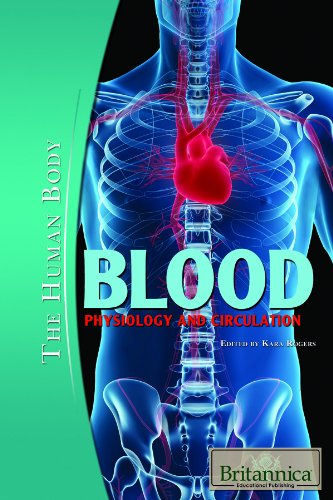
Blood physiology and circulation edited by Kara Rogers.
Series The human bodyDetalles de publicación: New York Britannica Educational Publishing;Rosen Educational Services 2011.Descripción: 239 p. ill. 23 cmISBN:- 9781615301218
| Imagen de cubierta | Tipo de ítem | Biblioteca actual | Biblioteca de origen | Colección | Ubicación en estantería | Signatura topográfica | Materiales especificados | Info Vol | URL | Copia número | Estado | Notas | Fecha de vencimiento | Código de barras | Reserva de ítems | Prioridad de la cola de reserva de ejemplar | Reservas para cursos | |
|---|---|---|---|---|---|---|---|---|---|---|---|---|---|---|---|---|---|---|
| Libro | Biblioteca de Mayagüez Colección General mb | QP 91 .B6558 2011 (Navegar estantería(Abre debajo)) | Disponible | 50000003204764 |
Total de reservas: 0
Descripciones mejoradas de Syndetics:
Although its ubiquity in the human body may make it seem unremarkable, simply put, blood makes life possible. It nourishes cells throughout the body and transports carbon dioxide to the lungs. Without it, the body would be unable to fight disease and infection or function at all. Readers are invited to follow the course of this extraordinary fluid as it circulates through the body and learn about its component parts. Detailed diagrams supplement the text and allow readers a glimpse into the anatomy and life-sustaining properties of human blood.
"In association with Britannica Eduactional Publishing, Rosen Eduactional Services.
Includes bibliographical references and index.
eigm 04/2011
Tabla de contenidos provista por Syndetics
- Introduction(p. 10)
- Chapter 1 The Fluid of Life(p. 17)
- Blood(p. 19)
- Blood Components(p. 21)
- Plasma(p. 23)
- Blood Cells(p. 29)
- Blood Cell Formation(p. 53)
- Bone Marrow(p. 54)
- Production of Red Blood Cells(p. 56)
- Destruction of Red Blood Cells(p. 58)
- Chapter 2 The Dynamics of Blood(p. 61)
- Circulation(p. 61)
- Arteries(p. 63)
- Veins(p. 65)
- Capillaries(p. 66)
- Blood Pressure(p. 67)
- Functions of Blood(p. 68)
- Respiration(p. 69)
- Nutrition(p. 71)
- Excretion(p. 72)
- Hemostasis(p. 73)
- Immunity(p. 74)
- Temperature Regulation(p. 75)
- Bleeding and Blood Clotting(p. 76)
- Significance of Hemostasis(p. 76)
- The Hemostatic Process(p. 79)
- Chapter 3 Blood Group Systems(p. 92)
- Blood Groups(p. 93)
- Historical Background(p. 93)
- Blood Typing(p. 96)
- ABO Blood Group System(p. 97)
- MNSs Blood Group System(p. 98)
- P Blood Group System(p. 99)
- Rh Blood Group System(p. 100)
- Lutheran Blood Group System(p. 102)
- Kell Blood Group System(p. 102)
- Lewis Blood Group System(p. 103)
- Duffy Blood Group System(p. 104)
- Kidd Blood Group System(p. 105)
- Diego Blood Group System(p. 106)
- Yt Blood Group System(p. 107)
- li Blood Group System(p. 108)
- Xg Blood Group System(p. 109)
- Dombrock Blood Group System(p. 110)
- Secretor System(p. 111)
- Antigens and Antibodies(p. 112)
- Chemistry of Blood Groups(p. 114)
- Blood Groups and Genetic Linkage(p. 115)
- Blood Groups and Population Groups(p. 119)
- Chapter 4 Blood Analysis and Therapeutic Applications(p. 121)
- Blood and Disease(p. 121)
- Laboratory Examination of Blood(p. 122)
- Blood Analysis(p. 126)
- Serum and Serum Albumin(p. 126)
- Plasma(p. 127)
- Separation of Plasma and Serum(p. 129)
- Measurable Properties of Blood(p. 129)
- Blood Cell Count(p. 130)
- Coagulation Tests(p. 132)
- Sedimentation and Compatibility Tests(p. 132)
- Hematocrit(p. 133)
- Serological Tests(p. 134)
- Methods of Blood Grouping(p. 135)
- Identification of Blood Groups(p. 135)
- Coombs Test(p. 137)
- Adsorption, Elution, and Triation(p. 138)
- Inhibition Tests(p. 139)
- Hemolysis(p. 140)
- Sources of Antibodies and Antigens(p. 140)
- Blood Bank(p. 141)
- Therapeutic Applications(p. 143)
- Blood Transfusion(p. 143)
- Organ Transplant(p. 150)
- Paternity Testing(p. 153)
- Bone Marrow and Hematopoietic Stem Cells(p. 153)
- Bone Marrow Transplant(p. 157)
- Autologous and Alloeneic Transplants(p. 158)
- Risks of Bone Marrow Transplant(p. 159)
- Collection of Donor Stem Cells(p. 160)
- Chapter 5 Diseases of Red Blood Cells and Hemoglobin(p. 161)
- Disorders of Red Blood Cells(p. 161)
- Anemia(p. 163)
- Megaloblastic Anemias(p. 165)
- Pernicious Anemia(p. 169)
- Normocytic Normochromic Anemias(p. 170)
- Aplastic Anemia(p. 172)
- Hypochromic Microcytic Anemias(p. 174)
- Iron Deficiency Anemia(p. 175)
- Hemolytic Anemias(p. 177)
- Hemoglobinopathy(p. 181)
- Polycythemia(p. 190)
- Pickwickian Syndrome(p. 192)
- Porphyria(p. 193)
- Sulfhemoglobinemia(p. 195)
- Methemoglobinemia(p. 195)
- Chapter 6 Diseases of White Blood Cells and Platelets and Disorders of Coagulation(p. 197)
- Diseases of White Blood Cells(p. 197)
- Leukocytosis(p. 198)
- Leukopenia(p. 203)
- Leukemia(p. 205)
- Lymphoma(p. 211)
- Multiple Myeloma(p. 213)
- Bleeding Disorders(p. 214)
- Thrombocytopenia(p. 215)
- Disorders of Platelet Function(p. 217)
- Vascular Causes of Bleeding Disorders(p. 218)
- Coagulation Disorders(p. 218)
- Hemophilia(p. 219)
- Vitamin K Deficiency(p. 221)
- Von Willebrand Disease(p. 221)
- Thrombosis(p. 224)
- Conclusion(p. 226)
- Appendix: Tables(p. 227)
- Glossary(p. 229)
- Bibliography(p. 232)
- Index(p. 234)