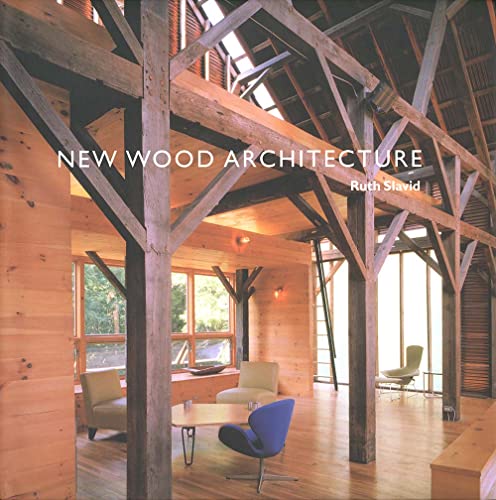

New wood architecture / Ruth Slavid. txt
New Haven : Yale University Press , 2005Edición: First published in Great BritainDescripción: 239 p. ill. (chiefly col.), plans 26 cmTipo de contenido:- text
- unmediaded
- volume
- 9780300107944
- NA4110 S63 2005
| Imagen de cubierta | Tipo de ítem | Biblioteca actual | Biblioteca de origen | Colección | Ubicación en estantería | Signatura topográfica | Materiales especificados | Info Vol | URL | Copia número | Estado | Notas | Fecha de vencimiento | Código de barras | Reserva de ítems | Prioridad de la cola de reserva de ejemplar | Reservas para cursos | |
|---|---|---|---|---|---|---|---|---|---|---|---|---|---|---|---|---|---|---|
| Libro | CARIBET Biblioteca Arquitectura Colección General CARIBET | General NA4110 S63 2005 (Navegar estantería(Abre debajo)) | 1 | Disponible | 91000000021949 |
Descripciones mejoradas de Syndetics:
A detailed and timely look at the resourceful ways wood is being used in some of the world's most innovative new buildings.
Despite its legacy as a traditional building material, timber is experiencing a renaissance as contemporary architects and designers increasingly come to appreciate its sustainability, versatility, and beauty. Lavishly illustrated with over 300 photographs and drawings, New Wood Architecture features over 40 contemporary projects from around the world by leading architects including Shigeru Ban, Roberto Briccola, Santiago Calatrava, Steven Holl, Herzog + Partner, Herzog and de Meuron, Peter Hübner, Renzo Piano Building Workshop, and Peter Zumthor.
Ruth Slavid examines the innovative ways timber is currently being handled and how its use has been expanded by new technologies and experiments with traditional building methods. Featured topics include wood's natural properties in rural landscapes; its heritage as a vernacular building material; its pragmatic and cost-efficient properties; its versatility; current technological innovations such as the uses of engineered products, laminates, plywoods, and chipboards; the ways wood can be combined with other materials to enhance its structural properties; and its use as a recycled or "green" material in some of the most beautiful and experimental plans being constructed today.
Includes index.
"First published in Great Britain in 2005 by Laurence King Publishing, Ltd, London"
Worldwide, Dec/12/2005, 2006-589.