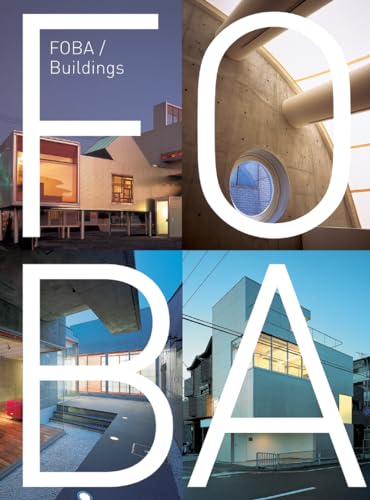

FOBA/buildings essays, Katsu Umebayashi ... [et al.]. txt
Idioma: Español New york Princeton Architectural Press 2005Descripción: 224 p. chiefly col. ill. 24 cmTipo de contenido:- text
- unmediaded
- volume
- 1568985274
- 9781568985275
- 720/.92/2 22
- NA1559.F63 A4 2005
| Imagen de cubierta | Tipo de ítem | Biblioteca actual | Biblioteca de origen | Colección | Ubicación en estantería | Signatura topográfica | Materiales especificados | Info Vol | URL | Copia número | Estado | Notas | Fecha de vencimiento | Código de barras | Reserva de ítems | Prioridad de la cola de reserva de ejemplar | Reservas para cursos | |
|---|---|---|---|---|---|---|---|---|---|---|---|---|---|---|---|---|---|---|
| Libro | CARIBET Biblioteca Arquitectura Colección General CARIBET | General NA1559.F63 A4 2005 (Navegar estantería(Abre debajo)) | 1 | Disponible | 91000000020891 |
Descripciones mejoradas de Syndetics:
Pure. Minimal. Simple. These are the words commonly used to describe the work of contemporary Japanese architects. FOBA, an internationally celebrated architectural practice based in Kyoto, looks beyond the aesthetics of minimalism, instead finding inspiration in the relationships between structure and site. FOBA: Buildings , the first monograph on the decade-old firm, features ten projects of surprising range: undulating lines, overlapping cubes, interpenetrating forms, and unexpected pairings demonstrate a varied set of approaches to projects. The work is at times boldly expressionistic, and at others refreshingly austere.
The book also chronicles the FOB Homes systema FOBA subsidiary company established in 1999a uniquely creative response to the generic mass-produced pre-fabricated housing available in Japan. With five basic prototypes that can be easily adapted to any site or client, FOB Homes redefines the concept of standardized housing. Their simple, neutral white boxes counter the visual chaos of contemporary Japan and offer the elegance and experience of "architecture" to the general publica union of modernist aesthetics with the modernist ideology of democratic, affordable design.
Together, FOBA and FOB Homes offers a look into the architecture of tomorrow. FOBA: Buildings will be an inspirational sourcebook of ideas for those interested in innovative architecture with humane ideals.
Includes bibliographical references (p. 222-223).
Nesting: beyond objects to the bodily experience of space Katsu Umebayashi -- It's not what it looks like Thomas Daniell -- Clarity and complexity Michael Web -- Aura; Pleats; Porous; Strata; Skip; Stack; Organ; Myougei; Asphodel; Orient -- FOB homes: brand recognition Thomas Daniell -- FOB homes typologies -- Prototypes in suburbia Peter Allison -- FOB homes examples: F-House; H-House; T-House; K-House; I-house; F-Blanc; S-Blanc -- Afterword Kazuhiro Kojima.
Tabla de contenidos provista por Syndetics
- Acknowledgments(p. 6)
- Nesting: Beyond Objects to the Bodily Experience of Space(p. 9)
- FOBA: It's Not What It Looks Like(p. 13)
- Clarity and Complexity(p. 17)
- Aura(p. 27)
- Pleats(p. 41)
- Porous(p. 59)
- Strata(p. 73)
- Skip(p. 87)
- Stack(p. 105)
- Organ(p. 119)
- Myougei(p. 135)
- Asphodel(p. 145)
- Orient(p. 159)
- FOB Homes: Brand Recognition(p. 169)
- FOB Homes Typologies(p. 172)
- Prototypes in Suburbia(p. 177)
- FOB Homes Examples
- F-House(p. 186)
- H-House(p. 192)
- T-House(p. 196)
- K-House(p. 200)
- I-House(p. 204)
- F-Blanc(p. 208)
- S-Blanc(p. 212)
- Afterword(p. 219)
- Selected Bibliography(p. 222)
- Author Biographies and Credits(p. 224)