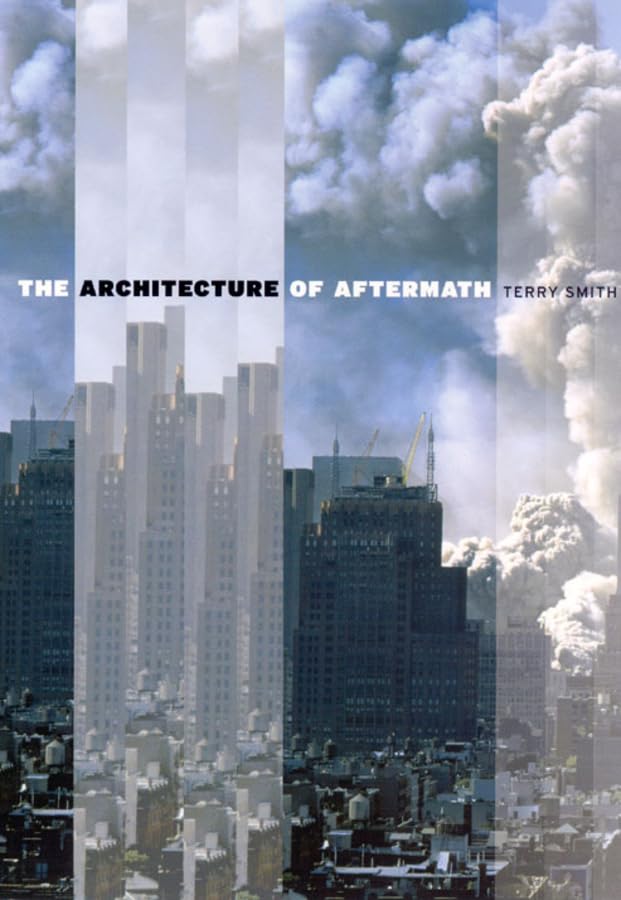

The Architecture of Aftermath : Terry Smith. txt
Idioma: Español Chicago : Chicago Press, 2006Descripción: xiii, 246 p. ill. ; plans ; 27 cmTipo de contenido:- text
- unmediaded
- volume
- 0226764699 (cloth : alk. paper)
- 0226764696(pbk. : alk. paper)
- 9780226764696
- 720.1/03 22
- N72.S6 S56 2006
| Imagen de cubierta | Tipo de ítem | Biblioteca actual | Biblioteca de origen | Colección | Ubicación en estantería | Signatura topográfica | Materiales especificados | Info Vol | URL | Copia número | Estado | Notas | Fecha de vencimiento | Código de barras | Reserva de ítems | Prioridad de la cola de reserva de ejemplar | Reservas para cursos | |
|---|---|---|---|---|---|---|---|---|---|---|---|---|---|---|---|---|---|---|
| Libro Col. General CARIBET | CARIBET Biblioteca Arquitectura Colección General CARIBET | General N72.S6 S56 2006 (Navegar estantería(Abre debajo)) | 1 | Disponible | 91000000018457 |
Descripciones mejoradas de Syndetics:
The September 11 terrorist attacks targeted, in Osama bin Laden's words, "America's icons of military and economic power." In The Architecture of Aftermath , Terry Smith argues that it was no accident that these targets were buildings: architecture has long served as a symbol of proud, defiant power--and never more so than in the late twentieth century.
But after September 11, Smith asserts, late modern architecture suddenly seemed an indulgence. With close readings of key buildings--including Jørn Utzon's Sydney Opera House, Minoru Yamasaki's World Trade Center, Frank Gehry's Guggenheim Museum Bilbao, and Richard Meier's Getty Center--Smith traces the growth of the spectacular architecture of modernity and then charts its aftermath in the conditions of contemporaneity. Indeed, Smith focuses on the very culture of aftermath itself, exploring how global politics, clashing cultures, and symbolic warfare have changed the way we experience destination architecture.
Like other artists everywhere, architects are responding to the idea of aftermath by questioning the viability of their forms and the validity of their purposes. With his richly illustrated The Architecture of Aftermath , Smith has done so as well.
Include index.
Includes bibliographical references and index.
Contents:
Acknowledgments ix --
List of Illustrations xi --
Introduction After Effects Architecture, Iconomy, --
Contemporaneity 1 --
Part I: Dispacing time :
1. The Bilbao Affect Culture as Industry 19 --
2. Flashback Uluru and the Sydney Opera House 35 --
3. The Past Modern Present Empire Redux at the Getty Center 50 --
4. Remembrance Now Architecture after Auschwitz at the Jewish Museum, Berlin 67 --
Part II: Targets and opportunities :
5. WTC Fast Forward Skyscrapers on the Isle of the Dead 97 --
6. Architecture’s Unconscious Trauma and the Contemporary Sublime at Ground Zero 124 --
7. Shock Build Mourn Hope Architects Confront Contemporaneity 160 --
Conclusion Aftermath and After 190 --
Notes 205 --
Index 233 --
"The September 11 terrorist attacks targeted, in Osama bin Laden's words, "America's icons of military and economic power." In The Architecture of Aftermath, Terry Smith argues that it was no accident that these targets were buildings: architecture has long served as a symbol of proud, defiant power--and never more so than in the late twentieth century. But after September 11, Smith asserts, late modern architecture suddenly seemed an indulgence. With close readings of key buildings--including Jorn Utzon's Sydney Opera House, Minoru Yamasaki's World Trade Center, Frank Gehry's Guggenheim Museum Bilbao, and Richard Meier's Getty Center--Smith traces the growth of the spectacular architecture of modernity and then charts its aftermath in the conditions of contemporaneity. Indeed, Smith focuses on the very culture of aftermath itself, exploring how global politics, clashing cultures, and symbolic warfare have changed the way we experience destination architecture. Like other artists everywhere, architects are responding to the idea of aftermath by questioning the viability of their forms and the validity of their purposes. With his richly illustrated The Architecture of Aftermath, Smith has done so as well." --
Tabla de contenidos provista por Syndetics
- Acknowledgments(p. ix)
- List of Illustrations(p. xi)
- Introduction: After Effects-Architecture, Iconomy, Contemporaneity(p. 1)
- Part I Dispacing Time
- 1 The Bilbao Affect: Culture as Industry(p. 19)
- 2 Flashback: Uluru and the Sydney Opera House(p. 35)
- 3 The Past-Modern Present: Empire Redux at the Getty Center(p. 50)
- 4 Remembrance Now: Architecture after Auschwitz at the Jewish Museum, Berlin(p. 67)
- Part II Targets and Opportunities
- 5 WTC Fast Forward: Skyscrapers on the Isle of the Dead(p. 97)
- 6 Architecture's Unconscious: Trauma and the Contemporary Sublime at Ground Zero(p. 124)
- 7 Shock.Build.Mourn.Hope: Architects Confront Contemporaneity(p. 160)
- Conclusion: Aftermath and After(p. 190)
- Notes(p. 205)
- Index(p. 233)