Imagen de portada de Amazon
Imagen de Amazon.com
Imagen de cubierta Syndetics
Portada de Syndetics
Imagen de OpenLibrary
Valoración
    Valoración media: 0.0 (0 votos)
Existencias
Imagen de cubierta Tipo de ítem Biblioteca actual Biblioteca de origen Colección Ubicación en estantería Signatura topográfica Materiales especificados Info Vol URL Copia número Estado Notas Fecha de vencimiento Código de barras Reserva de ítems Prioridad de la cola de reserva de ejemplar Reservas para cursos
Libro Biblioteca de Mayagüez Colección General mb E 876 .S35 1989 (Navegar estantería(Abre debajo)) Disponible 50000001801587
Total de reservas: 0

Descripciones mejoradas de Syndetics:

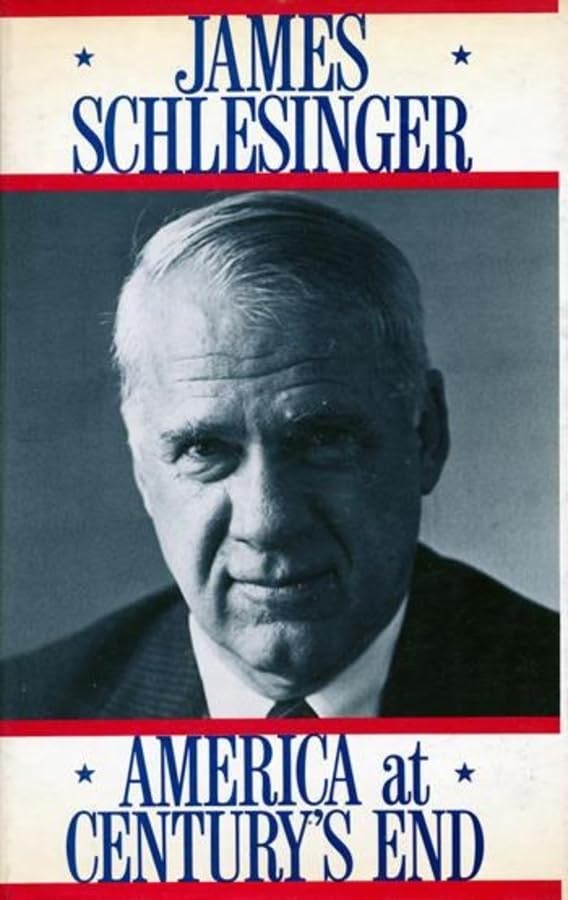
Describes modern American society, examines America's domestic and foreign policy, and identifies trends in government.

Includes index.

Reseñas proporcionadas por Syndetics

Library Journal Review

This slim text presents three lectures on U.S. foreign policy given by Schlesinger at Columbia University in March 1988. He examines the social, cultural, and geographical conditions which contributed to the unique shape of U.S. foreign policy; explores its style, based on moralism and freedom of choice; and argues that U.S. policy results directly from the short attention span, public opinion pressures, and disrespect for authority endemic to our domestic politics. With a quarter-century of public service, including stints as Secretary of Energy, Secretary of Defense, and CIA director, Schlesinger is eminently qualified as a commentator. His observations are sometimes insightful, but there is little new in these somewhat unfocused addresses. Not an essential purchase.--James R. Kuhlman, Univ. of Georgia Lib., Athens (c) Copyright 2010. Library Journals LLC, a wholly owned subsidiary of Media Source, Inc. No redistribution permitted.

Publishers Weekly Review

Ex-CIA director and former Secretary of Defense and of Energy, Schlesinger gives a bland performance in this 88-page volume, a set of three lectures delivered in 1988 at Columbia University. Analyzing the American character, he finds us to be a feisty, excitable people with a disregard for authority; extrapolating from this profile, he then considers U.S. foreign and domestic policies. As a superpower, he charges, America is too soft-hearted and lacks steadiness of purpose. The moral he draws from the Iranian arms-for-hostages scandal is that ``in our society covert operations will be accepted only if they are in support of openly declared policy goals.'' He offers sketchy guidelines as to how future covert operations might be conducted. Elsewhere he addresses TV's role in shaping public opinion, the carnival atmosphere of presidential elections, U.S. military failure in Vietnam, the appeal (to some) of Reagan's Star Wars and the public's alleged complacency concerning energy sources. (June) (c) Copyright PWxyz, LLC. All rights reserved
Compartir
logopucpr-y-vive

Contáctanos

¡Queremos saber de ti!

Tel. 787.841.2000 Ext. 1801

bibliotecavaldes@pucpr.edu

⁣Búscanos en las redes

© 2026 Desarrollado por Ignite Online • All Rights Reserved • Powered by Koha.