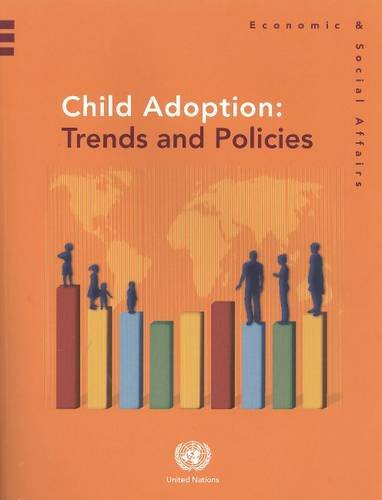

Child adoption trends and policies Department of Economic and Social Affairs, Population Division.
Detalles de publicación: New York United Nations 2009.Descripción: xix, 463 p. graphs, tables 28 cmISBN:- 9789211514667
- ST/ESA/SER.A/292
| Imagen de cubierta | Tipo de ítem | Biblioteca actual | Biblioteca de origen | Colección | Ubicación en estantería | Signatura topográfica | Materiales especificados | Info Vol | URL | Copia número | Estado | Notas | Fecha de vencimiento | Código de barras | Reserva de ítems | Prioridad de la cola de reserva de ejemplar | Reservas para cursos | |
|---|---|---|---|---|---|---|---|---|---|---|---|---|---|---|---|---|---|---|
| Libro | Biblioteca de Derecho Mons. Fremiot Torres Oliver sala Naciones Unidas, edif. Spellman | ST/ESA/SER.A/292 (Navegar estantería(Abre debajo)) | Child Adoption: Trends and Polic | Disponible | 70000000887856 |
Descripciones mejoradas de Syndetics:
Adoption is one of the oldest social institutions. Nevertheless, adoption still raises highly emotive issues because of its fundamental implications for the familial ties. This publication provides a solid foundation for furthering research on child adoption and, more specifically, on the demographic factors that shape the demand for and the availability of adoptable children. The focus of this report is on the nexus between adoption policies and trends at the national and global levels. Understanding adoption policies and their origins is all the more important today because, as adoption has become global, inconsistencies among the legal principles and traditions regarding adoption in different countries are increasingly coming to the fore.
At head of title: Department of Economic and Social Affairs, Population Division.
"References for country profiles" : p. 369-395.
Annexes (p. [356]-463) : 1. Derivation of global estimates of total, domestic and intercountry adoptions -- 2. References for country profiles -- 3. Annex tables.
"United Nations publication sales no. E.10.XIII.4"--T.p. verso.
"Economic & Social Affairs"--Cover.
Includes bibliographical references and index.
History and evolution of modern adoption laws -- Adoption in religious law and in traditional societies -- Key features of modern adoption laws -- International, regional and bilateral agreements on intercountry adoption -- Levels and trends in child adoptions -- The characteristics of adoptive children, adoptive parents and birth parents -- The demand for and availability of adoptable children -- A framework for furthering the study of adoption.