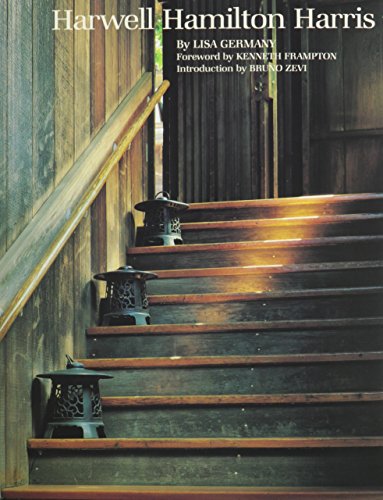

Harwell Hamilton Harris. by Lisa Germany; foreword by Kenneth Frampton; introduction by Bruno Zevi. txt
Austin : University of Texas Press , 1991Edición: 1st editionDescripción: xx, 252 p. ill. ;col. ;plans. ;photo. ; 29 cmTipo de contenido:- text
- unmediaded
- volume
- 9780292730434
- 0292730438
- 20 720.92
- NA737.H295 G4 1991
| Imagen de cubierta | Tipo de ítem | Biblioteca actual | Biblioteca de origen | Colección | Ubicación en estantería | Signatura topográfica | Materiales especificados | Info Vol | URL | Copia número | Estado | Notas | Fecha de vencimiento | Código de barras | Reserva de ítems | Prioridad de la cola de reserva de ejemplar | Reservas para cursos | |
|---|---|---|---|---|---|---|---|---|---|---|---|---|---|---|---|---|---|---|
| Libro | CARIBET Biblioteca Arquitectura Colección General CARIBET | General NA737.H295 G4 1991 (Navegar estantería(Abre debajo)) | 1 | Disponible | 91000000013896 |
Descripciones mejoradas de Syndetics:
As a young sculptor, Harwell Hamilton Harris longed for a means of expression to liberate his emotions, an artistic voice in which to communicate his feelings and connect them to the lives and sensibilities of others. This longing was answered when he visited Frank Lloyd Wright's Hollyhock House in Los Angeles and realized the power of architecture for the first time. He saw that Wright's creation functioned both as a home and as shapes that moved into and out of nature, creating sculpture on a monumental scale. This revelation inspired Harris to become an architect and to create homes that would speak to people as Wright's creation had spoken to him. Harwell Hamilton Harris is a biography of this important American architect. Lisa Germany traces the development of Harris' life (1903-1990) and career, assessing his place in American Modernism, in the development of regionalist architecture, and in the interpretation of a modern California lifestyle that would have admirers throughout the world. This discussion opens a window into the complexities of Modernism in America during the 1930s, 1940s, and 1950s. Harris, his regionalism, and his emphasis on the democratic single family home, are seen against the backdrop of dispute and dissension among modern architects in this country. Germany explores Harris' career in its entirety, from the dawning of an artistic spirit through the heady days of world recognition and celebrity to leaner years when, first in Texas and later in North Carolina, he taught and practiced, forgotten by the fashionable magazines but still revered by those who had seen and felt his architecture. Throughout his life, Harris remained true to his vision of architecture, a vision still relevant today, as this biography amply demonstrates.
Include index
Include Bibliography
Foreword by Kenneth Frampton --
Introduction by Bruno Zevi --
Forsaking the Formula, 1903-1921 --
Form in Clay and Color, 1922-1925 --
Of Organisms, Machines, and the Illusion of Architecture, 1926-1931 --
Rubbing Aladdin's Lamp, 1932-1934 --
Jean Murray Bangs and a Career Takes Shape, 1934-1937 --
Houses with Good Manners, 1938-1942 --
New York: Glamour and Dissension, 1943-1944 --
Back West: A Regrouping in Patterns, 1944-1948 --
The Schism Intensified: Regionalism Becomes an Issue, 1948-1949 --
Decline of the West, 1950 --
"We're Not Canning Tomatoes": The University of Texas at Austin, 1951-1955 --
The Ten-Fingered Grasp of Reality in the Split Cultures of Fort Worth and Dallas, 1955-1962 --
The River Flows On: North Carolina, 1962-1975 --
Retirement --
As a young sculptor, Harwell Hamilton Harris longed for a means of expression to liberate his emotions, an artistic voice in which to communicate his feelings and connect them to the lives and sensibilities of others. This longing was answered when he visited Frank Lloyd Wright's Hollyhock House in Los Angeles and realized the power of architecture for the first time. He saw that Wright's creation functioned both as a home and as shapes that moved into and out of nature, creating sculpture on a monumental scale. This revelation inspired Harris to become an architect and to create homes that would speak to people as Wright's creation had spoken to him."--BOOK JACKET. "Harwell Hamilton Harris is a biography of this important American architect. Lisa Germany traces the development of Harris' life (1903-1990) and career, assessing his place in American Modernism, in the development of regionalist architecture, and in the interpretation of a modern California lifestyle that would have admirers throughout the world."--BOOK JACKET. "This discussion opens a window into the complexities of Modernism in America during the 1930s, 1940s, and 1950s. Harris, his regionalism, and his emphasis on the democratic single family home, are seen against the backdrop of dispute and dissension among modern architects in this country. Germany explores Harris' career in its entirety, from the dawning of an artistic spirit through the heady days of world recognition and celebrity to leaner years when, first in Texas and later in North Carolina, he taught and practiced, forgotten by the fashionable magazines but still revered by those who had seen and felt his architecture. Throughout his life, Harris remained true to his vision of architecture, a vision still relevant today, as this biography amply demonstrates.
Tabla de contenidos provista por Syndetics
- Acknowledgments(p. vii)
- Foreword(p. xi)
- Introduction(p. xiii)
- 1. Forsaking the Formula, 1903-1921(p. 1)
- 2. Form in Clay and Color, 1922-1925(p. 15)
- 3. Of Organisms, Machines, and the Illusion of Architecture, 1926-1931(p. 21)
- 4. Rubbing Aladdin's Lamp, 1932-1934(p. 41)
- 5. Jean Murray Bangs and a Career Takes Shape, 1934-1937(p. 51)
- 6. Houses with Good Manners, 1938-1942(p. 71)
- 7. New York: Glamour and Dissension, 1943-1944(p. 97)
- 8. Back West: A Regrouping in Patterns, 1944-1948(p. 107)
- 9. The Schism Intensified: Regionalism Becomes an Issue, 1948-1949(p. 119)
- 10. Decline of the West, 1950(p. 127)
- 11. "We're Not Canning Tomatoes": The University of Texas at Austin, 1951-1955(p. 139)
- 12. The Ten-Fingered Grasp of Reality in the Split Cultures of Fort Worth and Dallas, 1955-1962(p. 157)
- 13. The River Flows On: North Carolina, 1962-1975(p. 189)
- 14. Retirement(p. 201)
- Notes(p. 205)
- Chronological Harris Bibliography(p. 221)
- Index(p. 247)