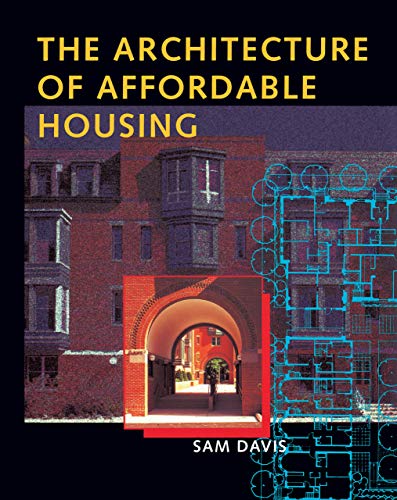
Imagen de portada de Amazon
Imagen de Amazon.com
Imagen de cubierta Syndetics
Portada de Syndetics
Imagen de OpenLibrary

The architecture of affordable housing. Sam Davis. txt

Por: Berkeley : University of California Press , 1995Descripción: ix, 208 p. ill.; plans. 27 cmTipo de contenido:
  • text
Tipo de medio:
  • unmediaded
Tipo de soporte:
  • volume
ISBN:
  • 9780520208858
  • 0520208854
  • 0520087585
Tema(s): Clasificación CDD:
  • 728/.1/0973 22
Clasificación LoC:
  • NA7540 D38 1995
Contenidos:
1. Architect and Affordable Housing -- 2. Process: The Long and Winding Road -- 3. Why Affordable Housing Isn't -- 4. Design: Things Big and Small, Far and Near -- 5. Is Affordable Housing Significant Architecture? --
Resumen: That a country of wealth cannot provide sound housing for those in need is a national embarrassment. This book is about the design of dignified, affordable housing for those not served by the private sector, and how that housing fits comfortably into our communities. Sam Davis has written an accessible, non-technical analysis for everyone interested in the creation of affordable housing. Through discussions of cost, politics, and design concepts, as well as case studies of completed projects, he gives solutions to the dilemmas posed by the development process. Good housing design is a delicate balance of community values, individual needs, esthetic judgments, and technical requirements. Good design can save money--seventy percent of the cost of a new dwelling is affected by planning and design. As a key ingredient in community building, housing should bestow on its inhabitants a sense of dignity, says Davis. To view this as a privilege for those who can afford market-rate housing invites both social and financial disaster. He also considers our national obsession with the single-family house and our historical ambivalence toward subsidized housing--attitudes that have often led to the stigmatization of low-income groups. This book will be indispensable to community and volunteer groups, local governments, financial backers, architects, planners, and students in related fields.
Valoración
    Valoración media: 0.0 (0 votos)
Existencias
Imagen de cubierta Tipo de ítem Biblioteca actual Biblioteca de origen Colección Ubicación en estantería Signatura topográfica Materiales especificados Info Vol URL Copia número Estado Notas Fecha de vencimiento Código de barras Reserva de ítems Prioridad de la cola de reserva de ejemplar Reservas para cursos
Libro CARIBET Biblioteca Arquitectura Colección General CARIBET General NA7540 D38 1995 (Navegar estantería(Abre debajo)) 1 Disponible 91000000011296
Total de reservas: 0

Descripciones mejoradas de Syndetics:

That a country of wealth cannot provide sound housing for those in need is a national embarrassment. This book is about the design of dignified, affordable housing for those not served by the private sector, and how that housing fits comfortably into our communities. Sam Davis has written an accessible, non-technical analysis for everyone interested in the creation of affordable housing. Through discussions of cost, politics, and design concepts, as well as case studies of completed projects, he gives solutions to the dilemmas posed by the development process.


Good housing design is a delicate balance of community values, individual needs, esthetic judgments, and technical requirements. Good design can save money--seventy percent of the cost of a new dwelling is affected by planning and design. As a key ingredient in community building, housing should bestow on its inhabitants a sense of dignity, says Davis. To view this as a privilege for those who can afford market-rate housing invites both social and financial disaster. He also considers our national obsession with the single-family house and our historical ambivalence toward subsidized housing--attitudes that have often led to the stigmatization of low-income groups.


This book will be indispensable to community and volunteer groups, local governments, financial backers, architects, planners, and students in related fields.

Include index

Include Bibliography

1. Architect and Affordable Housing --
2. Process: The Long and Winding Road --
3. Why Affordable Housing Isn't --
4. Design: Things Big and Small, Far and Near --
5. Is Affordable Housing Significant Architecture? --

That a country of wealth cannot provide sound housing for those in need is a national embarrassment. This book is about the design of dignified, affordable housing for those not served by the private sector, and how that housing fits comfortably into our communities. Sam Davis has written an accessible, non-technical analysis for everyone interested in the creation of affordable housing. Through discussions of cost, politics, and design concepts, as well as case studies of completed projects, he gives solutions to the dilemmas posed by the development process. Good housing design is a delicate balance of community values, individual needs, esthetic judgments, and technical requirements. Good design can save money--seventy percent of the cost of a new dwelling is affected by planning and design. As a key ingredient in community building, housing should bestow on its inhabitants a sense of dignity, says Davis. To view this as a privilege for those who can afford market-rate housing invites both social and financial disaster. He also considers our national obsession with the single-family house and our historical ambivalence toward subsidized housing--attitudes that have often led to the stigmatization of low-income groups. This book will be indispensable to community and volunteer groups, local governments, financial backers, architects, planners, and students in related fields.

Reseñas proporcionadas por Syndetics

Library Journal Review

This thoughtful account of what used to be called public housing should be of interest to a broad spectrum of readers, from specialists to the general public. It is engagingly written by a recognized authority who has served as chair of the Department of Architecture at the University of California at Berkeley. Davis is a seasoned veteran of the housing wars across the country, and this book is replete with concrete case studies dating from the past 20 years. The chief virtue of the book is the tremendous variety of public housing it exhibits; architects never seem to tire of attempting to design better pubic housing wherever they work regardless of fractious approval processes, inhibiting rules and regulations, and discouraging economics. Recommended for all collections.-Peter Kaufman, Boston Architectural Ctr. (c) Copyright 2010. Library Journals LLC, a wholly owned subsidiary of Media Source, Inc. No redistribution permitted.

CHOICE Review

That a country of wealth cannot provide sound housing for those in need is a national embarrassment. This book is about the design of dignified affordable housing for those not served by the private sector and how that housing fits comfortably into our communities. It is an accessible, nontechnical analysis for everyone interested in the creation of affordable housing, which reveals the complexities posed in planning and development and discusses cost, politics, and design concepts, and case studies of completed projects. Good housing design is a delicate balance of community values, individual needs, aesthetic judgments, and technical requirements. Davis (Univ. of California, Berkeley) is editor of The Form of Housing (CH, Nov'78). His design firm, Davis & Joyce Architects, has won numerous design awards and housing competitions. Many ink line plans and sketches are intermixed with a substantial number of black and white photographs. This book will be most valuable to community and volunteer groups, local governments, financial backers, architects, planners, and students in related fields. Undergraduate; graduate; faculty; professional; general. R. P. Meden; Marymount University

Booklist Review

The architecture of affordable housing has assumed as many forms as the very nomenclature. Davis presents a history of poor, low-income, social, and subsidized housing using examples of Frank Lloyd Wright, the WPA, and contemporary case studies in the most expensive state in the union, California. These examples illustrate that while the beliefs surrounding affordable housing have changed, the need has been steady, if not growing. They also illustrate many myths, one being that affordable housing most often isn't any cheaper to build than market-rate housing. The in-depth documentation of the community planning process shows just how passionate the contesting parties are and how complex the issues have become. While not offering Wright's technical secrets on cost cutting, the California case studies lend the book a credibility from which both laypeople and architects can benefit. But, ultimately, the 10 award-winning projects the author presents as evidence of "good" architecture fulfilling a social need skirt the real issue: Why is it that award-winning projects can turn into unlivable places and that less attractive ones can be wonderful places to live? While the book is valuable, Davis does not address the issue of place-making and community, which many believe is the heart of the affordable housing crisis. --William Huchting

Notas de autor provistas por Syndetics

Sam Davis is Professor and Chair of Architecture at the University of California, Berkeley and editor of The Form of Housing (1977). He is Principal of Davis and Joyce Architects and has won numerous design awards and housing competitions.
Compartir
logopucpr-y-vive

Contáctanos

¡Queremos saber de ti!

Tel. 787.841.2000 Ext. 1801

bibliotecavaldes@pucpr.edu

⁣Búscanos en las redes

© 2026 Desarrollado por Ignite Online • All Rights Reserved • Powered by Koha.