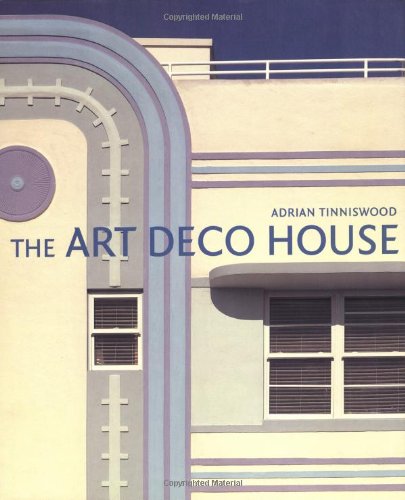

The art deco house avant-garde houses of the 1920s and 1930s Adrian Tinniswood. txt
Idioma: Español New York Watson-Guptill Publications 2002Descripción: 176 p. col. ill. 29 cmTipo de contenido:- text
- unmediaded
- volume
- 0823003159
| Imagen de cubierta | Tipo de ítem | Biblioteca actual | Biblioteca de origen | Colección | Ubicación en estantería | Signatura topográfica | Materiales especificados | Info Vol | URL | Copia número | Estado | Notas | Fecha de vencimiento | Código de barras | Reserva de ítems | Prioridad de la cola de reserva de ejemplar | Reservas para cursos | |
|---|---|---|---|---|---|---|---|---|---|---|---|---|---|---|---|---|---|---|
| Libro | CARIBET Biblioteca Arquitectura Colección General CARIBET | General NA682.A78 T56 2002 (Navegar estantería(Abre debajo)) | 1 | Disponible | 91000000010710 |
Descripciones mejoradas de Syndetics:
Modern architecture between the two world wars was a deliberate rejection of the past, causing a tension between traditional concepts of the home as warm, intimate, and comfortable and cool, futuristic visions of the house as a technological paradise. Art Deco was an attempt to resolve these tensions. Some of the most popular and influential architects and designers of the past 150 years--Norman Bel Geddes and Richard Neutra, working in the US; Robert Mallet-Stevens in France; and Berthold Lubetkin in the UK--designed houses that could be defined as being in the Art Deco style. And Art Deco enjoys a new popularity today, unrivalled since its inception in the 1920s. InThe Art Deco House, architectural historian Adrian Tinniswood combines fascinating text and stunning photography to create an essential reference for anyone who loves Art Deco design. Captivating chapters provide detailed overviews of the design, decoration, furnishings, and gardens of the Art Deco house, covering such themes as streamline moderns; Modernist ideas for estates and apartment blocks; urbanism and domestic design; and more. Within each chapter, special stand-alone features draw upon contemporary literature, magazines, and museum exhibitions to demonstrate the style and philosophy of the Art Deco movement. This remarkable guide also features hundreds of stunning, full-color examples of a broad range of Art Deco houses, including the House of Tomorrow by Norman Bel Geddes; the Henry House in Utrecht, Holl∧ Geragh in Sandycove, Dublin; and Rudolf Schindler's Los Angeles home. • An essential source-book of Art Deco style, with scores of resplendent illustrations • Features little-known houses from the US, France, Ireland, Germany, and Austria • Provides fascinating insight into the lives of Art Deco architects and their clients • Art Deco style is enjoying a resurgence in popularity
Includes bibliographical references (p. 170) and index.
Worldwide Books, 01/jul/03, 2003-1022.
Reseñas proporcionadas por Syndetics
Booklist Review
Tinniswood, author of The Arts & Crafts House (1999), celebrates the boldness, flair, and sweep of the art deco movement and its innovative, technology-based design vocabulary. Its influence was pervasive and international and impacted architecture both exterior and interior, public and private. Focusing on the latter, Tinniswood captures the extraordinary range of art deco homes in places as far-flung as Los Angeles and Santa Monica and Dublin and Havana. Chrome, glass, and tubular steel replaced the more traditional woods and natural fabrics of the past, as did a growing interest in Meso-American and Native American motifs first rediscovered and embraced by Frank Lloyd Wright, who had a tremendous influence on European architectural design in the 1910s and 1920s, culminating in the high deco peak at the famous 1925 Paris Exposition. This handsome coffee-table volume's clearly written and informative text and generous spreads of color and black-and-white photographs of 34 spectacular homes ensure this title its place as a major design sourcebook and a must-see for the legions of art deco fanatics. --Whitney ScottNotas de autor provistas por Syndetics
Adrian Tinniswood has worked for Britain's leading heritage organization., the National Trust, as an author, editor, and educational consultant for 15 years. He lives in Bath, England.