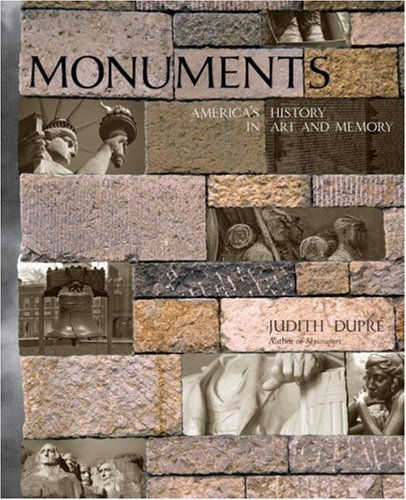
From the award-winning, bestselling author of Skyscrapers, Churches, and Bridges comes a stunning visual history that serves as a tribute to classic American landmarks.
Includes bibliographical references (p. [234]-242) and index.
Extracto provisto por Syndetics
Excerpt from Monuments Monuments are our response to the collective need to remember, revisit, and delineate the dreams of history. The best memorials are not mere relics, but extraordinarily rich communications from the past, living history books that illuminate societal, political, and cultural values at specific moments in time. Because consensus about historical events, shared values, and appropriate visual vocabularies is increasingly rare, monuments must find new ways to inspire and console. The unspoken directive today is to read into a memorial what you will. Once proudly ascendant or low and tomblike, the forms of monuments are changing, as are the materials from which they are made. Public works that now are revered created controversy and encountered resistance when their unfamiliar forms were first unveiled. In the last century, abstract art and architecture have allowed designers to sidestep a specific or heroic message. This stance was exemplified by the minimalist design for the Vietnam Veterans Memorial by Maya Lin which, although it met bitter opposition when first proposed, is now recognized as a milestone of commemorative architecture against which future monuments must be measured. The Evolving Monument Similarly, marble and limestone, once sacrosanct materials of Western commemoration, are giving way to ephemeral materials such as light and other nonpermanent elements. The genius of the gay rights activists who conceived of the AIDS Quilt in 1985 was recognizing the quilted form as a way to tap into a familiar yet subversive tradition that has existed for centuries in the shadow of the dominant male culture. Soft, domestic, intimate yet epic, the AIDS Quilt is made of fabric and other materials more vulnerable than stone or steel. Glass and light have long been employed in buildings to express transcendence, but have been used less frequently in memorial design. Reflective and translucent monuments such as Luminous Manuscript as well as the Kennedy Space Center's Astronaut Memorial Space Mirror (1991), which honors the American astronauts who died in the quest to explore space, suggest the wide metaphoric possibilities of glass. Even more ephemeral are works created solely from light, and portable monuments that are no longer rooted in one place. Some memorials exist only in cyberspace, with increasingly popular online sites featuring photos of and quotes from the deceased as well as virtual guest books for recording remembrances. After September 11, 2001, millions gathered online to express grief, prayers, and political commentary. The rapidly emerging Web with its seemingly infinite pages, sites, and hyperlinks allows the world to do what it most often needs in order to heal: talk together. Recent, heavily publicized competitions have exposed the huge cultural and political stakes at play in the manufacture of monuments. The competition's function is not limited to getting a monument built. In fact, getting something built is often beside the point. Competitions raise public consciousness about what can and should be built, and expand the notion of what is possible. They also promote the idea that the proposed memorial should be funded and help raise funds. Additionally, they fulfill a significant conciliatory role by helping a potential memorial's myriad stakeholders come to terms with the event itself. The World Trade Center Memorial Competition, announced in April 2003, was the largest design competition in history, generating 5,201 submissions from 63 nations, most from nonprofessionals who, despite the low odds of winning, were moved to express their feelings. Excerpted from Monuments: America's History in Art and Memory by Judith Dupre All rights reserved by the original copyright owners. Excerpts are provided for display purposes only and may not be reproduced, reprinted or distributed without the written permission of the publisher.
Reseñas proporcionadas por Syndetics
Publishers Weekly Review
This visually arresting book is vintage Dupre (Churches; Skyscrapers). The stylish architectural historian examines 37 monuments (from the Liberty Bell and the Alamo to Oklahoma City) for what they reveal about those they commemorate, those who designed them and those who visit them. Dupre decodes monument symbolism (when a soldier is mounted on a horse, the number of hooves planted on the ground indicates whether the rider survived the conflict being commemorated), and she sheds light on commemoration controversies, such as the 1990s debate over erecting a statue of Arthur Ashe on Richmond's Monument Avenue, which had previously been dedicated to Confederate leaders. She addresses "sites of shame," like Manzanar National Historical Site (where Japanese-Americans were interned during WWII), that recall events many people would rather forget. The 180-plus black-and-white photos are as absorbing as the text, and additional material, like an interview with a stone carver who worked on the National World War II Memorial in D.C., enriches the volume. The foreword is the only disappointment. This ode to 9/11 begins on a stale note, recalling innocent 9/10 and trotting out cliches like "Monuments are history made visible." But that's a minor flaw in a lavish, thoughtful tome. (Nov. 6) (c) Copyright PWxyz, LLC. All rights reserved
Booklist Review
Following her popular books on skyscrapers, bridges, and churches, architectural historian Dupré turns her keenly incisive gaze on monuments, which she defines as history made visible. Dupré traces the evolving forms of monuments, and delves deeply into America's history. Spanning 200 years, the narrative recognizes changes in perspectives, such as how the glorification of General Custer at the Little Bighorn battlefield shifted to the commemoration of American Indians. To balance the rigorous intellectualism of her argument, Dupré offers enlivening and fascinating insights into the personalities of designers and engineers whose names are often unfamiliar, unlike the subjects of the heroic tombs, temples, and sculptural masterpieces they created. Poignant and profound back-stories add depth to the accomplishments of contemporary figures, especially Maya Lin's remarkable Vietnam Veterans Memorial, which inspires the author's heartfelt account of her childhood neighbor, Rickey Caruolo, one of the earliest casualties of the Vietnam War.--Joyce, Alice Copyright 2007 Booklist
Monuments
APA
Dupré J., . (2007). Monuments: America's history in art and memory. New York: Random House.
Chicago
Dupré Judith, . 2007. Monuments: America's history in art and memory. New York: Random House.
Harvard
Dupré J., . (2007). Monuments: America's history in art and memory. New York: Random House.
MLA
Dupré Judith, . Monuments: America's history in art and memory. New York: Random House. 2007.