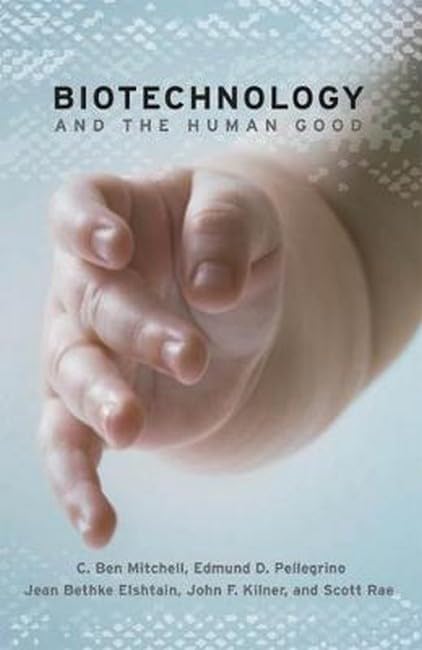

Biotechnology and the human good C. Ben Mitchell ... [et al.].
Detalles de publicación: Washington, D.C. Georgetown University Press c2007.Descripción: xiv, 210 p. 22 cmISBN:- 1589011384 (alk. paper)
- 9781589011380 (alk. paper)
- 174.96606 B6164 22
- TP248.23 .B566 2007
- 2008 A-320
- TP 248.23
| Imagen de cubierta | Tipo de ítem | Biblioteca actual | Biblioteca de origen | Colección | Ubicación en estantería | Signatura topográfica | Materiales especificados | Info Vol | URL | Copia número | Estado | Notas | Fecha de vencimiento | Código de barras | Reserva de ítems | Prioridad de la cola de reserva de ejemplar | Reservas para cursos | |
|---|---|---|---|---|---|---|---|---|---|---|---|---|---|---|---|---|---|---|
| Libro | Biblioteca Encarnación Valdés Colección General bev | 174.96606 B6164 (Navegar estantería(Abre debajo)) | Disponible | 80000002409855 |
Descripciones mejoradas de Syndetics:
Some of humankind's greatest tools have been forged in the research laboratory. Who could argue that medical advances like antibiotics, blood transfusions, and pacemakers have not improved the quality of people's lives? But with each new technological breakthrough there comes an array of consequences, at once predicted and unpredictable, beneficial and hazardous.
Outcry over recent developments in the reproductive and genetic sciences has revealed deep fissures in society's perception of biotechnical progress. Many are concerned that reckless technological development, driven by consumerist impulses and greedy entrepreneurialism, has the potential to radically shift the human condition--and not for the greater good. Biotechnology and the Human Good builds a case for a stewardship deeply rooted in Judeo-Christian theism to responsibly interpret and assess new technologies in a way that answers this concern.
The authors jointly recognize humans not as autonomous beings but as ones accountable to each other, to the world they live in, and to God. They argue that to question and critique how fields like cybernetics, nanotechnology, and genetics might affect our future is not anti-science, anti-industry, or anti-progress, but rather a way to promote human flourishing, common sense, and good stewardship.
A synthetic work drawing on the thought of a physician, ethicists, and a theologian, Biotechnology and the Human Good reminds us that although technology is a powerful and often awe-inspiring tool, it is what lies in the heart and soul of who wields this tool that truly makes the difference in our world.
Includes bibliographical references (p. [159]-192) and index.
The rapidly changing world of biotechnology -- Humanity and the technological narrative -- Biotechnology and competing worldviews -- Biotechnology and human dignity -- Biotechnology and the quest for control -- Biotechnology, human enhancement, and the ends of medicine -- Conclusion : toward a foundation for biotechnology.
Tabla de contenidos provista por Syndetics
- Preface
- Acknowledgments
- 1 The Rapidly Changing World of Biotechnology
- 2 Humanity and the Technological Narrative
- 3 Biotechnology and Competing Worldviews
- 4 Biotechnology and Human Dignity
- 5 Biotechnology and the Quest for Control
- 6 Biotechnology, Human Enhancement, and the Ends of Medicine
- 7 Conclusion: Toward a Foundation for Biotechnology
- Notes
- Authors and Collaborators
- Index
Notas de autor provistas por Syndetics
C. Ben Mitchell is associate professor of bioethics and contemporary culture at Trinity International University.
Edmund D. Pellegrino, MD , is the chair of the President's Council on Bioethics, and professor emeritus of medicine and medical ethics, Center for Clinical Bioethics, Georgetown University Medical Center.
Jean Bethke Elshtain is the Laura Spelman Rockefeller Professor of Social and Political Ethics in the Divinity School at the University of Chicago.
John F. Kilner is the Franklin Forman Chair of Ethics, professor of bioethics and contemporary culture, and the director of the bioethics program at Trinity International University.
Scott B. Rae is professor of biblical studies and Christian ethics at Biola University.