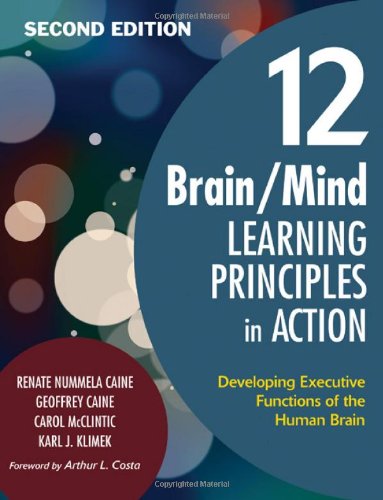
Imagen de Amazon.com

Portada de Syndetics
Imagen de OpenLibrary
12 brain/mind learning principles in action developing executive functions of the human brain Renate Nummela Caine ... [et al.] ; foreword by Arthur L. Costa.
Detalles de publicación: Thousand Oaks, Calif. Corwin Press c2009.Edición: 2 nd edDescripción: xvi, 2285 p. ill. 29 cmISBN:- 9781412961073
- Twelve brain/mind learning principles in action
| Imagen de cubierta | Tipo de ítem | Biblioteca actual | Biblioteca de origen | Colección | Ubicación en estantería | Signatura topográfica | Materiales especificados | Info Vol | URL | Copia número | Estado | Notas | Fecha de vencimiento | Código de barras | Reserva de ítems | Prioridad de la cola de reserva de ejemplar | Reservas para cursos | |
|---|---|---|---|---|---|---|---|---|---|---|---|---|---|---|---|---|---|---|
| Libro | Biblioteca de Mayagüez Colección General mb | LB 1060 .A16 2009 (Navegar estantería(Abre debajo)) | Disponible | 50000003199865 |
Total de reservas: 0
Descripciones mejoradas de Syndetics:
With updated research, revised sections on leadership, and new anecdotes, this second edition helps teachers and students reach higher performance levels based on how the brain learns.
Rev. ed. of: 12 brain/mind learning principles in action, published in 2005.
EIGM 04/2010
Includes bibliographical references (p. 285-280) and index.
Tabla de contenidos provista por Syndetics
- Foreword to the First Edition by Arthur L. Costa
- Preface to the Second Edition
- Acknowledgments
- About the Authors
- 1 Getting Started
- We Have to Begin With Learning
- Natural Learning Capacities
- Three Critical Elements Teachers Must Master
- What Are We After? Developing Higher-Order Learning Functions
- Scaffolding the Journey: Shifting Your Instructional Approach
- The Process That Makes It Real: How to Use This Book
- Mastering the Vocabulary: Getting Started
- Part I Relaxed Alertness
- 2 Why Relaxed Alertness Provides the Optimum Emotional Climate for Learning
- Relaxed Alertness Is a Psychophysiological State
- Foundations of Relaxed Alertness
- Executive Functions
- What Can Educators Do?
- For the Empowering Leader
- Mastering the Vocabulary: Introduction to Relaxed Alertness
- 3 Complex Learning Is Enhanced by Challenge and Inhibited by Threat, Helplessness, and Fatigue
- How Do We Know This? The Research That Supports This Principle
- Processing This Principle
- Taking It Into the Classroom
- The First Foundational Skill for Relaxed Alertness: Ordered Sharing
- For the Empowering Leader
- Mastering the Vocabulary: The Development of Competence and Confidence Accompanied by Meaning or Purpose
- 4 The Brain/Mind Is Social
- How Do We Know This? The Research That Supports This Principle
- Processing This Principle
- Taking It Into the Classroom
- The Second Foundational Skill for Relaxed Alertness: Effective Listening and "I" Messages
- For the Empowering Leader
- Mastering the Vocabulary: How the Social Environment Contributes to Relaxed Alertness
- 5 The Search for Meaning Is Innate
- How Do We Know This? The Research That Supports This Principle
- Processing This Principle
- Taking It Into the Classroom
- The Third Foundational Skill for Relaxed Alertness: Process Meetings
- For the Empowering Leader
- Mastering the Vocabulary: How Meaning Contributes to a State of Relaxed Alertness
- 6 Emotions Are Critical to Patterning
- How Do We Know This? The Research That Supports This Principle
- Processing This Principle
- Taking It Into the Classroom
- The Fourth Foundational Skill for Relaxed Alertness: Resolving Conflict
- For the Empowering Leader
- Mastering the Vocabulary: Emotions and Patterning
- Part II Orchestrated Immersion
- 7 Creating the Richest Learning Environments Using Immersion in Complex Experience
- How Do We Know This? The Research That Supports This Principle
- Processing These Ideas
- Taking It Into the Classroom
- For the Empowering Leader
- Mastering the Vocabulary: Creating the Richest Learning Environments Using Immersion in Complex Experience
- 8 The Brain/Mind Processes Parts and Wholes Simultaneously
- How Do We Know This? The Research That Supports This Principle
- Processing This Principle
- Taking It Into the Classroom
- The First Foundational Skill for Orchestrated Immersion: Designing Teacher-Orchestrated, Global Experiences
- For the Empowering Leader
- Mastering the Vocabulary: The Brain/Mind Processes Parts and Wholes Simultaneously
- 9 All Learning Engages the Physiology
- How Do We Know This? The Research That Supports This Principle
- Processing This Principle
- Taking It Into the Classroom
- The Second Foundational Skill for Orchestrated Immersion: Guiding Actor-Centered Learning
- For the Empowering Leader
- Mastering the Vocabulary: All Learning Engages the Physiology
- 10 The Search for Meaning Occurs Through Patterning
- How Do We Know This? The Research That Supports This Principle
- Processing This Principle
- Taking It Into the Classroom
- The Third Foundational Skill for Orchestrated Immersion: Seeing and Teaching Patterns
- For the Empowering Leader
- Mastering the Vocabulary: The Search for Meaning Occurs Through Patterning
- 11 Learning Is Developmental
- How Do We Know This? The Research That Supports This Principle
- Processing This Principle
- Taking It Into the Classroom
- The Fourth Foundational Skill for Orchestrated Immersion: Effective Assessment
- For the Empowering Leader
- Mastering the Vocabulary: Learning Is Developmental
- Part III Active Processing
- 12 How to Help Learners Digest and Consolidate Learning
- How Do We Know This? The Research That Supports This Principle
- Active Processing and the Instructional Approaches
- For the Empowering Leader
- Mastering the Vocabulary: How to Help Learners Digest and Consolidate Learning
- 13 There Are at Least Two Approaches to Memory
- One Is to Store or Archive and the Other Is to Engage Multiple Memory Systems in Order to Make Sense of Experience
- How Do We Know This? The Research That Supports This Principle
- Memory and Decision Making
- Processing This Principle
- Taking It Into the Classroom
- The First Foundational Skill for Active Processing: The Effective Use of Questions
- For the Empowering Leader
- Mastering the Vocabulary: There Are at Least Two Approaches to Memory
- One Is to Store or Archive and the Other Is to Engage Multiple Memory Systems in Order to Make Sense of Experience
- 14 Learning Engages Both Focused Attention and Peripheral Perception
- How Do We Know This? The Research That Supports This Principle
- Processing This Principle
- Taking It Into the Classroom
- The Second Foundational Skill for Active Processing: Capitalizing on Attention Through the Effective Use of Observation
- For the Empowering Leader
- Mastering the Vocabulary: Learning Engages Both Focused Attention and Peripheral Perception
- 15 Learning Is Both Conscious and Unconscious
- How Do We Know This? The Research That Supports This Principle
- Processing This Principle
- Taking It Into the Classroom
- The Third Foundational Skill for Active Processing: Self-Regulation
- For the Empowering Leader
- Mastering the Vocabulary: Learning Is Both Conscious and Unconscious
- 16 Each Brain Is Uniquely Organized
- How Do We Know This? The Research That Supports This Principle
- Processing This Principle
- Taking It Into the Classroom
- The Fourth Foundational Skill for Active Processing: Advanced Questioning
- For the Empowering Leader
- Mastering the Vocabulary: Each Brain in Uniquely Organized
- Resource A The Brain/Mind Principles Wheel
- Resource B The Brain/Mind Learning Capacities Wheel
- Resource C How to Develop Process Learning Circles
- Resource D Guided Experiences Presentation Cycle
- Resource E Guidelines for the Guided Experiences Model
- Resource F Global Experience Design Wheel
- Resource G Sensory Poem
- References
- Index
- Index