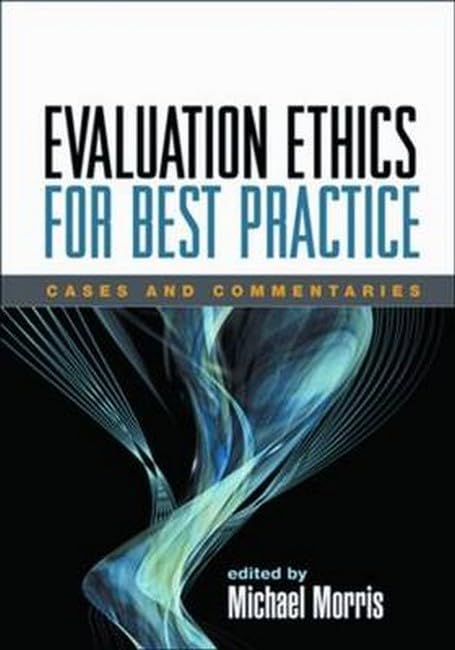

Evaluation ethics for best practice cases and commentaries edited by Michael Morris.
Detalles de publicación: New York Guilford Press c2008.Descripción: x, 230 p. ill. 23 cmISBN:- 9781593855697 (pbk.)
- 1593855699 (pbk.)
- 177 E9214 22
- H62 .E8472 2008
| Imagen de cubierta | Tipo de ítem | Biblioteca actual | Biblioteca de origen | Colección | Ubicación en estantería | Signatura topográfica | Materiales especificados | Info Vol | URL | Copia número | Estado | Notas | Fecha de vencimiento | Código de barras | Reserva de ítems | Prioridad de la cola de reserva de ejemplar | Reservas para cursos | |
|---|---|---|---|---|---|---|---|---|---|---|---|---|---|---|---|---|---|---|
| Libro | Biblioteca Encarnación Valdés Colección General bev | 177 E9214 (Navegar estantería(Abre debajo)) | Disponible | 80000002409376 |
Descripciones mejoradas de Syndetics:
Focusing on ethical challenges in program evaluation, this innovative book features six case-study scenarios that end at a point where the evaluator faces a significant decision about how to proceed. For each case, two distinguished evaluators offer insights on the best course of action to choose, and why. "What If?" boxes modify the details of the scenarios, inviting readers to reflect on whether these changes alter the ethical implications of the case. Six additional cases are presented with questions that guide readers to develop their own ethical analyses. The book is organized to follow the progress of an evaluation, from the entry/contracting phase through the utilization of results.
Includes bibliographical references and indexes.
Ethics and evaluation -- The entry/contracting stage -- Scenario 1: the coordination project -- Commentary: consumers, culture, and validity / Karen E. Kirkhart -- Commentary: whose evaluation is it, anyway? / David M. Chavis -- What if ...? -- Final thoughts: the coordination project -- Scenario 2: just say no? -- Questions to consider -- Designing the evaluation -- Scenario 1: the damp parade? -- Commentary: everybody talks about the weather ... / Melvin M. Mark -- Commentary: no rain today / Gail V. Barrington -- What if ...? -- Final thoughts: the damp parade -- Scenario 2: what's under the rock? -- Questions to consider -- Data collection -- Scenario 1: the folder -- Commentary: hold 'em or fold(er) 'em? : what's an evaluator to do? / Michael Hendricks -- Commentary: centering the folder / sarita davis -- What if ...? -- Final thoughts: the folder -- Scenario 2: hideout -- Questions to consider -- Data analysis and interpretation -- Scenario 1: knock, knock, what's there? -- Commentary: what's there : confidence or competence? / Leslie J. Cooksy -- Commentary: interpreting effects / William R. Shadish -- What if ...? -- Final thoughts : knock, knock, what's there? -- Scenario 2: things happen -- Questions to consider -- Communication of results -- Scenario 1: mainstream -- Commentary: mainstreaming process evaluation : ethical issues in reporting interim results / Mary Ann Scheirer -- Commentary: reporting bad news : challenges and opportunities in an ethical dilemma / Yolanda Suarez-Balcazar and Lucía Orellana-Damacela -- What if ...? -- Final thoughts : mainstream -- Scenario 2: whose voices? -- Questions to consider -- Utilization of results -- Scenario 1: nightly news -- Commentary: fixing the spin on evaluation / Laura C. Leviton -- Commentary: from substance use to evaluation misuse : is there a way out? / Sharon F. Rallis -- What if ...? -- Final thoughts: nightly news -- Scenario 2: is my job done yet? -- Questions to consider -- Lessons learned.
Tabla de contenidos provista por Syndetics
- Chapter 1 Ethics and Evaluation(p. 1)
- Chapter 2 The Entry/Contracting Stage(p. 31)
- Scenario 1 The Coordination Project(p. 31)
- Commentary. Consumers, Culture, and Validity(p. 33)
- Commentary. Whose Evaluation Is It, Anyway?(p. 50)
- What If...?(p. 54)
- Final Thoughts. The Coordination Project(p. 54)
- Scenario 2 Just Say No?(p. 56)
- Questions to Consider(p. 57)
- Chapter 3 Designing the Evaluation(p. 59)
- Scenario 1 The Damp Parade?(p. 59)
- Commentary. Everybody Talks about the Weather...(p. 61)
- Commentary. No Rain Today(p. 72)
- What If...?(p. 82)
- Final Thoughts. The Damp Parade?(p. 82)
- Scenario 2 What's under the Rock?(p. 84)
- Questions to Consider(p. 85)
- Chapter 4 Data Collection(p. 87)
- Scenario 1 The Folder(p. 87)
- Commentary. Hold 'Em or Fold(er) 'Em?: What's an Evaluator to Do?(p. 89)
- Commentary. Centering the Folder(p. 100)
- What If...?(p. 112)
- Final Thoughts. The Folder(p. 113)
- Scenario 2 Hideout(p. 115)
- Questions to Consider(p. 116)
- Chapter 5 Data Analysis and Interpretation(p. 117)
- Scenario 1 Knock, Knock, What's There?(p. 117)
- Commentary. What's There: Confidence or Competence?(p. 119)
- Commentary. Interpreting Effects(p. 132)
- What If...?(p. 137)
- Final Thoughts. Knock, Knock, What's There?(p. 137)
- Scenario 2 Things Happen(p. 139)
- Questions to Consider(p. 140)
- Chapter 6 Communication of Results(p. 141)
- Scenario 1 Mainstream(p. 141)
- Commentary. Mainstreaming Process Evaluation: Ethical Issues in Reporting Interim Results(p. 144)
- Commentary. Reporting Bad News: Challenges and Opportunities in an Ethical Dilemma(p. 155)
- What If...?(p. 166)
- Final Thoughts. Mainstream(p. 166)
- Scenario 2 Whose Voices?(p. 168)
- Questions to Consider(p. 170)
- Chapter 7 Utilization of Results(p. 171)
- Scenario 1 Nightly News(p. 171)
- Commentary. Fixing the Spin on Evaluation(p. 173)
- Commentary. From Substance Use to Evaluation Misuse: Is There a Way Out?(p. 183)
- What lf...?(p. 191)
- Final Thoughts. Nightly News(p. 191)
- Scenario 2 Is My Job Done Yet?(p. 193)
- Questions to Consider(p. 194)
- Chapter 8 Lessons Learned(p. 195)
- Appendix A The Guiding Principles for Evaluators(p. 207)
- Appendix B The Program Evaluation Standards, Second Edition(p. 212)
- Author Index(p. 216)
- Subject Index(p. 219)
- About the Editor(p. 225)
- Contributors(p. 226)