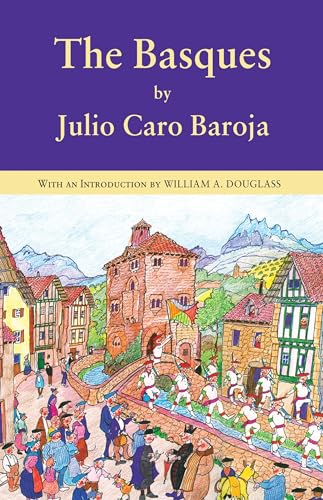

The Basques by Julio Caro Baroja ; translated by Kristin Addis.
Idioma: Inglés Lenguaje original: Español Series Basque classics series ; no. 5Detalles de publicación: Reno Center for Basque Studies, University of Nevada, Reno c2009.Descripción: xix, 483 p. ill., maps 24 cmISBN:- 9781877802928 (hardcover)
- 305.89992 C2921v I 22
- GN549.B3 C3713 2009
| Imagen de cubierta | Tipo de ítem | Biblioteca actual | Biblioteca de origen | Colección | Ubicación en estantería | Signatura topográfica | Materiales especificados | Info Vol | URL | Copia número | Estado | Notas | Fecha de vencimiento | Código de barras | Reserva de ítems | Prioridad de la cola de reserva de ejemplar | Reservas para cursos | |
|---|---|---|---|---|---|---|---|---|---|---|---|---|---|---|---|---|---|---|
| Libro | Biblioteca Encarnación Valdés Colección General bev | 305.89992 C2921v I (Navegar estantería(Abre debajo)) | Disponible | 80000002416165 |
Descripciones mejoradas de Syndetics:
"The most important personality of contemporary post-war Spanish historiography." -Juan Pablo FusíCaro was prepared to eschew grand theory in any guise (be it of sweeping culture areas and cycles, Marxist, ahistorical functionalist, or structuralist). . . . He was a clear proponent of the primacy of cultural differences in human affairs, including their capacity to define distinctive ethnic groups. However, the latter were to be understood as both unique historical precipitates and the result of a complex (indeed functionally integrated) interaction between the crucial components of society, economy, geography, and culture. He specifically eschewed explanations of human difference as expressions of inherent racial propensities (a postulate that still informed at least some of the social scientific thinking of his day). In the foregoing regards Caro proved to be thoroughly modern and even visionary, however as always his journey to such conclusions deviated from conventional pathways. -William A. Douglass, from the new introduction
Includes bibliographical references and index.
"The first English edition of the author's 1949 classic on the Basque people, customs, and culture. Translation of the 1971 edition"--Provided by publisher.