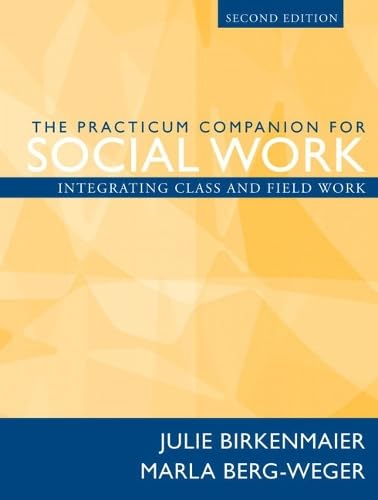

The practicum companion for social work integrating class and field work Julie Birkenmaier, Marla Berg-Weger.
Detalles de publicación: Boston, MA Pearson A and B c2007.Edición: 2nd edDescripción: xxii, 297 p. ill. 23 cmISBN:- 0205474829 (alk. paper)
- 361.32071 B6191p2 22
- HV11 .B44 2007
| Imagen de cubierta | Tipo de ítem | Biblioteca actual | Biblioteca de origen | Colección | Ubicación en estantería | Signatura topográfica | Materiales especificados | Info Vol | URL | Copia número | Estado | Notas | Fecha de vencimiento | Código de barras | Reserva de ítems | Prioridad de la cola de reserva de ejemplar | Reservas para cursos | |
|---|---|---|---|---|---|---|---|---|---|---|---|---|---|---|---|---|---|---|
| Libro | Biblioteca Encarnación Valdés Colección General bev | 361.32071 B6191p2 (Navegar estantería(Abre debajo)) | Disponible | 80000002406026 |
Descripciones mejoradas de Syndetics:
The ideal companion for the first field/practicum experience, this text guides students through their placement while reinforcing the link between social work theory and practice. It includes detailed information on the field/practicum experience from start to finish. Topics covered include establishing a professional identity; working safely; making the most of practicum supervision; organizational issues; micro, mezzo, and macro social work practice; social work and the legal system; and terminating effectively from the practicum. To make the material more accessible, the book follows the progress of five students--Ben, Cameron, Corina, Lauren and Rosa--as they move through their own practicum experiences. Their real-life stories help spur discussion while allowing students to apply the knowledge, skills, and/or issues presented in the text. To further stimulate critical thinking and discussion, the text provides discussion questions and practice applications in each unit. Many of the applications were developed in conjunction with agency-based field instructors.
Rev. ed. of: The practicum companion for social work / Marla Berg-Weger and Julie Birkenmaier.
Includes bibliographical references and index.
Tabla de contenidos provista por Syndetics
- Preface(p. xii)
- 1 Getting Started on Your Social Work Practice Career(p. 1)
- Getting Started in Your Practicum(p. 2)
- Developing Relationships at Your Practicum Site(p. 3)
- The Adult Learner: What Is It and Am I One?(p. 4)
- What Kind of Learner Am I?(p. 5)
- What Is My Role as a Student Learner?(p. 7)
- What Can I Expect from My Practicum?(p. 8)
- What Will the Social Work Program Expect from Me?(p. 9)
- The Learning Plan(p. 9)
- What Can I Expect from My Practicum Site?(p. 13)
- What Can I Expect from My Field Instructor?(p. 14)
- What Can I Expect from My Faculty Liaison?(p. 16)
- What Should I Expect from Myself?(p. 16)
- Integrative Practice Field Seminar(p. 18)
- What Can I Expect from the Integrative Practice Field Seminar?(p. 19)
- What Can I Expect from My Seminar Instructor?(p. 21)
- What Can I Expect from the Other Students?(p. 22)
- What Should I Expect from Myself?(p. 23)
- Summary(p. 24)
- Student Scenario Postscripts(p. 24)
- References(p. 25)
- 2 Socialization into the Social Work Profession(p. 27)
- Me? A Social Worker?(p. 29)
- Strategies for Your Socialization as a Social Worker(p. 30)
- Pulling It All Together: How Can I Juggle All the Roles?(p. 35)
- Setting Professional Boundaries(p. 37)
- Stress: Bane or Boon?(p. 38)
- Self-Care as Professional Development(p. 44)
- The Transitions of Professional Socialization(p. 47)
- Coursework to Practicum(p. 47)
- Beginning to Middle Phase(p. 48)
- Middle Phase to Termination Phase(p. 49)
- Subsequent Practica or Second Semester of Practicum to Graduation(p. 49)
- Practicum Student to Professional Social Worker(p. 50)
- Summary(p. 53)
- Student Scenario Postscripts(p. 53)
- References(p. 54)
- 3 Safety in Social Work Settings(p. 56)
- The Scope of Personal Safety Risks in Social Work(p. 56)
- Safety in the Practicum Setting(p. 57)
- Reasonalbe Concerns and Caution(p. 58)
- Assessment of Potentially Violent Clients(p. 61)
- Specific Guidelines for Safety within the Office(p. 62)
- Interacting with Clients within the Home and the Community(p. 63)
- Working with Angry, Resistant, or Aggressive Clients(p. 66)
- Follow-Up to Crises(p. 67)
- Ethical Dilemmas Involving Safety Issues(p. 67)
- Sexual Harassment(p. 68)
- Defining Features of Harassment(p. 69)
- Intervention(p. 70)
- Helping to Ensure Client Safety(p. 72)
- Summary(p. 72)
- Student Scenario Postscripts(p. 73)
- References(p. 74)
- 4 Making the Most of Your Practicum Supervision(p. 75)
- What Is Practicum Supervision?(p. 76)
- Who Provides Practicum Supervision?(p. 77)
- The Practicum Supervision Approach(p. 77)
- What Can I Expect from Practicum Supervision?(p. 79)
- What Can I Expect from My Field Instructor?(p. 80)
- What Should I Expect from Myself?(p. 83)
- Ethical and Interpersonal Issues in Supervision(p. 86)
- Strategies for Maximizing the Effectiveness of Your Practicum Supervision(p. 89)
- Summary(p. 93)
- Student Scenario Postscripts(p. 94)
- References(p. 95)
- 5 Organizational Issues(p. 97)
- The Importance of Organizational Knowledge(p. 99)
- Internal Elements of an Organization(p. 100)
- Governmental (Public) Organizations(p. 101)
- For-Profit Organizations(p. 102)
- Nonprofit Organizations(p. 103)
- Agency Size(p. 104)
- Large Agencies(p. 105)
- Small Agencies(p. 105)
- Management Theory(p. 106)
- Classical Scientific Management Theories(p. 106)
- Human Relations Theories(p. 106)
- Structuralist Theories(p. 108)
- Systems Theories(p. 108)
- The Role of Social Work within the Organization(p. 108)
- The Informal Organization(p. 111)
- Socialization into the Social Service Organization(p. 113)
- Uncovering Staff Violations(p. 115)
- Summary(p. 118)
- Student Scenario Postscripts(p. 118)
- References(p. 119)
- 6 Micro Social Work Practice in the Field: Working with Individuals and Families(p. 121)
- Expectations for Student Learning in Micro Practice(p. 122)
- Learning the "Business" of Micro Practice(p. 123)
- Orientation(p. 124)
- Caseload Assignment(p. 124)
- Identifying Yourself as a Student(p. 125)
- Role Transition(p. 126)
- Charging for Services(p. 127)
- Confidentiality(p. 128)
- Documentation(p. 130)
- Seeking Answers(p. 134)
- Coverage(p. 135)
- Collaboration(p. 136)
- Ongoing Evaluation(p. 136)
- Learning the "Process" of Micro Practice(p. 137)
- Theory-Practice Integration: Evidence-Based Practice(p. 138)
- Working with Challenging Situations with Clients(p. 141)
- Unique Micro-Practice Opportunities(p. 142)
- Developing Appropriate Expectations of Yourself and Your Clients(p. 147)
- Use of Self in Micro Practice(p. 148)
- Practice Application 6.1 Follow-Up(p. 153)
- Summary(p. 153)
- Student Scenario Postscripts(p. 154)
- References(p. 154)
- 7 Mezzo Social Work Practice in the Field: Working with Groups(p. 156)
- Expectations for Student Learning in Mezzo Practice(p. 158)
- Learning the "Business" of Mezzo Practice(p. 161)
- Orientation(p. 161)
- Group Work Assignments(p. 163)
- Identifying Yourself as a Student(p. 163)
- Role Transition(p. 164)
- Confidentiality(p. 164)
- Documentation(p. 166)
- Collaboration(p. 168)
- Ongoing Evaluation(p. 169)
- Learning the "Process" of Mezzo Practice(p. 172)
- Theory-Practice Integration: Evidence-Based Practice(p. 172)
- Working with Difficult Client Behaviors in the Group Setting(p. 178)
- Unique Mezzo-Practice Opportunities(p. 181)
- Developing Appropriate Expectations of Yourself and Your Clients(p. 185)
- Use of Self in Mezzo Practice(p. 185)
- Working with Nonclient Groups(p. 187)
- Group Member and Leader Roles(p. 188)
- Techniques for Facilitating Group Meetings(p. 189)
- Management of Challenging Group Dynamics(p. 192)
- Summary(p. 195)
- Student Scenario Postscripts(p. 196)
- References(p. 196)
- 8 Macro Social Work Practice in the Field: Working with Organizations and Communities(p. 198)
- Expectations for Student Learning in Macro Practice(p. 200)
- Learning the "Business" of Macro Practice(p. 202)
- Receiving a Macro Assignment(p. 202)
- Orientation(p. 207)
- Identifying Yourself as a Student(p. 208)
- Practice in Smaller Communities(p. 209)
- Role Transition(p. 210)
- Confidentiality and Self-Determination(p. 210)
- Collaboration/Coalitions(p. 210)
- Writing/Documentation Skills(p. 211)
- Ongoing Evaluation(p. 212)
- Learning the "Process" of Macro Practice(p. 212)
- Theory-Practice Integration(p. 213)
- Managing Adverse Relationships and Conflicting Goals(p. 213)
- Developing Reasonable Expectations(p. 215)
- The Impact of Contemporary Social Policy on Social Work Practice and Practica(p. 215)
- Managed Care(p. 215)
- Administrative Trends among Social Service Agencies(p. 217)
- Welfare Reform(p. 218)
- Summary(p. 222)
- Student Scenario Postscripts(p. 223)
- References(p. 223)
- 9 Social Work Practice and the Legal System(p. 226)
- Legal Terms(p. 228)
- Grievance Procedures and Legal Resources for Clients(p. 230)
- Professional and Student Malpractice Issues and Liability(p. 232)
- Confidentiality(p. 233)
- Documentation as a Legal Record(p. 237)
- Special Legal Issues in Practicum(p. 239)
- Social Work Ethical Violations and Grievance Procedures(p. 240)
- The Employing Agency(p. 240)
- Profession(p. 240)
- State(p. 241)
- Court (Civil and Criminal)(p. 241)
- If You Are Sued(p. 242)
- Professional Court Involvement(p. 242)
- Receiving a Subpoena(p. 243)
- Testifying in Court and Serving as an Expert Witness(p. 244)
- Follow-Up to Practice Application 9.3: Authors' Suggested Resolution(p. 248)
- Summary(p. 249)
- Student Scenario Postscripts(p. 249)
- References(p. 249)
- 10 Termination: The Beginning of an End (or the End of a Beginning?)(p. 251)
- What Has This Practicum Experience Meant?(p. 252)
- Beginning the Termination: Where Do I Start?(p. 255)
- Joys and Frustrations: Taking Stock(p. 256)
- Lessons Learned(p. 257)
- The Nuts and Bolts of Termination with Your Clients, Agency, Field Instructor, and Social Work Program(p. 260)
- Terminating with Clients(p. 261)
- Terminating with Your Field Instructor and Agency Staff(p. 264)
- Terminating with the Social Work Program(p. 269)
- Professional Development: Where Does It Begin and Where Does It End?(p. 270)
- Employment Search: A Needle in a Haystack?(p. 271)
- Succeeding in Your First Social Work Position(p. 277)
- Involvement with the Professional Social Work Community(p. 278)
- Social Work Credentials: To Get or Not to Get?(p. 280)
- Summary(p. 282)
- Student Scenario Postscripts(p. 283)
- References(p. 283)
- Appendix Criteria for Determining the Best Graduate Social Work Program for You(p. 285)
- Index(p. 288)