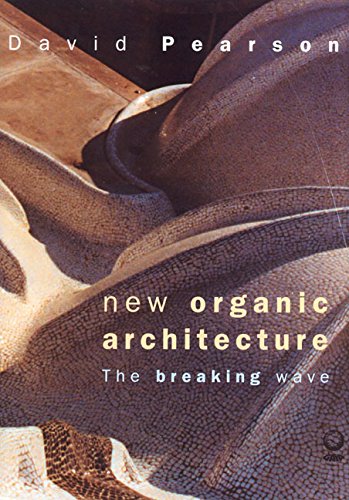

New organic architecture the breaking wave David Pearson. txt
Idioma: Español Los angeles: University of California Press 2001Descripción: 223 p. col. ill. 29 cmTipo de contenido:- text
- unmediaded
- volume
- 0520232895 (alk. paper)
- 720/.47 21
- NA682.O73 P43 2001
| Imagen de cubierta | Tipo de ítem | Biblioteca actual | Biblioteca de origen | Colección | Ubicación en estantería | Signatura topográfica | Materiales especificados | Info Vol | URL | Copia número | Estado | Notas | Fecha de vencimiento | Código de barras | Reserva de ítems | Prioridad de la cola de reserva de ejemplar | Reservas para cursos | |
|---|---|---|---|---|---|---|---|---|---|---|---|---|---|---|---|---|---|---|
| Libro | CARIBET Biblioteca Arquitectura Colección General CARIBET | General NA682.O73 P43 2001 (Navegar estantería(Abre debajo)) | 1 | Disponible | 91000000007724 |
Descripciones mejoradas de Syndetics:
New Organic Architecture is a manifesto for building in a way that is both aesthetically pleasing and kinder to the environment. It illuminates key themes of organic architects, their sources of inspiration, the roots and concepts behind the style, and the environmental challenges to be met. The organic approach to architecture has an illustrious history, from Celtic design, Art Nouveau, Arts and Crafts, to the work of Antoni Gaud#65533; and Frank Lloyd Wright. Today there is a response to a new age of information and ecology; architects are seeking to change the relationship between buildings and the natural environment. In the first part of his book, David Pearson provides a history and assessment of organic architecture. The second part comprises statements from thirty architects from around the world whose work is based on natural or curvilinear forms rather than the straight-line geometrics of modernism. Each statement is accompanied by full-color illustrations of one or several of the architects' built projects.
Include index
Include bibliography
Introduction
Building as nature
Form Follows Flow
Of the People
Of the hill
Of the materials
Youthful and unexpected
Living Music
Sources and inspirations
Roots and concepts
Natures Forms
Geometry
Environment
Living organic architecture
Fabrizio Carola
Bart Prince
Jacques Gillet
Erik Asmussen
Douglas Cardinal
Gregory Burgess
Sim Van der Ryn
Eric Furnemont
Daniel Liebermann
Balkrishna Doshi
Tadao Ando
Drew and James Hubell
Vitor Rubio Forte
Renzo Piano
Eisaku Ushida and Kathryn Finday
Mickey Muenning
Peter Hubner
Shoei Yoh
Imre Makovecz
John Watson
Steven Johnson
Koval
Keith Struthers
Eugene Tsui
Nicholas Grimshaw
Javier Senosian
Kendrick Bangs Kellogg
Thomas Rau
Arthur Dyson
Philippe Samyn
Selected Biographies
Useful Adresses
Bibliography
Index
Acknowledgements
Photographic credits
Tabla de contenidos provista por Syndetics
- Introduction(p. 8)
- Building as nature(p. 10)
- Continuous present(p. 12)
- Form follows flow(p. 14)
- Of the people(p. 16)
- Of the hill(p. 18)
- Of the materials(p. 20)
- Youthful and unexpected(p. 22)
- Living music(p. 24)
- Part 1 Sources and inspirations(p. 26)
- Roots and concepts(p. 30)
- Nature's forms(p. 48)
- Geometry(p. 62)
- Environment(p. 70)
- Part 2 Living organic architecture(p. 80)
- Fabrizio Carola(p. 82)
- Bart Prince(p. 86)
- Jacques Gillet(p. 94)
- Erik Asmussen(p. 100)
- Douglas Cardinal(p. 104)
- Gregory Burgess(p. 110)
- Sim Van der Ryn(p. 114)
- Eric Furnemont(p. 118)
- Daniel Liebermann(p. 122)
- Balkrishna Doshi(p. 130)
- Tadao Ando(p. 136)
- Drew and James Hubbell(p. 138)
- Vitor Ruivo Forte(p. 142)
- Renzo Piano(p. 144)
- Eisaku Ushida and Kathryn Findlay(p. 148)
- Mickey Muennig(p. 152)
- Peter Hubner(p. 158)
- Shoei Yoh(p. 162)
- Imre Makovecz(p. 166)
- John Watson(p. 172)
- Steven Johnson(p. 176)
- Koval(p. 178)
- Keith Struthers(p. 180)
- Eugene Tsui(p. 182)
- Nicholas Grimshaw(p. 186)
- Javier Senosiain(p. 190)
- Kendrick Bangs Kellogg(p. 196)
- Thomas Rau(p. 202)
- Arthur Dyson(p. 206)
- Philippe Samyn(p. 210)
- Selected biographies: Biographical details of featured architects(p. 214)
- Useful addresses(p. 219)
- Bibliography(p. 219)
- Index(p. 221)
- Acknowledgements(p. 222)
- Photographic credits(p. 223)