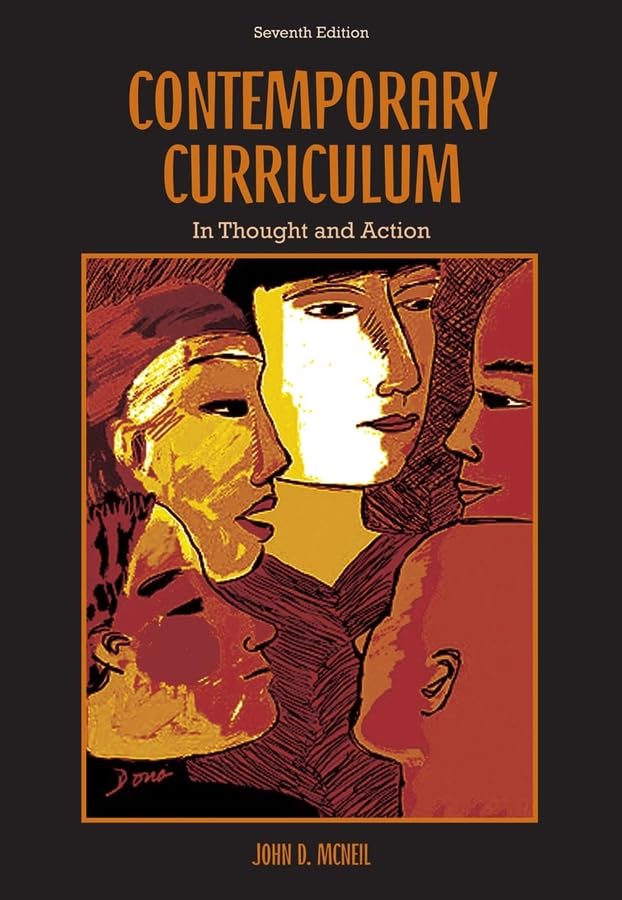

Contemporary curriculum In thought and action John D. McNeil.
Detalles de publicación: Hoboken, NJ John Wiley 2009.Edición: 7th edDescripción: 408 p. 25 cmISBN:- 9780471719434
| Imagen de cubierta | Tipo de ítem | Biblioteca actual | Biblioteca de origen | Colección | Ubicación en estantería | Signatura topográfica | Materiales especificados | Info Vol | URL | Copia número | Estado | Notas | Fecha de vencimiento | Código de barras | Reserva de ítems | Prioridad de la cola de reserva de ejemplar | Reservas para cursos | |
|---|---|---|---|---|---|---|---|---|---|---|---|---|---|---|---|---|---|---|
| Libro | Biblioteca Mons. Iñaki Mallona (Arecibo) Colección General ab | 375.001 M1686c7 (Navegar estantería(Abre debajo)) | Disponible | 60000010097852 |
Descripciones mejoradas de Syndetics:
Practical tools for joining curriculum conversation
Curriculum is a field in continual flux, the result of an ongoing discussion among teachers approaching from a multitude of perspectives. Contemporary Curriculum: In Thought and Action, Seventh Edition offers the tools to participate in curriculum discussion and to construct and implement curriculum in the classroom.
The Seventh Edition provides you with practical tools for executing curriculum at all levels: policy, institutional, and classroom. You'll develop multiple strategies for dealing with curriculum problems, and build your skills in such areas as determining goals and purposes, providing optimum learning opportunities, and organizing for effective and continuous learning.
This text encourages online curriculum conversation among users and two-way communication between the author and readers. With an array of thoughtful new features and content, the Seventh Edition now:
* Profiles thinkers and resources who are energizing the field with "new departures" that deviate from the established views or prevailing thought discussed in each chapter
* Covers political ideologies, the conflicts over school subject matter, and data-driven decision making at state, district, school and classroom levels
* Examines the functioning of schools and media as democratic institutions and the relationship of citizens and the political system
* Discusses the impact of the privatization of schooling and the world-wide growth of the "Silent Curriculum"
With a balanced presentation of humanistic, social reconstructionist, systemic, and academic perspectives and fresh insights into key curriculum questions, Contemporary Curriculum: In Thought and Action, Seventh Edition comprises an excellent foundation for every educator from master's to doctoral level.
Includes index.
Tabla de contenidos provista por Syndetics
- Preface(p. xi)
- Acknowledgement(p. xv)
- Part I Conceptions of Curriculum
- Chapter 1 Humanistic Curriculum(p. 3)
- Characteristics of the Humanistic Curriculum(p. 5)
- Purpose(p. 5)
- Role of the Teacher(p. 5)
- Forms of Humanistic Curriculum(p. 6)
- A Confluent Curriculum(p. 6)
- Consciousness and Transcendency(p. 7)
- Responses to Depersonalization(p. 9)
- Psychological Foundations of the Humanistic Curriculum(p. 14)
- Third-Force Psychology(p. 14)
- Historical Antecedents to the Humanistic Curriculum(p. 18)
- Ancient Greeks and Romans(p. 18)
- Traditional Humanities(p. 19)
- Progressive Education(p. 20)
- Spiritual Images(p. 20)
- Criticisms of the Humanistic Curriculum(p. 20)
- Concluding Comments(p. 22)
- Questions(p. 23)
- Suggested Strategic Research(p. 24)
- New Directions in the Humanistic Curriculum(p. 24)
- Chapter 2 The Social Reconstructionist Curriculum(p. 27)
- Characteristics of the Social Reconstructionist Curriculum(p. 27)
- Purpose(p. 27)
- Role of the Teacher(p. 28)
- Social Reconstruction in Practice(p. 29)
- Changing the Community(p. 29)
- Freire's Social Reconstructionism(p. 30)
- Eradicating Illiteracy(p. 31)
- Neo-Marxists(p. 32)
- A Neo-Marxist Manifesto(p. 33)
- Critical Theory against Reproductive Knowledge(p. 33)
- Environmental Reconstruction(p. 35)
- Futurologists(p. 36)
- The Use of Future Planning(p. 36)
- Typical Futurists' Recommendations(p. 37)
- Critical Pedagogy(p. 37)
- Social Adaptation versus Social Reconstruction(p. 39)
- Psychological Foundatons of Social Reconstruction(p. 40)
- Cultural Psychology as a Source(p. 40)
- Psychoanalytical Psychology and Social Reconstruction(p. 42)
- Historical Antecedents to Social Reconstruction(p. 43)
- Criticisms of Social Reconstructionism(p. 46)
- Concluding Comments(p. 47)
- Questions(p. 48)
- Suggested Strategic Research(p. 48)
- New Directions in Social Reconstruction Curriculum(p. 49)
- Chapter 3 The Systemic Curriculum(p. 52)
- Alignment(p. 53)
- Accountability(p. 54)
- Standards-Based Curriculum(p. 54)
- Policies for Standards-Based Curriculum(p. 54)
- Standards-Based Curriculum in the Classroom(p. 57)
- Psychological Foundations of the Systemic Curriculum(p. 60)
- Historical Antecedents to the Systemic Curriculum(p. 62)
- Consequences of Systemic Curriculum(p. 64)
- Concluding Comments(p. 67)
- Questions(p. 68)
- Suggested Strategic Research(p. 68)
- New Directions in the Systemic Curriculum(p. 69)
- Chapter 4 The Academic Curriculum(p. 71)
- Approaches to the Academic Curriculum(p. 75)
- The Forms of Knowledge Approach(p. 75)
- Structure in the Disciplines Approach(p. 77)
- Reaction against a Structure of Knowledge(p. 80)
- Revival of the Disciplines Approach(p. 81)
- Liberal Arts and the Academic Core(p. 83)
- Liberal Arts in Higher Education(p. 84)
- Academic Programs in the Elementary and Secondary Curriculum(p. 86)
- Cultural Literacy(p. 87)
- Making Subject Matter More Appealing to Growing Minds(p. 88)
- Psychological Foundations of the Academic Curriculum(p. 91)
- Historical Antecedents of the Academic Curriculum(p. 93)
- Concluding Comments(p. 97)
- Questions(p. 98)
- Suggested Strategic Research(p. 98)
- New Directions in the Academic Curriculum(p. 99)
- Part II Curriculum Development
- Chapter 5 Deciding What Should be Taught(p. 105)
- Arenas for Deciding What to Teach(p. 106)
- Levels of Decision Making(p. 106)
- Curriculum at Different Levels(p. 107)
- Contexts for Development of Curriculum(p. 108)
- Range of Activity(p. 108)
- Development of Materials(p. 109)
- State, Regional, and Local Curriculum Planning(p. 109)
- Institutional Curriculum Planning(p. 109)
- Functions of the Curriculum(p. 110)
- Determining What to Teach(p. 112)
- Rational and Technical Models in Curriculum Decision Making(p. 113)
- Needs Assessment Model(p. 113)
- Steps in Needs Assessment(p. 114)
- The Futuristic Model(p. 116)
- The Rational Model(p. 118)
- The Vocational or Training Model(p. 122)
- Alternative Approaches to Determining Curriculum Purposes(p. 123)
- Disjointed Incrementalism(p. 123)
- Problems with Disjointed Incrementalism in Curriculum Making(p. 124)
- Emergent Approaches in Curriculum Decision Making(p. 125)
- A Comment on Models and Approaches for Curriculum Building(p. 127)
- Concluding Comments(p. 129)
- Questions(p. 129)
- Suggested Strategic Research(p. 130)
- New Directions in Deciding What is to be Taught(p. 131)
- Chapter 6 Developing and Selecting Learning Opportunities(p. 133)
- Standards for Teaching Impact Classroom Curriculum Development(p. 134)
- Principles for Developing Learning Opportunities(p. 136)
- Learning Opportunities for Higher Order Thinking(p. 139)
- Transfer and Problem Solving(p. 139)
- Creativity(p. 140)
- Creating New Knowledge(p. 142)
- Procedures for Developing Learning Activities(p. 144)
- Current Orientations in Developing Learning Activities(p. 144)
- Criteria for Selecting Learning Activities(p. 148)
- Philosophical Criteria(p. 149)
- Psychological Criteria(p. 149)
- Political Criteria(p. 151)
- Practicality as a Criterion(p. 152)
- Scientifically Based Research Criteria(p. 153)
- Criticisms of Textbooks and Learning Opportunities(p. 154)
- Criticisms of Criteria for Selecting Learning Opportunities(p. 155)
- Concluding Comments(p. 155)
- Questions(p. 156)
- Suggested Strategic Research(p. 156)
- Aperture Chapter 6 How Technology is Used with Curriculum Orientations(p. 158)
- Technology in Humanistic Classrooms(p. 158)
- Social Reconstruction and Technology(p. 159)
- Technology in a Systemic Curriculum(p. 161)
- Technology in the Academic Curriculum(p. 163)
- Building Web Sites(p. 165)
- New Developments in Learning Opportunities(p. 165)
- Chapter 7 Organizing Learning Opportunities(p. 168)
- Key Concepts in Curriculum Organization(p. 168)
- Organizing Centers or Foci(p. 169)
- Organizing Elements(p. 169)
- Principles for Sequencing Centers and Activities Related to Elements(p. 172)
- Organizing Structures(p. 173)
- Structure at the Institutional Level(p. 173)
- Structure at the Classroom Level(p. 173)
- Organizational Patterns and Conceptions of the Curriculum(p. 179)
- Unified Disciplines: The New Academic Pattern(p. 181)
- Empirical Studies of the Effects of Patterns(p. 186)
- Issues in Curriculum Organization(p. 189)
- Concluding Comments(p. 191)
- Questions(p. 191)
- Suggested Strategic Research(p. 192)
- New Directions in Organizing Learning Opportunities(p. 193)
- Part III Curriculum Management
- Chapter 8 Managing Curriculum(p. 197)
- Schools and the Institutionalized Curriculum(p. 197)
- Curriculum Change in the Context of Restructuring(p. 199)
- Roles in Restructuring Curriculum(p. 203)
- The Principal as Director of Learning(p. 203)
- The Principal in Shared Leadership(p. 204)
- Department Heads in Curriculum Management(p. 205)
- Administrative Arrangements(p. 205)
- Stratifying Students(p. 207)
- Staffing Patterns and Scheduling(p. 208)
- Supplementary Personnel(p. 210)
- Nongrading(p. 210)
- Facilities(p. 210)
- The Middle School(p. 211)
- Alternative, Magnet, Charter, and Specialist Schools(p. 212)
- Trends in Reforming School Organization(p. 215)
- Options in the Schools(p. 215)
- Administration for Instructional Effectiveness(p. 216)
- Coordinating the Curriculum(p. 216)
- Effective Research and Curriculum Policy(p. 219)
- Concluding Comments(p. 221)
- Questions(p. 221)
- Suggested Strategic Research(p. 222)
- New Directions in Schools as Institutions(p. 223)
- Chapter 9 Evaluating the Curriculum(p. 225)
- Models for Evaluation(p. 227)
- Consensus Models (Traditional and Technical Evaluation)(p. 227)
- Pluralistic Models (Humanistic and Social Reconstructionist Evaluation)(p. 230)
- Controversial Technical Issues in Curriculum Evaluation(p. 232)
- The Form of Objectives (Goals, Standards, Benchmarks, and Indicators)(p. 232)
- Measurement of Intended Outcomes versus Goal-Free Evaluation(p. 234)
- Norm- and Criterion-Referenced Tests(p. 235)
- Tests and Invasion of Privacy(p. 236)
- Authentic Assessment of Student Performance(p. 237)
- Assessment as Learning(p. 238)
- Techniques for Collecting Data(p. 239)
- Measuring Affect(p. 240)
- Sampling(p. 241)
- Hazards in Conducting Traditional Evaluation(p. 242)
- Value Added Assessment(p. 243)
- Concluding Comments(p. 244)
- Questions(p. 245)
- Suggested Strategic Research(p. 246)
- New Directions in Curriculum Evaluation(p. 246)
- Chapter 10 The Politics of Curriculum Making(p. 249)
- Curriculum Policy(p. 252)
- The Politics Involved(p. 252)
- Political Decisions about What will be Taught(p. 253)
- Concepts for Interpreting the Process of Political Decision Making(p. 253)
- The Professionalization of Reform(p. 253)
- Forces of Stability(p. 254)
- Constraints on Policy(p. 255)
- Participants in Determining Curriculum Policy(p. 256)
- School-Based Political Participants(p. 256)
- Community Participants(p. 260)
- State Agencies(p. 262)
- Testing Agencies(p. 263)
- Publishers(p. 263)
- The Courts(p. 264)
- The Federal Government(p. 265)
- Foundations(p. 266)
- Special Interests(p. 267)
- Conflicts in Curriculum Control(p. 268)
- Concluding Comments(p. 269)
- Questions(p. 270)
- Suggested Strategic Research(p. 270)
- New Directions in the Politics of Curriculum Making(p. 270)
- Part IV Issues and Trends
- Chapter 11 Current Issues Demanding Responses(p. 275)
- Curriculum For Thinking(p. 275)
- The Focus of a Thinking Curriculum(p. 277)
- Curriculum Competition: An International Comparison(p. 279)
- Invidious Comparisons(p. 280)
- Vocational Education(p. 286)
- Contrasting Purposes for Vocational Education(p. 287)
- Access to Vocational Education(p. 289)
- Content of Vocational Education(p. 290)
- Reorganizing Vocational Education(p. 292)
- Trends in Vocational Education(p. 292)
- Moral Education(p. 293)
- Phenix's Basic Questions in Moral Education(p. 293)
- Kohlberg's Theory of Moral Development(p. 295)
- Character Education(p. 296)
- School Safety(p. 297)
- Concluding Comments(p. 299)
- Questions(p. 299)
- Suggested Strategic Research(p. 300)
- New Directions in Curriculum Issues(p. 301)
- Chapter 12 Trends in the Subject Fields(p. 305)
- Mathematics(p. 305)
- Mathematics in Our Schools(p. 305)
- Trends in Mathematics(p. 306)
- Science(p. 309)
- Evolution of Science Teaching(p. 309)
- New Approaches in Science Education(p. 311)
- Recommendations for the Future Science Curriculum(p. 313)
- Physical and Health Education(p. 315)
- Its Place in the Curriculum(p. 315)
- Guidelines for Future Physical Education Programs(p. 316)
- English(p. 318)
- English as a Subject(p. 318)
- Current Trends in the Teaching of English(p. 320)
- Reading(p. 321)
- The Curriculum of Reading(p. 321)
- Contested Trends in Reading(p. 322)
- History and Social Studies(p. 324)
- History as a Subject(p. 324)
- An Evaluation of History Curriculum(p. 324)
- History and Geography in the 1990s(p. 325)
- History and the Social Studies in the Standards Movement(p. 326)
- Social Studies(p. 327)
- The Future of Social Studies(p. 329)
- Foreign Language(p. 330)
- The Rise and Fall of Foreign Language(p. 330)
- Efforts to Revive Language Instruction(p. 330)
- The Arts(p. 333)
- Concluding Comments(p. 335)
- Questions(p. 336)
- Suggested Strategic Research(p. 337)
- New Directions in the Subject Matters(p. 337)
- Part V Curriculum Inquiry: Retrospect and Prospect
- Chapter 13 A Historical Perspective of Curriculum Making(p. 345)
- Curriculum Historians(p. 346)
- Context for Formulation of the Curriculum Field(p. 347)
- Founders of the Field of Curriculum(p. 349)
- Herbartism and the McMurrys(p. 349)
- Basic Tenets of Herbartism(p. 350)
- The McMurrys' Thinking(p. 350)
- Dewey's Opposition to Herbartism(p. 353)
- Dewey's School(p. 353)
- Dewey's Curriculum(p. 354)
- Scientific Curriculum Making: Franklin Bobbitt and Werrett W. Charters(p. 354)
- Societal Influences on the Scientific Movement(p. 354)
- Key Ideas of Scientific Curriculum Making(p. 355)
- Bobbitt's Contribution to Curriculum Making(p. 355)
- Charters's Contribution to the Curriculum Field(p. 358)
- Improvement of Instruction(p. 359)
- Local Development of Curriculum(p. 359)
- The Course of Study Movement(p. 359)
- Caswell's Influence on the Curriculum Field(p. 360)
- Rational Curriculum Making(p. 361)
- Tyler's Curriculum Inquiry(p. 361)
- Feminine Enactment of Curriculum(p. 365)
- Hilda Taba(p. 365)
- Mary Sheldon Barnes(p. 366)
- Lucy Maynard Salmon(p. 366)
- Lucy Sprague Mitchell(p. 366)
- Concluding Comments(p. 367)
- Questions(p. 368)
- Suggested Strategic Research(p. 368)
- New Directions in Historical Curriculum Studies(p. 369)
- Chapter 14 The Promise of Theory and Inquiry in Curriculum(p. 370)
- State of the Field(p. 371)
- The Need for Curriculum Theory(p. 371)
- The Need for Curriculum Conceptions(p. 373)
- The Need for Studies of Correlation and Integration(p. 375)
- The Need for Studies of Sequence(p. 376)
- The Need for Analyzing Education Objectives (Standards)(p. 377)
- The Need for Process-Product Research(p. 378)
- Trends in Curriculum Inquiry(p. 379)
- Forms of Inquiry(p. 380)
- Synoptic Activity as Curriculum Inquiry(p. 381)
- Inquiry in the School and Classroom(p. 381)
- Narrative(p. 382)
- Qualitative Inquiry in School Settings(p. 382)
- Action Research as Curriculum Inquiry(p. 383)
- Concluding Comments(p. 385)
- Questions(p. 386)
- Suggested Strategic Research(p. 386)
- New Directions in Curriculum Inquiry(p. 387)
- Name Index(p. 389)
- Subject Index(p. 395)