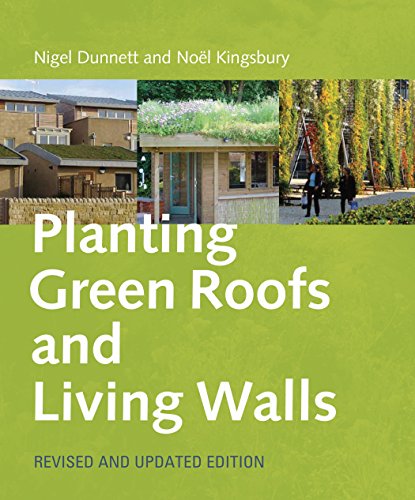
Imagen de portada de Amazon
Imagen de Amazon.com
Imagen de cubierta Syndetics
Portada de Syndetics
Imagen de OpenLibrary

Planting green roofs and living walls Nigel Dunnett and Noël Kingsbury.

Por: Colaborador(es): Idioma: Español Detalles de publicación: Portland, Or. Timber Press 2008.Edición: Rev. and updated ed., [2nd ed.]Descripción: vii, 328 p. ill. (chiefly col.) 25 cmISBN:
  • 9780881929119
  • 0881929115
Tema(s): Clasificación CDD:
  • 635.9/671 22
Clasificación LoC:
  • SB419.5 .D85 2008
Valoración
    Valoración media: 0.0 (0 votos)
Existencias
Imagen de cubierta Tipo de ítem Biblioteca actual Biblioteca de origen Colección Ubicación en estantería Signatura topográfica Materiales especificados Info Vol URL Copia número Estado Notas Fecha de vencimiento Código de barras Reserva de ítems Prioridad de la cola de reserva de ejemplar Reservas para cursos
Libro CARIBET Biblioteca Arquitectura Colección General CARIBET SB419.5.D85 2008 (Navegar estantería(Abre debajo)) Disponible 91000000005462
Total de reservas: 0

Descripciones mejoradas de Syndetics:

The latest techniques for planting roofs and walls to enhance our buildings and benefit the environment. The green roof industry is booming and the technology changing fast as professionals respond to the unique challenges of each new planting. In this comprehensively updated, fully revised edition of their authoritative reference, Nigel Dunnett and Noël Kingsbury reveal the very latest techniques, materials, and plants, and showcase some spectacular new case studies for the non-professional. Green roofs and walls reduce pollution and runoff, help insulate and reduce the maintenance needs of buildings, contribute to biodiversity, and provide habitats for wildlife. In addition to all this, they are attractive to look at and enhance the quality of life of residents. In Planting Green Roofs and Living Walls, Revised and Updated Edition , the authors describe and illustrate the practical techniques required to design, implement, and maintain a green roof or wall to the highest standards. This informative, up-to-the-minute reference will encourage gardeners everywhere to consider the enormous benefits to be gained from planting on their roofs and walls.

Includes bibliographical references (p. 312-322) and index.

Tabla de contenidos provista por Syndetics

  • Introduction
  • Why build green roofs?
  • Constructing green roofs
  • Planting green roofs
  • Façade greening
  • Living walls, structures, and surfaces
  • Conclusion
  • Roof-greening plant directory
  • Suppliers
  • Bibliography
  • Further reading
  • Index

Extracto provisto por Syndetics

The contemporary use of plants on roofs and walls is distinguished from previous uses by the integration of planting and its supporting structures with the construction of the buildings themselves, as well as the use of modern materials. The result is a dovetailing of living plants, the building, and its human users, a closeness and integration not easy to achieve with older construction technologies. It is important to appreciate the distinction between older technologies of plant use and the new. Old-style roof gardens either restricted the planting to containers and planters or used a layer of soil spread onto a roof surface, which had to be massively stronger than would otherwise need to be the case. New-style roof greening recognizes two distinct approaches, intensive and extensive. Intensive roof greening is similar to the old-style roof gardens, where it is expected that people would use the area much as a conventional garden. Plants are maintained on an individual basis in the same way as they would in a garden at ground level. Soil depth is generally at least 15 cm (6 in) deep, but now may be composed of lightweight growing media, and is thus more correctly known as substrate . Simple intensive green roofs are covered with lawns or ground covering plants that still require regular maintenance, but have thinner substrates and are therefore less costly to install. Access may be possible, but generally these roofs are intended to be overlooked (English Nature 2003). Extensive roof greening is not intended for regular human usage and may not even be intended to be seen on a regular basis. Plants are treated en masse, rather as grass plants are in a lawn. Any maintenance operation is carried out on them all simultaneously, such as mowing. In any case, maintenance is generally designed to be minimal. Substrate depth can be between 2 and 15 cm (0.8 and 6 in), which reduces the amount of extra loading that must be build onto the roof construction. Ecoroof is a term used in some places as a substitute for green roof . Some people use the name to describe vegetated roofs as a way to distinguish them from other types of roof that may have an ecological function (such as roofs covered with photovoltaic cells) that can also be called green roofs (using the word green in its popular ecological or environmental sense). Ecoroof has also been taken up as a descriptive term for extensive green roofs in climates that experience very dry periods that cause vegetation to brown or ripen. For example, extensive green roofs in the city of Portland, Oregon, are referred to as ecoroofs because they are not green but brown for much of the growing season and therefore the term green is seen as a misnomer. Brown roof is a term to describe roofs that have been covered with substrate or loose material but have not been purposefully planted. Brown roofs are created primarily for biodiversity purposes and aim to recreate typical brownfield conditions through the use of by-products of the development of urban sites: brick rubble, crushed concrete, and subsoils. Such roofs may colonize spontaneously with vegetation but the unvegetated loose substrates can also provide habitat for a range of invertebrates and birds. Excerpted from Planting Green Roofs and Living Walls by Nigel Dunnett, Noël Kingsbury All rights reserved by the original copyright owners. Excerpts are provided for display purposes only and may not be reproduced, reprinted or distributed without the written permission of the publisher.

Reseñas proporcionadas por Syndetics

Library Journal Review

Living in a Chicago high rise with a green roof measuring almost an acre makes this reviewer slightly less objective about these imaginative additions to cityscapes around the world. Dunnett (landscape, Univ. of Sheffield, U.K.) and Kingsbury (coauthor, Designing with Plants) certainly encourage enthusiasm with this fact-rich, well-illustrated, and accessible book on roofs and walls alive with plants. Divided into two parts (roofs and walls, respectively), the book provides plenty of details on construction-no small matter in minimizing the burden on a roof-and plant selection. In fact, plant selection is so important to both roofs and walls that the authors have included appendixes describing the kinds of plants best suited to these exotic locales. An outstanding work and another fine production from Timber Press, this book will certainly become the standard reference on the topic.-Edward J. Valauskas, Lib. & Plant Information Office, Chicago Botanic Garden (c) Copyright 2010. Library Journals LLC, a wholly owned subsidiary of Media Source, Inc. No redistribution permitted.

Booklist Review

Green roofs are a hot topic, and one that constitutes a trend extending well beyond the world of gardening. This sourcebook brings together a fascinating amount of data, covering the actual logistics of how to implement plantings on roofs and building facades. Dunnett and Kingsbury look at examples of ornamental projects while stressing the concept's solid link to the environment. Examinations of recent research underline the wide-ranging benefits of greening buildings, from recreational aspects to increased energy efficiency. Among the most positive changes to emerge are improvements in the air we breathe and the support of biodiversity. Given the lively current interest in how to extend living ecosystems that reach beyond the ground plane to the upper stories of our homes and office buildings, this resource offers important technical advice, along with horticultural recommendations pertinent to flat or sloped roofs and the greening of vertical surfaces. Undoubtedly, other manuals will appear as an interest in living roofs increases. At present, the material compiled here will be welcomed by a wide audience. --Alice Joyce Copyright 2004 Booklist
Compartir
logopucpr-y-vive

Contáctanos

¡Queremos saber de ti!

Tel. 787.841.2000 Ext. 1801

bibliotecavaldes@pucpr.edu

⁣Búscanos en las redes

© 2026 Desarrollado por Ignite Online • All Rights Reserved • Powered by Koha.