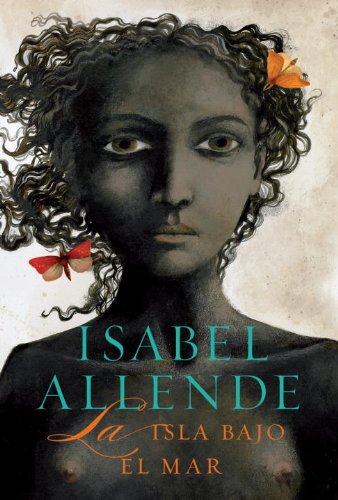

La isla bajo el mar Isabel Allende.
Detalles de publicación: New York Random House 2009.Edición: 1. ed., Vitange EspañolDescripción: 510 p. maps 23 cmISBN:- 9780307476043
- 9500730960
| Imagen de cubierta | Tipo de ítem | Biblioteca actual | Biblioteca de origen | Colección | Ubicación en estantería | Signatura topográfica | Materiales especificados | Info Vol | URL | Copia número | Estado | Notas | Fecha de vencimiento | Código de barras | Reserva de ítems | Prioridad de la cola de reserva de ejemplar | Reservas para cursos | |
|---|---|---|---|---|---|---|---|---|---|---|---|---|---|---|---|---|---|---|
| Libro | Biblioteca Encarnación Valdés Colección General bev | C863 A425ia 2009 (Navegar estantería(Abre debajo)) | c.2 | Disponible | 80000002560236 | |||||||||||||
| Libro | Biblioteca Encarnación Valdés Colección General bev | C863 A425ia 2009 (Navegar estantería(Abre debajo)) | Overdue(pending) | 80000002393083 | ||||||||||||||
| Libro | Biblioteca Mons. Iñaki Mallona (Arecibo) Colección General ab | C 863 A425ia (Navegar estantería(Abre debajo)) | Disponible | 60000010109558 |
Descripciones mejoradas de Syndetics:
Para ser una esclava en el Saint-Domingue de finales del siglo XVIII, Zarité había tenido buena estrella: a los nueve años fue vendida a Toulouse Valmorain, un rico terrateniente, pero no conoció ni el agotamiento de las plantaciones de caña ni la asfixia y el sufrimiento de los trapiches, porque siempre fue una esclava doméstica. Su bondad natural, fortaleza de espíritu y honradez le permitieron compartir los secretos y la espiritualidad que ayudaban a sobrevivir a los suyos, los esclavos, y conocer las miserias de los amos, los blancos. Zarité se convirtió en el centro de un microcosmos que era un reflejo del mundo de la colonia: el amo Valmorain, su frágil esposa española y su sensible hijo Maurice, el sabio Parmentier, el militar Relais y la cortesana mulata Violette, Tante Rose, la curandera, Gambo, el apuesto esclavo rebelde… y otros personajes de una cruel conflagración que acabaría arrasando su tierra y lanzándolos lejos de ella. Al ser llevada por su amo a Nueva Orleans, Zarité inició una nueva etapa en la que alcanzaría su mayor aspiración: la libertad. Más allá del dolor y del amor, de la sumisión y la independencia, de sus deseos y los que le habían impuesto a lo largo de su vida, Zarité podía contemplarla con serenidad y concluir que había tenido buena estrella.
Extracto provisto por Syndetics
Reseñas proporcionadas por Syndetics
Library Journal Review
STARAllende's latest excursion into historical fiction takes us to the Caribbean of the late 18th to early 19th century, first to the island of Saint-Domingue (Santo Domingo-later the capital of the Dominican Republic) and then to New Orleans. Toulouse Valmorain, a French national who comes to the New World to save his father's sugar plantation and the family, yearns to return to Paris. A humanist by nature, he is uncomfortable with the institution of slavery but considers it a necessary evil for the profitable running of the plantation. The first persona narratives of the slave Zarite, Valmorain's wife's servant, are the heart and soul of this novel, where passionate human melodrama takes place against the backdrop of exciting historical revolts, as slaves fight for their freedom and plantation owners struggle to maintain the status quo. Allende is diligent at recreating the varied cultures that collided in the Caribbean at that time. Readers will sink their teeth into this sweeping epic, It is an indispensable addition to every collection.-Sara Martinez, Hispanic Resource Center; Tulsa City-County Library System, OK (c) Copyright 2010. Library Journals LLC, a wholly owned subsidiary of Media Source, Inc. No redistribution permitted.Notas de autor provistas por Syndetics
Isabel Allende was born in 1942 in Lima, Peru, the daughter of a Chilean diplomat. When her parents separated, young Isabel moved with her mother to Chile, where she spent the rest of her childhood. She married at the age of 19 and had two children, Paula and Nicolas. Her uncle was Salvador Allende, the president of Chile. When he was overthrown in the coup of 1973, she fled Chile, moving to Caracas, Venezuela.While living in Venezuela, Allende began writing her novels, many of them exploring the close family bonds between women. Her first novel, The House of the Spirits, has been translated into 27 languages, and was later made into a film. She then wrote Of Love and Shadows, Eva Luna, and The Stories of Eva Luna, all set in Latin America. The Infinite Plan was her first novel to take place in the United States. She explores the issues of human rights and the plight of immigrants and refugees in her novel, In The Midst of Winter. In Paula, Allende wrote her memoirs in connection with her daughter's illness and death. She delved into the erotic connections between food and love in Aphrodite: A Memoir of the Senses.
In addition to writing books, Allende has worked as a TV interviewer, magazine writer, school administrator, and a secretary at a U.N. office in Chile. She received the 1996 Harold Washington Literacy Award. She lives in California. Her title Maya's Notebook made The New York Times Best Seller List in 2013.
(Bowker Author Biography)