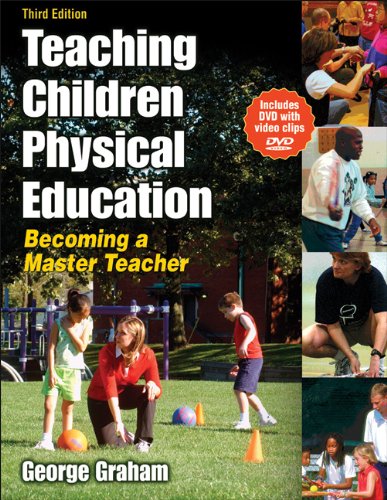

Teaching children physical education becoming a master teacher George Graham.
Detalles de publicación: Champaign, Ill. Human Kinetics Books c2008.Edición: 3rd edDescripción: xiv, 242 p. ill. 28 cm. 1 DVD VIDEO (39 min. : son. col. ; 4 3/4 in.)ISBN:- 9780736062107
- 372.86/044 20
- GV363 .G68 2008
| Imagen de cubierta | Tipo de ítem | Biblioteca actual | Biblioteca de origen | Colección | Ubicación en estantería | Signatura topográfica | Materiales especificados | Info Vol | URL | Copia número | Estado | Notas | Fecha de vencimiento | Código de barras | Reserva de ítems | Prioridad de la cola de reserva de ejemplar | Reservas para cursos | |
|---|---|---|---|---|---|---|---|---|---|---|---|---|---|---|---|---|---|---|
| Libro | Biblioteca de Mayagüez Colección General mb | GV363 .G68 2008 (Navegar estantería(Abre debajo)) | Disponible | 50000003192605 | ||||||||||||||
| Audiovisual | Biblioteca de Mayagüez sala de audiovisual | GV363 .G68 2008 (Navegar estantería(Abre debajo)) | DVD | Disponible | 50000002154309 |
Descripciones mejoradas de Syndetics:
In this fully updated edition, George Graham, PhD, presents a concise, practical, user-friendly view of what it takes to become a master teacher of children's physical education. The book is contemporary and easy to apply in real-world teaching situations. Dr. Graham knows kids--and the challenges of teaching them.
Teaching Children Physical Education, Third Edition, is valuable to future and veteran teachers alike. Future teachers will learn the skills and techniques that master teachers employ, and experienced teachers will be challenged to consider some new techniques for designing their classes, developing lessons, and adjusting tasks for individual children. All readers will learn the skills and techniques that successful teachers use to make their classes vibrant, fun, and developmentally appropriate.
Graham, a university professor and public school physical education instructor who was recently named to the NASPE Hall of Fame, deftly weaves research-based information with firsthand experience in a conversational tone. The result is an easy-to-read book rich with practical advice based on what really works in today's gymnasiums and playgrounds.
Bound into every copy of the book is a DVD featuring video clips showing teachers in real-life situations as well as easy-to-print worksheets from the book. The video clips illustrate key techniques and strategies from the book. Those techniques and strategies include how to
- motivate children to practice,
- build positive feelings,
- minimize off-task behavior and discipline problems,
- create an atmosphere of learning,
- maximize learning,
- develop lesson content,
- use a problem-solving approach,
- observe and analyze,
- provide feedback, and
- assess children's (and your own) progress.
The book includes many practical teaching scenarios that illustrate the decision-making process that master teachers use in virtually every lesson they teach. Other reader-friendly features include
- chapter objectives,
- author insights that make the book come alive, and
- reflection questions that help teachers consider how well a lesson worked and what would have happened if they had taken a different approach.
This new edition is also backed by easily downloadable ancillaries for course instructors, including an instructor guide and test and presentation packages.
Teaching Children Physical Education has become the foundation for the shared technical language that is used in many college and university PE teacher education programs. If you're looking for an affordable text or reference that focuses on pedagogy in a down-to-earth style, Teaching Children Physical Education, Third Edition is a book you'll turn to again and again on your way to becoming a master teacher.
DVD
English
gccmar2009
Includes bibliographical references and index.
Tabla de contenidos provista por Syndetics
- Preface
- Acknowledgments
- Chapter 1 Successful Teaching
- The Teacher, Not Only the Contents
- How Is Children's Physical Education Different?
- Analogies of Teaching
- Changing and Dynamic
- Difficult to Capture in Words
- The Challenge of Teaching Children's Physical Education
- The Teacher Makes the Difference
- Pedagogy Tool Box
- Working Definition of "Successful"
- Summary
- Questions for Reflection
- References
- Chapter 2 Planning to Maximize Learning
- The Need for Planning
- Tendencies to Avoid Planning
- Personalized Planning
- Planning Formats and Components
- Summary
- Questions for Reflection
- References
- Chapter 3 Creating a Positive Learning Environment
- Teacher Expectancy
- Teacher Stereotypes
- Creating an Emotionally Safe Environment
- Determining Management Protocols for Your Classes
- Teaching Behavior Protocols
- Summary
- Questions for Reflection
- References
- Chapter 4 Minimizing Off-Task Behavior and Discipline Problems
- Strategies for Minimizing Off-Task Behavior
- Discipline Problems
- Discipline Systems
- Characteristics of Effective Discipline Systems
- The Discipline Confrontation
- Summary
- Questions for Reflection
- References
- Chapter 5 Getting the Lesson Started
- Instant Activity
- Why Instant Activity?
- Communicating the Purpose of the Lesson
- Traditional Ways to Start a Lesson
- Summary
- Questions for Reflection
- References
- Chapter 6 Instructing and Demonstrating
- Instructing
- Demonstrating
- Checking for Understanding
- Students' Use of Time
- Definition of Categories
- Pinpointing
- Play-Teach-Play
- CDs and DVDs
- Summary
- Questions for Reflection
- References
- Chapter 7 Motivating Children to Practice
- Three Keys to Motivating Children
- Eight Techniques for Motivating Children
- Helping Children Develop Realistic Expectations
- Teacher as Cheerleader
- Summary
- Questions for Reflection
- References
- Chapter 8 Observing and Analyzing
- Child-Centered and Subject-Centered Decisions
- Observing Individuals
- Techniques for Observing
- Four Key Observation Questions
- Summary
- Questions for Reflection
- References
- Chapter 9 Developing the Content
- Teacher Choices in Developing the Content
- Content Development Patterns
- Summary
- Questions for Reflection
- References
- Chapter 10 Providing Feedback
- Types of Feedback
- Who Gets Your Feedback?
- Research on Physical Education Teacher Feedback
- Summary
- Questions for Reflections
- References
- Chapter 11 Building Critical-Thinking Skills
- Value for the Children
- Convergent Problem Solving
- Divergent Problem Solving
- Verbal Problem Solving
- Effective Questioning and Problem Setting
- Should I Use a Direct or an Indirect Approach?
- Summary
- Questions for Reflection
- References
- Chapter 12 Building Positive Feelings
- Intentional and Ever Present
- Techniques and Strategies
- Selection of Activities
- Competition for Children
- Testing
- Understanding Feelings
- Learned Helplessness
- Concluding Thoughts
- Summary
- Questions for Reflection
- References
- Chapter 13 Assessing and Reporting Children's Progress
- Why Assess?
- Grading
- New Ways to Assess in Physical Education
- What to Assess
- How to Assess
- Reporting What Has Been Assessed
- Informal Assessments
- Fitness Testing
- Summary
- Questions for Reflection
- References
- Chapter 14 Continuing to Develop as a Teacher
- Stages of Teaching
- Techniques for Continuing to Improve as a Teacher
- Seven Habits of Highly Effective Teachers
- What Type of Teacher Will You Become?
- Parting Thoughts
- Questions for Reflection
- References
- Appendix
- Index
- About the Author
- DVD User Instructions
Notas de autor provistas por Syndetics
George Graham, PhD , has been on the faculty at Pennsylvania State University in the department of kinesiology since 2002. He was on the faculty at Virginia Tech for 17 years, where he was a member of Virginia Tech's Academy of Teaching Excellence. He began his career teaching and coaching in the public schools of California and Oregon and served on the faculties of the University of Georgia and the University of South Carolina before moving to Blacksburg, Virginia.
Since its inception in 1996, Dr. Graham has served as the senior advisor for PE Central (www.pecentral.org), the most widely used Web site by physical educators in the United States.
Dr. Graham has published extensively on physical education teacher effectiveness and physical education for children; he has more than a dozen books, monographs, and journal features and more than 50 articles, monographs, and videotapes to his credit. He is a sought-after speaker and consultant, having delivered presentations at more than 100 conferences throughout the world, including over 60 keynote speeches and feature addresses. He has served as a consultant to more than 70 school districts, the United States Tennis Association, and the Professional Golf Association. He continues to work as a consultant to schools and districts throughout the United States.
In 2007, Dr. Graham was inducted into the National Association for Sport and Physical Education (NASPE) Hall of Fame. He is also a fellow in the American Academy of Kinesiology and Physical Education (2005) and the North American Society of Health, Physical Education, Recreation and Dance Professionals (2004). Dr. Graham has also received the Margie Hanson Honor Award presented by the Council on Physical Education for Children in 1997 and the NASPE Curriculum and Instruction Academy Honor Award in 1996. He served as the executive director of the United States Physical Education Association. With his graduate students, he wrote the first developmentally appropriate document for NASPE. With his undergraduate students, he spends several weeks each semester in elementary schools teaching children physical education.